

A P0441 code, which a scan tool prints as diagnostic trouble code (DTC) P0441 "incorrect purge flow", is the flow check in the evaporative emission (EVAP) system, which handles fuel vapor, not the leak check. Nothing has to be leaking for it to set, so a new gas cap isn't usually the place to start.
The codes stored beside it can point to the fix, and on some cars a carmaker bulletin already names it. Where neither does, a flow test decides which part to buy.
Can you drive with a P0441 code?
Yes, because a purge valve stuck shut only keeps vapor in the canister. You may fail an emissions test, but the engine usually runs normally in the meantime.
A valve stuck open is the exception, because it can make the engine stall or refuse to start, often right after you fill up. We'd stop driving and get it checked if:
- It stalls or won't restart. That's the pattern of a purge valve stuck open, often right after a fill-up.
- The idle is rough or races. Extra vapor and air are reaching the engine when they shouldn't.
- The fuel gauge reads oddly. On the Ford Focus a stuck-open valve could pull the plastic tank out of shape and upset the gauge.
- You smell strong fuel. A leak in the fuel or vapor lines can do that, and fuel near a hot engine can catch fire.
- The check engine light flashes. A flashing light means a misfire bad enough to damage the catalytic converter.
What does a P0441 code mean?
P0441 means the purge flow wasn't what it should have been. Your fuel tank gives off vapor, the car stores it in a canister of charcoal, and the engine is supposed to draw it back in and burn it when the computer opens the purge valve.
Purge flow not as expected
Evaporative Emission (EVAP) System Incorrect Purge Flow
What the computer saw
The engine computer checked the vapor flow from the canister and it wasn't what the purge valve's position called for.
- Code
- P0441
- System
- Powertrain
- Area
- Auxiliary emission controls
- Standard
- Generic OBD-II
- Checks
- Whether vapor reaches the engine when it should, and only then
What it doesn't prove
It doesn't prove the valve is bad, and it isn't a leak test. A hose, wiring or the computer's software can set it too.
The computer checks that flow, and the code's name is incorrect purge flow, not absent purge flow. Vapor that never arrives sets it, and so can vapor that arrives when the valve was ordered shut. A leak is a different check, which the P0442 and P0456 pages cover, and the whole family is mapped on the P0440 page.

Use this image
Free to republish under CC BY 4.0: credit Oil & Miles and link to this page. The snippet does both.
<a href="https://oilandmiles.com/articles/p0441-code"><img src="https://oilandmiles.com/assets/img/diagrams/p0441-code-purge-valve-bench.svg" alt="P0441 code: the same purge valve cut open twice. On the left the computer says open, but the plunger stays down on its seat: the vapor from the canister stops there and nothing reaches the engine. On the right the computer says shut, but the plunger stays up off its seat: the vapor flows through to the engine" width="1200" height="675"></a> <p>Diagram: <a href="https://oilandmiles.com/articles/p0441-code">Oil & Miles</a>, CC BY 4.0</p>What are the symptoms of a P0441 code?
With a valve stuck shut you'll only see the check engine light, because vapor that never reaches the engine changes nothing you can feel. A valve stuck open is different, because it lets vapor and air into the engine when the computer didn't ask for them.
Owners then describe a hard start or a stall shortly after filling up, when the canister is fullest, and the next section explains why. If you smell fuel, have it checked right away, with or without a second code.
Why does P0441 show up after a fill-up?
Because a fill-up pushes the most vapor into the canister, and a purge valve stuck open lets it straight into the engine. The extra fuel can make it idle rough, stall or not restart, as with a 2016 Focus that stalled a minute after refueling and a 2020 Avalon leaving the station.
Ford recalled the 2012–2018 Focus 2.0L for a valve stuck open that could also pull the plastic fuel tank out of shape. On a Focus, run the VIN before you pay for anything, because Ford's program may replace that valve free.
What causes a P0441 code?
Anything that stops vapor moving on schedule from the canister to the engine, or lets it move when it shouldn't. Carmakers name the purge valve more often than any other single part, but they also name hoses, wiring and software.
P0441 alone confirms none of them, so a part bought on the code alone is a guess. The fix steps test them in order, starting with the purge valve.

Use this image
Free to republish under CC BY 4.0: credit Oil & Miles and link to this page. The snippet does both.
<a href="https://oilandmiles.com/articles/p0441-code"><img src="https://oilandmiles.com/assets/img/diagrams/p0441-code-evap-bench.svg" alt="The EVAP system of a small SUV seen from below, with the purge side in color and numbered to match the sections below: 1 the purge valve at the intake manifold, 2 the purge hose or line, 3 the canister and its filter. Wiring and engine software aren't drawn." width="1200" height="675"></a> <p>Diagram: <a href="https://oilandmiles.com/articles/p0441-code">Oil & Miles</a>, CC BY 4.0</p>1. The purge valve
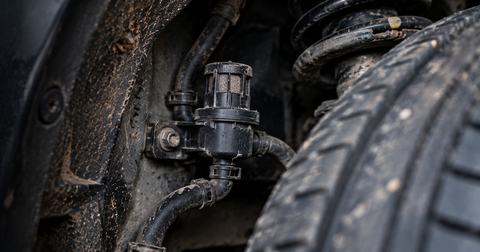
The purge valve, also called the purge solenoid, is an electric valve between the canister and the engine that the computer opens and closes. If it sticks shut, no vapor flows. If it sticks open, vapor flows all the time, including when the engine is idling or restarting, which is the fill-up stall above.
2. The purge hose or line
The hose or tube that carries vapor from the canister to the valve and on to the intake can kink, split or come off. The valve then works perfectly and the flow still doesn't arrive, and a bent hose looks fine from the valve end. Chrysler has bulletins for exactly this, covered below.

A purge line off its fitting
3. The canister and its filter
The canister is the box of charcoal that holds the vapor, and fresh air has to get into it for vapor to flow out. Dust or water that blocks its filter or fresh-air side can starve the flow, and a damaged canister can fail the test too.
It's also the most expensive part here, so ask for a test before you buy one. GM, in a pickup bulletin for leak and vent codes, tells its technicians not to replace the canister unless it fails the leak test or has taken in dirt, dust or water.
4. Wiring and sensor signals
The computer judges the flow from sensor readings, so a garbled signal can set the code while vapor flows normally and the valve is fine. That's a measurement fault rather than a part failure, and you can't fix it by buying a valve. On one Honda SUV, radio interference in a wiring harness did exactly that.
5. Engine software
On some cars the computer's own logic was the problem, and the fix is a reprogram at the dealer. Kia and Chrysler have released software fixes that list this code. Ask the dealer to check your VIN, the 17-character vehicle identification number, before a part is ordered.
How do you fix a P0441 code?
Start with the cheap checks, and let a flow test, not a guess, choose the part. Go in this order, and the first two steps cost little or nothing:
- Read and save every code. Write down P0441 and anything beside it, because P0455, P0456, P0446, P0443 or P04F1 each narrows where to look.
- Run the VIN. A dealer checks bulletins, software updates and recalls by VIN, and our free VIN checker lists the recall campaigns for your car's model year. Honda's valve and wiring fixes and Kia's update are dealer jobs.
- Look along the purge line you can reach. A kinked, split or disconnected hose near the valve and the intake can be seen with the hood open. Ask the shop to trace the rest back to the canister.
- Ask for a purge valve test. A shop can command the valve open and shut with a scan tool and check that it holds vacuum when shut and flows when open.
- Replace only what the test found. Clear the code after the repair and drive normally until the monitor, the car's EVAP self-check, reads ready again.
A look along the line can't catch a valve that sticks only sometimes, which is why step 4 matters. Ask for that test's result on the invoice.
What to say to the shop
“I have P0441 and these other codes stored: [codes]. Before you replace a purge valve or a canister, can you check my VIN for bulletins, software updates and recalls, run a purge valve test with a scan tool, and tell me which test result points at the part you recommend?”
A good answer: a purge valve test comes first, and the canister only if a test shows it's blocked or damaged.
How much does it cost to fix a P0441 code?
It can cost nothing, so run the VIN before you pay. Ford's program replaces the purge valve free on a 2012–2018 Focus still within 15 years of its warranty start, and a software or wiring fix from a bulletin may be free under the car's warranty.
When you pay, the purge valve is the usual job. It runs $110–$173, part plus booked labor, the carmaker's listed job time, at an independent shop on a 2018 Acura MDX, and $100–$160 on a 2019 Honda Pilot.
The valve and the canister together are the most expensive job, $261–$545 on a 2014 Focus 5-door, parts and labor. A hose, a connector or a software flash is a shorter job in the bulletins, and a diagnosis fee, set by each shop, may be waived if you approve the repair.
A shop's labor guide can run longer than the carmaker's half hour for a valve. At the counter, ask: "Which test result points at this part, and how many hours are you quoting?"
Why does my Acura or Honda show P0441?
Honda's own bulletins point at a purge valve that sticks, because its spring wears unevenly, and the fix is a new valve. On a 2018 Acura MDX, that job costs $110–$173, part plus booked labor, and the normal warranty may still cover it.
Honda is still studying newer cars and has asked dealers to send parts back before any repair, without naming a fix yet. On one CR-V range the same code came from radio interference in a wiring harness, so have the VIN run before a part is ordered.
Why does my Chrysler, Dodge or Jeep show P0441?
Often it's software or a purge line rather than the valve itself. Chrysler has filed computer flashes that list this code, along with fixes for a kinked purge line, a tube pushed into the wrong place in its elbow and a hose left unconnected.
Those are short dealer jobs, so have the VIN checked first. If your car needs the valve after all, the part alone is $31–$129 at a shop on a 2020 Chrysler 300 3.6L. That's part only, so ask the shop to add its labor to the quote.
Why does P0441 keep coming back?
Usually because the part that was replaced wasn't the fault. A valve that sticks only sometimes can look fine, and a hose, wiring or software fault comes back however many valves go in.
Federal complaints show how that goes. A 2015 RAV4 had four parts replaced and the problem came back, a 2012 Beetle owner spent "over $700.00" at a dealer on three parts with no change, and a 2015 Journey's code kept returning over seven visits.
If it comes back after a part, ask for the purge valve test again before buying another. Ask which result pointed at the part already replaced, and have the VIN run if nobody has.
Will a P0441 code fail an emissions test?
It can, in states that read the car's computer, and clearing it first doesn't help. With the check engine light on, the car fails there.
On California's 2010 and newer cars, the car keeps a permanent code until its own check passes. That code fails the test even after clearing.
Clearing also resets the evaporative monitor, the computer's EVAP self-check, to "not ready". Depending on the state and the car's model year, a test may reject that.
Only driving sets the monitor back to ready, because the check runs by itself when its conditions are met. Ask the shop how much driving your car needs after the repair before you go back for the test.
Which codes come with P0441?
Leak codes are often stored beside it, so you may see two at once. Each pairing points somewhere different, so read every code stored beside P0441 before anything is replaced:
- P0455 or P0456 with P0441. Two findings, a leak and a flow fault. The P0455 and P0456 pages cover the leak.
- P0446 with P0441. A vent valve fault as well, and the P0446 page covers it.
- P0443 with P0441. The valve's electrical circuit, not just its flow, so see P0443.
- P04F1 with P0441. Seen on Honda and Acura models, and Honda's wiring fix covers both codes on one SUV.
Write them all down before anyone clears the codes. A clear erases the stored codes a shop needs to read, though a permanent copy can stay behind.
From the documents
What do the rule and the carmakers say about P0441?
Ford makes two fixes free on the 2012–2018 Focus: program 24N07 replaces the purge valve once, for 15 years with unlimited miles, and recall 26V-369 reprograms the engine computer, though its letter doesn't name P0441. Other documents tie the code to a sticking Honda valve, a wiring harness and the California rule that defines the fault, and one of these fixes needs no EVAP part at all.
Recall NHTSA 26V-369
may not have been installed correctly during a prior dealership visit
Program 24N07
no-cost, one-time replacement (if needed) for the canister purge valve (CPV) for 15 years of service (unlimited miles)
Bulletin 23-091
Due to variations in the purge control solenoid valve spring, the valve wears unevenly and intermittently sticks.
Regulation 13 CCR 1968.2
No purge flow from the evaporative system to the engine can be detected by the OBD II system
Bulletin 21-081
External radio waves cause fluctuation of sensor outputs within the harness leading to a miscalculation setting a DTC.
- Bulletins naming P0441. As of October 2026, 163 bulletins since 2010 name the code. P0456 sits beside it in 75 and P0455 in 36. One is for a Toyota-group car, a 2009 Scion tC.
- Federal complaints. Owners of 2010–2025 models filed 28 complaints naming P0441: Stellantis 8, Hyundai and Kia 6, Honda and Acura 6, Toyota group 4, Ford 2 and Volkswagen 2. None mentions a fuel smell.
- Acura valve. Acura 23-035 covers the 2018–2020 and 2022–2024 MDX, not the Type S, the 2018 RDX and the 2018–2020 TLX, at 0.6 hours.
- Honda's newer cars. A May 12, 2026 request asks dealers to send back parts from 2024–2026 MDXs with P0441 stored before any repair, and names no fix. The same request covers the 2024–2026 Odyssey and Ridgeline and the 2024–2025 Passport.
- Ford Focus. Recall 18V-735 covers a 2012–2018 Focus 2.0L valve stuck open that can deform the plastic fuel tank. Program 24N07 books 0.6 hours for the valve, and 0.8 on the 4-door or 1.1 on the 5-door with the canister. Recall 25E05 fits a free valve and software to the 2015–2018 Focus 1.0L, and its letter names no code.
- Chrysler software. Chrysler 18-040-25 on 2019 Dodge models and 18-035-25 on 2019 Jeeps are computer flashes that list P0441, at 0.3 hours.
- Chrysler lines and hoses. Chrysler 25-003-20 covers a kinked line on the 2020 300, Challenger and Charger 3.6L, and 18-061-22 a purge tube in its elbow on the 2021–2022 Grand Cherokee WL 5.7L, both 0.2 or 0.3 hours. Chrysler 18-035-20 covers a hose left unconnected on the 2020 Durango and Grand Cherokee 3.6L. Chrysler 25-002-15, a split hose on 2015 Jeeps and Durangos, was written for P0455 and P0456.
- Canister. Chrysler 25-009-24 offers a dual filter kit for 2010–2025 Ram 1500 trucks in continuous dust.
- Connector. Chrysler STAR S2008000112 on the 2019–2020 Wrangler has technicians inspect connector XY465A, with "no parts required".
- Software. Kia TSB-ENG164 is an ECU upgrade titled a P0441 logic improvement on the 2012–2016 Soul and Rio. Volvo 37666.1.0 on the XC40 mild hybrid says not to begin by replacing parts. Audi TSB_2077640_2 on the RS 3 2.5L is titled for incorrect purge flow, and Mazda SA-059-25 on the 2024–2026 CX-90 and CX-70 is listed for P0441.
- Gas cap. Mazda 01-002/18 on 2003–2015 models says "it can be stored when evaporative emissions are leaking from the fuel filler cap". A 2012 Wrangler owner with P0441 and P0445 had two faulty aftermarket caps before a Mopar cap fixed it (10692609, 10692884).
Conclusion
What to do next about a P0441 code
Read every code stored beside it, run the VIN, and look along the purge line before you pay for a part. Stop driving if it stalls or won't restart, the idle is rough or races, or the fuel gauge reads oddly.
Then ask for a purge valve test, and replace only what it finds. Oil & Miles checks these causes against the regulation and the carmakers' own bulletins.
Other OBD-II EVAP codes and what each one means
Common questions
Asked most often
Will a P0441 code clear itself?
The lamp can go out after several drives in which the check runs and finds normal flow. A code that clears and comes back can mean a valve that sticks only sometimes.
How much does it cost to fix P0441 on a Toyota?
On a 2014 Camry, the canister part costs several times what the purge valve part does, before labor, so have the valve and the lines tested before you buy either. Toyota sits behind three other carmaker groups in a small sample of federal complaints.
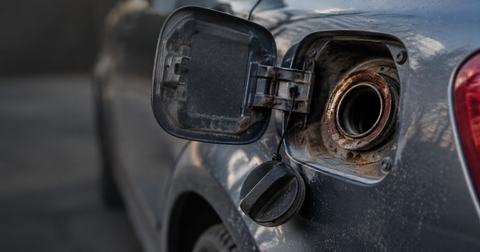
Can a loose gas cap cause a P0441 code?
On some cars it can, because Mazda says P0441 can be stored when the cap wasn't closed properly after refueling. Close it properly, but don't buy a new cap before you check the purge line and valve.
What people ask next
Sources
- California Code of Regulations, Title 13, section 1968.2: (e)(4.1) for what the system must verify, (e)(4.2.2)(A) for the purge flow condition this code carries. California Air Resources Board, read September 21, 2026
- NHTSA's technical service bulletin index, for the 163 bulletins since 2010 naming P0441, the codes beside them and the single Toyota-group bulletin. NHTSA, read October 4, 2026
- Honda Service Bulletin 23-091, December 15, 2023, the sticking purge control solenoid valve, its 0.5 hours and the normal warranty. American Honda, read October 2, 2026
- Acura Service Bulletin 23-035, December 15, 2023, the same valve on Acura models and its 0.6 hours. American Honda, read October 2, 2026
- Honda Service Bulletin 21-081, October 26, 2021, 2017–2022 CR-V, the harness sub cord and its 0.4 and 0.5 hours. American Honda, read October 2, 2026
- Chrysler 25-003-20, November 14, 2020, the kinked purge line and its hours. FCA US, read October 2, 2026
- Chrysler 18-061-22, March 29, 2022, the purge tube in its elbow and its hours. FCA US, read October 2, 2026
- Chrysler 25-002-15, September 23, 2015, the split purge valve hose. FCA US, read October 2, 2026
- Chrysler 25-009-24, December 5, 2024, the dual canister filter kit for dusty driving. FCA US, read October 2, 2026
- Chrysler STAR S2008000112, July 31, 2020, 2019–2020 Jeep Wrangler, the connector fix with no parts. FCA US, read October 2, 2026
- GM 15-06-04-002, April 2015, when not to replace the canister. General Motors, read October 2, 2026
- Ford Part 573 recall report 18V-735, October 30, 2018, 2012–2018 Focus, purge valve vacuum deforming the fuel tank, and Ford program 24N07, December 4, 2024, for the one-time purge valve replacement for 15 years and the rough running and stalling at low speed. Ford via NHTSA, read October 2, 2026
- Ford recall announcement for 18V-735, 2012–2018 Focus, for the fluctuating fuel gauge and the stall or no-restart risk. Ford via NHTSA, read October 1, 2026
- Ford owner notice for recall 26V369, July 2026, 2012–2018 Focus, for the 18S32 software that may not have been installed. Ford via NHTSA, read October 1, 2026
- Mazda 01-002/18, for a fuel cap that wasn't closed properly. Mazda North American Operations, filed with NHTSA, read November 1, 2026
- California Bureau of Automotive Repair, OBD test reference, for how the light and permanent codes fail a test. California BAR, read November 1, 2026
- Acura's parts request of May 12, 2026, Chrysler 18-040-25, 18-035-25 and 18-035-20, and Ford 25E05, for the newer Honda cars, the Chrysler flashes and the unconnected hose, and the 1.0L Focus recall. Filed with NHTSA, read November 1, 2026
- Volvo technical journal 37666.1.0, February 24, 2026, XC40 mild hybrid, for the instruction not to begin by replacing parts and the software remedy. Volvo Car USA, read September 21, 2026
- Audi bulletin TSB_2077640_2, December 9, 2025, RS 3 with the 2.5 liter five-cylinder, titled for incorrect purge flow. Volkswagen Group of America, read September 21, 2026
- Mazda bulletin SA-059-25, December 17, 2025, 2024–2026 CX-90 and CX-70, listed for P0441 in the archive index. Mazda North American Operations, read October 3, 2026
- Kia bulletin TSB-ENG164, February 16, 2017, for the ECU upgrade titled a P0441 logic improvement on the 2012–2016 Soul and Rio, issued as service action SA280. Kia America, read September 21, 2026
- NHTSA's consumer complaint database, 2010–2025 model years, for the 28 complaints naming this code, what owners replaced and the figures they reported. NHTSA consumer complaints received through September 30, 2026
- PartsTech's September 2025 survey of about 700 US independent shops, as reported by Ratchet+Wrench (August 19, 2026), for the $100 to $139 an hour that nearly half of them charge. Ratchet+Wrench, read October 17, 2026
- RockAuto catalog, every known brand it lists for a 2019 Honda Pilot, 2018 Acura MDX, 2020 Chrysler 300, 2014 Ford Focus and 2014 Toyota Camry, for the part prices. RockAuto, read November 1, 2026
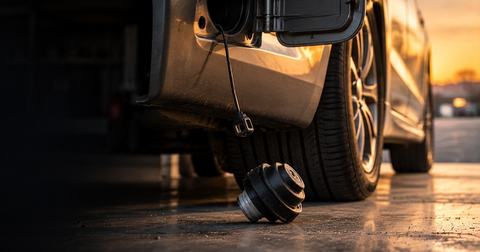
AI illustration by Oil & Miles
How this was compiled
Labor is a carmaker's booked time times $100–$139 an hour, the independent-shop rate used across this site. Parts are RockAuto's known-brand listings for each car plus the shop markup, and the valve and canister job adds each part's own shop figure.
The bulletin count leaves out 12 near-identical Volkswagen VIN batch notices, because one maker's batch filings would skew it. The complaint count covers every form owners write the code and groups makes by the company that builds the car.
What we didn't do
We didn't read a Toyota document that names a part for P0441, so we don't name a Toyota cause. We found no carmaker time for a Camry's valve or canister, so the Toyota figures are parts only.
We didn't open a car. Everything above is the regulation, carmakers' filings, the federal complaint record and a parts catalog.
Prices are ranges compiled in November 2026 for the US market and vary by region, engine and shop rate. Prices from $10 up are rounded to the nearest dollar. Below $10 they're exact. Owners' figures are what they told NHTSA, not prices we checked. This article is general information, not advice about your specific vehicle. See the disclaimer.