
Key takeaways
- Safety: If the check engine light flashes, ease off the throttle and pull over where it's safe.
- A 7E8 is a message identifier on the car's diagnostic network, not a trouble code.
- A scan tool shows 7E8 to say which module answered, not to report a problem.
- The real code is a separate one, so look past 7E8 for it.
- Go by the module name your scan tool shows, not the number.
Seeing 7E8 on a scan tool or an app doesn't mean something is broken. It's an address on the car's diagnostic network, and a trouble code is a separate item, such as P0456.
What does 7E8 mean on a scanner?
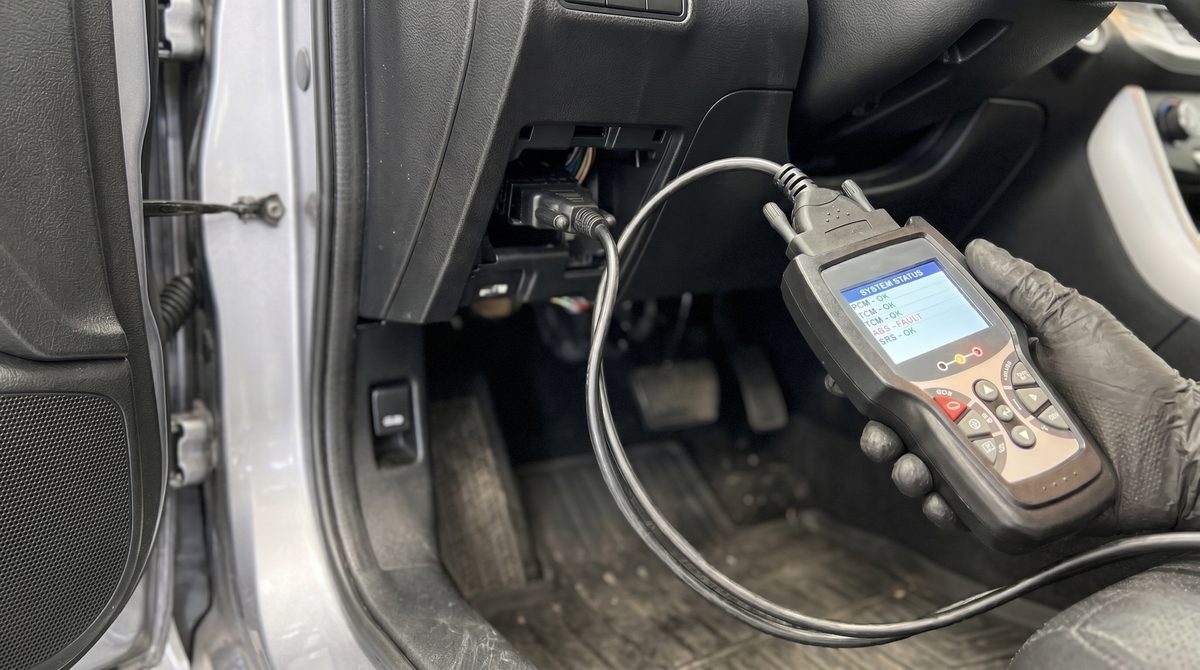
On a scan tool, 7E8 is the label on the reply the first control module sends back when the tool asks a question. It's part of how cars on a CAN network, the wiring the modules use to talk to each other, answer a scan tool.
A scan tool lists 7E8 to show which module answered, not because that module reported a problem. The identifier names the module and nothing more.
Is it safe to drive with 7E8 showing?
A 7E8 alone isn't a fault, so it doesn't decide whether the car is safe to drive. The real code and the symptoms do. A steady check engine light with the car running normally isn't an emergency, but have the code read soon.
A flashing light or a loss of drive is a different case. If the check engine light flashes, ease off the throttle and pull over where it's safe. If it flashes again after the engine has rested, drive slowly and gently to the nearest shop. If the car loses drive or stalls while moving, steer to a safe spot, stop and call for help.
Is 7E8 a trouble code?
No. A bare 7E8 is an identifier, not a P-code, and a scan tool that lists it is only naming the module that replied. A code that starts with P is a different thing.
If the check engine light is on, the cause is a separate code stored in a module, such as P0300 or P0171. The identifier needs no repair, so the work starts at that code.
What do 7E8, 7E9 and 7EA mean?
They're the reply addresses of the first, second and third modules that answer a scan tool, out of up to eight emissions-related modules. The scan tool asks the first module on 7E0 and it answers on 7E8, the second answers on 7E9, the third on 7EA, and so on up to 7EF. A tool can also send one question to all of them at once on 7DF.
| Module | Tool asks on | Module answers on |
|---|---|---|
| First | 7E0 | 7E8 |
| Second | 7E1 | 7E9 |
| Third | 7E2 | 7EA |
| Fourth | 7E3 | 7EB |
| Fifth | 7E4 | 7EC |
| Sixth | 7E5 | 7ED |
| Seventh | 7E6 | 7EE |
| Eighth | 7E7 | 7EF |
The recommended slot is 7E8 for the engine control module and 7E9 for the transmission control module, but carmakers don't have to follow it. The module name your scan tool shows is the one to go by on your car.
How do you fix a 7E8 code?
There's nothing to fix on 7E8 itself, so the work starts at the real code, in this order:
- Open the module's code list. The real code sits under the module that answered, as a code such as P0300 or P0171.
- Note the module name. Go by the name your scan tool shows, not the 7E8 number, because carmakers don't have to follow the recommended slots.
- Fix what the code points to. Each code has its own causes, so look up that code in the check engine light codes, not 7E8.
A shop reads the same list with its own scan tool. The module name beside each code shows which module answered.
From the standard
What does the OBD-II standard say about 7E8?
The 7E8 label comes from ISO 15765-4, the standard for OBD-II diagnostics on CAN. It pairs each request identifier, 7E0 to 7E7, with a reply identifier, 7E8 to 7EF.
Standard ISO 15765-4:2005, Table 3
…7E8 Physical response CAN identifier from ECU #1 to external test equipment.
Standard ISO 15765-4:2005, p.18
…7E0/7E8 for ECM (engine control module) … 7E1/7E9 for TCM (transmission control module).
Conclusion
What to do next about a 7E8 code
Once the real code is fixed, the 7E8 line can stay on the scan tool, because it only names the module that answered. If you aren't sure which module is which, go by the module name your scan tool shows.
Oil & Miles checks each step here against the ISO diagnostic standard.
Common questions
Asked most often
What does the 7E8 engine code mean?
A 7E8 isn't a trouble code. It's the response identifier from the first module to your scan tool, and the real code is a separate one.
What does 7E9 mean?
The 7E9 identifier is the response identifier from the second module, and it's the recommended slot for the transmission control module. Your scan tool's module name is the one to go by on your car.
How do I fix a 7E8 engine code?
There's nothing to fix on 7E8 itself, because it's an identifier and not a fault. Find the real code and fix what that code points to.
Is it safe to drive with 7E8 showing?
A 7E8 alone doesn't decide it, because the real code and the symptoms do. A steady light with the car running normally isn't an emergency, but have the code read soon.
What people ask next
Sources
- ISO 15765-4:2005 Road vehicles, diagnostics on CAN, part 4 (US), Table 3 and section 6.3.2.2, PDF page 18, for the identifiers and the recommended assignments. ISO, read November 10, 2026
The standard is the 2005 edition.
AI illustration by Oil & Miles
This article is general information, not advice about your specific vehicle. See the disclaimer.