
Key takeaways
- Safety: Switch the engine off before you open or tighten the fuel cap, and keep sparks and flames away from the filler.
- A loose or missing cap lets the car detect a fuel vapor leak, and the message shows.
- Tighten the cap until it clicks, and the message goes off after some driving or a button press, depending on the carmaker.
- A car with no cap says Check Fuel Fill Inlet, so check the valve for debris and use the pump nozzle or the funnel.
- If the check engine light stays on but doesn't flash, have the car checked as soon as you can.
The message means the car's fuel vapor system detected a leak, and a loose or missing cap is the first thing to check. Carmakers name it differently, from Check Fuel Cap to Tighten Gas Cap to Loose Fuel Cap, and Ford cars with no cap at all show Check Fuel Fill Inlet instead.
Can you keep driving with the Check Fuel Cap message?
Yes, once the cap is tight. The check engine light that a loose cap can set also turns off after a few driving trips. For example, on the 2018 Rogue and Altima a steady check engine light doesn't need a tow.
That holds unless one of these applies:
- A raw fuel smell or dripping fuel. If you smell raw fuel or see fuel dripping, shut the engine off and don't drive the car.
- A flashing check engine light. If the check engine light flashes, ease off the throttle and pull over where it's safe. If it flashes again after the engine has rested, drive slowly and gently to the nearest shop.
If the check engine light stays on but doesn't flash, have the car checked as soon as you can. Hyundai says a cap that is on securely keeps fuel from spilling in a crash, so check the cap is secure after you fill up.
What does the Check Fuel Cap message mean?
A loose or missing fuel cap lets the car detect a leak in its fuel vapor system, which keeps fuel fumes from escaping the tank. The car then shows a message on the display, and a loose cap alone can also turn on the check engine light.
Each carmaker names it differently, and each name points at the cap or the inlet:
- Check Fuel Cap. The cap may be loose, unfastened or not installed. Honda shows it on the 2016 CR-V.
- Tighten Gas Cap. The cap wasn't tightened properly, and the message can come with the check engine light. GM shows it on the 2014 Chevrolet Silverado.
- Loose Fuel Cap. The cap is loose or missing. Nissan shows it on the 2018 Rogue.
- gASCAP. The cluster shows it in the odometer display when the system finds a problem with the cap. Jeep shows it on the 2018 Wrangler JL.
- Check Fuel Fill Inlet. The car has no cap and the fuel fill inlet may not be closed properly. Ford shows it on the 2020 Escape.
What do you do when the message comes on?
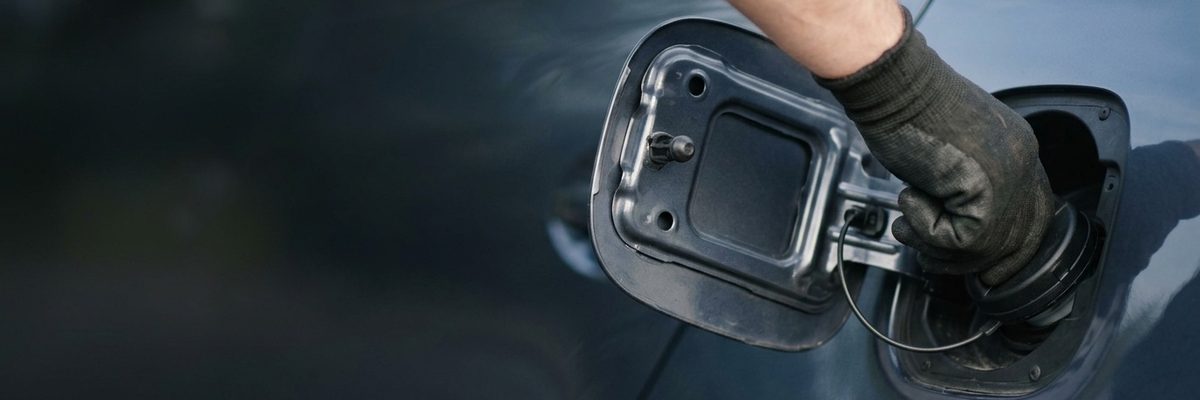
Switch the engine off before you open or tighten the fuel cap, and keep sparks and flames away from the filler. Then work through the cap in this order:
- Check the cap is installed. The message comes on when the cap is loose or not installed.
- Loosen it, then tighten it until it clicks. The click is the sign the cap is seated.
- Drive as usual, unless you smell raw fuel or the check engine light flashes. How the message goes off depends on the carmaker.
- If the message stays, try once more. On a 2019 Toyota RAV4, wait a few seconds and then turn the engine switch off once again.
The number of clicks depends on the car, so follow your owner's manual for the exact number. A 2016 Honda CR-V needs at least one click, and other cars also say to turn the cap until you hear a click.

The fuel cap and the filler
How long does the message take to go away?
The timing depends on the carmaker, and the message goes off either with some driving or with a button press. The check engine light that a loose cap set turns off after a few driving trips, and a Toyota takes several.
For example, on a 2018 Nissan Rogue you press the OK button on the steering wheel for about one second after the cap clicks. The message comes back at the next start if the leak is still found.
The light turns off after a few driving trips (a few separate drives), as on a 2014 Chevrolet Silverado. If it stays on after those trips, have the vehicle inspected.
My car has no gas cap: what does Check Fuel Fill Inlet mean?
A car with a capless filler has no cap to tighten, so a message about the fuel fill inlet means the inlet may not be closed properly. Ford shows it as Check Fuel Fill Inlet, and on a 2020 Escape the steps are:
- Stop as soon as it's safe and switch the engine off. Park the car and set the parking brake.
- Open the fuel door and check the valve for debris. Clear anything that sits in the inlet.
- Insert a pump nozzle or the funnel provided, then remove it. This seats the inlet valve.
- Close the fuel door. Then drive as usual.
The message may not clear straight away. If it keeps showing and a warning lamp comes on, have the car checked as soon as you can.

A capless fuel inlet
Why is the message still on after you tightened the cap?
The cap is the first suspect, but it's not the only one. These are the reasons the message or the light stays on:
- The cap isn't the right one for the car. Fit the cap made for your car. On 2025 Hyundai models, the wrong cap can cause a serious fuel or emission system fault.
- A leak somewhere else in the system. The car checks the whole fuel vapor system for a leak, not only the cap, so a leak at a hose or the tank can keep the message coming back.
- The message hasn't been turned off. Some cars need a button press after the cap clicks, and others turn it off with driving. For example, a 2018 Nissan Rogue uses the OK button on the steering wheel.
A shop that reads the stored code, the fault number the car saves, finds a leak code such as these:
- P0442. A small leak, on many cars at least as big as a 0.040-inch hole.
- P0455. A large leak, the size a cap left loose can make.
- P0456. A very small leak, about the width of a pencil lead.
A leak code names a size class, not the part that leaks. That's why the cap is the first place to look, and why a code that stays after the cap is tight points at a leak elsewhere in the system.
Why is the check engine light on with the message?
The check engine light comes on if the car keeps detecting the leak. On a 2018 Wrangler JL it comes on when the problem is found twice in a row.
A steady check engine light means the leak is still being detected. It should turn off after a few driving trips, and if it doesn't, have the vehicle inspected. A blinking lamp means a misfire, as on a 2016 Honda CR-V.
A loose cap can also affect an emissions inspection. On a 2019 Toyota RAV4 the lamp it sets may fail the inspection, and the stored code, the fault the car has saved, isn't cleared until the car has been driven 40 or more times.
From the carmakers
What the carmaker manuals say about the message
Each of these is a carmaker's own owner's manual for the US market, and it covers only the car and model year it names. Honda and GM are 2016 books, Nissan 2018, Toyota 2019 and Ford 2020.
Owner's manual 2016 CR-V, Check Fuel Cap message
The message should go off after several days of normal driving.
Owner's manual 2019 RAV4, Check Fuel Cap message
Turn the engine switch off, check the cap and tighten it securely.
Owner's manual 2014 Silverado and 2016 Terrain, Tighten Gas Cap message
A few driving trips with the cap properly installed should turn the light off.
Owner's manual 2018 Rogue, Loose Fuel Cap warning message
Press the OK button on the steering wheel for about one second to turn off the Loose Fuel Cap warning message.
Owner's manual 2020 Escape, Check Fuel Fill Inlet message
The fuel fill inlet may not be properly closed.
Owner's manual 2018 Wrangler JL, gASCAP message
Tighten the gas cap until a clicking sound is heard.
Conclusion
What to do next about the Check Fuel Cap message
Tighten the cap until it clicks and drive as usual, and the message goes off on the carmaker's own timing. If the check engine light stays on but doesn't flash, have the car checked as soon as you can.
Oil & Miles checks the carmaker wording here against the owner's manuals.
Common questions
Asked most often
How long until the message goes away?
The message goes off after several days of normal driving on a 2016 Honda CR-V. Some cars need a button press after the cap clicks.
Can I reset the message myself?
On a Honda the message goes off by itself, and on a 2018 Nissan Rogue you press the OK button. On a Jeep Wrangler JL the odometer reset button turns it off, and it comes back at the next start if the leak is still found.
Is it safe to drive with the message on?
Yes, once the cap is tight, unless you smell raw fuel or the check engine light flashes. On the 2018 Rogue and Altima, a steady check engine light doesn't need a tow.
On a capless Ford, what does the fuel fill inlet message mean and what do I check?
The car has no cap, and the fuel fill inlet may not be closed properly. On a 2020 Ford Escape, check the valve for debris and insert a pump nozzle or the funnel provided.
What people ask next

Sources
- Honda CR-V 2016 owner's manual, PDF pages 97 and 511, for the Check Fuel Cap message, the cap steps and the several days. Honda, read November 11, 2026
- Toyota RAV4 2019 owner's manual (year inferred from the PDF date, US and Canada edition) and Toyota Avalon 2019 owner's manual, for the Check Fuel Cap steps and the 40 drives. Toyota, read November 11, 2026
- Chevrolet Silverado 2014 and GMC Terrain 2016 owner manuals, for the Tighten Gas Cap message and the few driving trips. GM, read November 11, 2026
- Nissan Rogue 2018 owner's manual, for the Loose Fuel Cap warning, the OK button and the few driving trips. Nissan, read November 11, 2026
- Ford Escape 2020 owner's manual, PDF pages 128 and 188, for the Check Fuel Fill Inlet message and its steps. Ford, read November 11, 2026
- Jeep Wrangler JL 2018 owner's manual, PDF page 362, for the gASCAP message. Jeep, read November 11, 2026
- Hyundai Sonata Hybrid 2012 owner's manual, for the cap fitting and the wrong-cap warning. Hyundai, read November 11, 2026
AI illustration by Oil & Miles
This article is general information, not advice about your specific vehicle. See the disclaimer.