
Key takeaways
- Safety: When you jump-start the car, keep sparks, flames and cigarettes away from the battery, because the gas it gives off can explode.
- The last black clamp goes on a solid, unpainted metal part away from the battery, not on the dead battery's negative post.
- Keep the clamps from touching each other and keep the two cars from touching.
- Where you connect and how long the donor runs depend on your car, so use the jump points your owner's manual names.
- After the car starts, keep it running for a while, because the battery has to recharge.
A jump-start moves enough charge from a good battery to a dead one to crank the engine. The steps are short, but a spark in the wrong place can set off the gas the battery gives off.
Is it safe to jump-start a car?
When you jump-start the car, keep sparks, flames and cigarettes away from the battery, because the gas it gives off can explode. Follow these as well before you connect a cable:
- Don't lean over the battery while you connect the cables.
- Wear eye protection when you work on or near the battery.
- Keep your hands, clothing and tools away from the cooling fan and other moving parts: the electric fan can start even when the engine is off.
- Don't try to jump-start a frozen battery, because it can burst or explode. Don't jump-start a battery with a low electrolyte level either, as on the 2014 Kia Sorento.
- If battery acid gets on your skin or in your eyes, flush it with water right away for at least 15 minutes and get medical help.
Your owner's manual has the jump points and its own warnings for your car. Read that page before you connect anything.
What do you need to jump-start a car?
You need a donor car with a 12-volt system and jumper cables of adequate size with insulated clamps. A 24-volt supply can damage a 12-volt starter, ignition and electrical parts beyond repair, as on the 2014 Kia Sorento.
Some cars sound the alarm and lock the doors when the cables go on, such as the 2018 Toyota Camry. Check your manual before you start.
A portable jump pack can stand in for the donor car. Follow the pack maker's instructions and use only a 12-volt source, as on the 2020 Ford Escape.
Where are the jump points on my car?
The jump points are the places to clamp onto, and on some cars they aren't on the battery itself. Use the points your manual names:
- Open the cover over the positive terminal before you clamp. Some cars hide it under a cover, as on the 2022 Chevrolet Equinox.
- If the battery is under a seat or in the trunk, use the remote jump points. They sit under the hood, as on the 2011 Jeep Grand Cherokee.
- On a hybrid, jump it through the car's 12-volt jump terminal, as on the 2010 Toyota Prius, where it sits under the fuse block cover.
Look in your own manual before you clamp onto anything under the hood. A clamp on the wrong part can start a spark where you don't want it.
How do you connect the jumper cables?
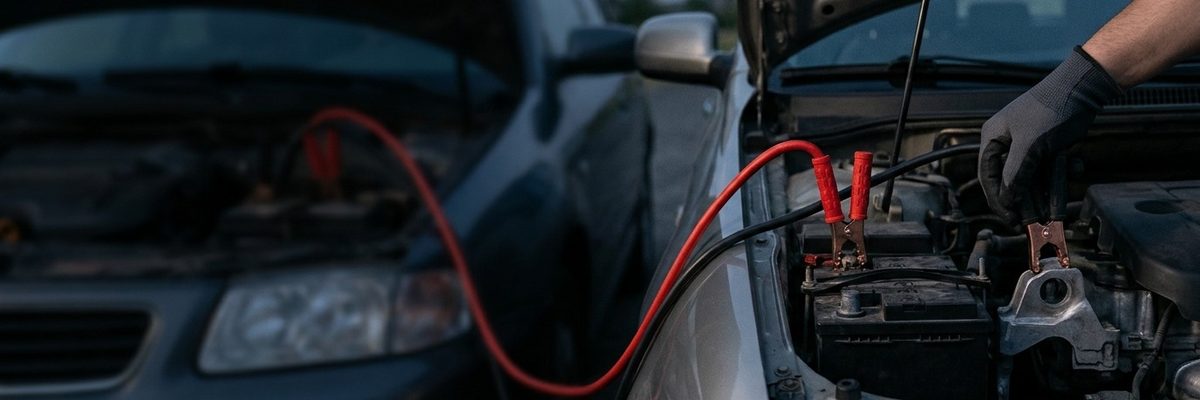
The cables run from the donor battery to the dead car's battery, and the last clamp goes on bare metal away from the battery. That way the spark from the final connection happens away from the battery, not on its post. Follow these steps in order:
- Park the cars close, but not touching, and turn both cars off. Touching can make a ground connection you don't want.
- Put a red clamp on the dead battery's positive (+) terminal. The posts are marked positive (+) and negative (-) on the battery or its case, and the positive post can sit under a protective cap or cover, so lift it first. Keep the clamps of one cable from touching the other cable's clamps or any other metal.
- Put the other red clamp on the donor battery's positive (+) terminal, then a black clamp on its negative (-) terminal. Keep the clamps from touching each other.
- Put the last black clamp on bare, unpainted metal of the dead car, away from the battery. It never goes on the dead battery's negative post.
- Start the donor car and let it run a few minutes. That gives the dead battery a little charge before you crank.
- Start the dead car, then leave both cars running a few more minutes. Don't crank for long at a time. If it doesn't start, turn the ignition off and wait a few seconds before you try again.
- Remove the clamps in the exact reverse order. Take the last black clamp off the metal first, then the black clamp off the donor, the red clamp off the donor and the red clamp off the dead car, keeping the clamps apart.
Your manual's order and times win over this list, and it shows the exact metal point in an illustration. Look for that one and don't guess, because a clamp on the wrong part can start a spark where you don't want it.
Good spots are a solid, unpainted metal bracket or bolt on the engine, away from the battery and moving parts. A clamp on the dead battery's negative post can make the battery overheat and crack, as on the 2012 Hyundai Sonata Hybrid.

The last clamp on bare metal
How do you start the car and take the cables off?
The donor car runs first so the dead battery takes a charge before you try to crank it. How long and how fast it runs depends on the maker, so your manual sets both.
Let the donor run about 4 to 5 minutes before you crank, at idle or slightly above, unless your manual gives another time. Leave the dead car's own battery connected, because disconnecting it could damage the electrical system, as on the 2020 Ford Escape.
What should you do after the car starts?
A jump-start only starts the car, and the battery still has to recharge, so keep the engine running for a while. How long to drive depends on the car, and on the 2022 Hyundai Elantra the figure is at least 30 minutes of driving or 60 minutes of idling, or the car can fail to start again.
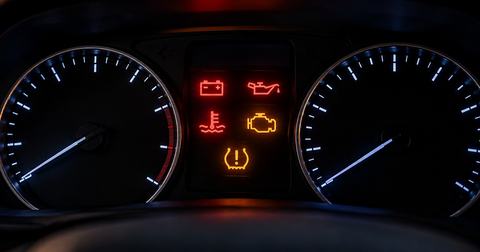
If the charging warning light stays on after the jump, stop the car in a safe place and contact your dealer, as on the 2019 Toyota 4Runner. Then have the battery and the charging system checked soon. If the car won't hold a charge afterward, read about why a battery keeps dying and about telling a bad alternator from a bad battery.
What if the car still won't start?
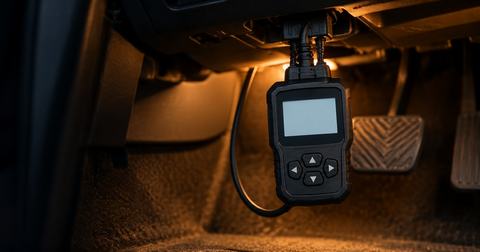
If the engine cranks but won't start, or won't crank at all, the battery may not be the problem. If the jump doesn't start the car, call a technician or a towing service instead of trying again and again. If the battery isn't the cause, see why a car won't start.
Don't push-start or tow-start an automatic to get it going, because it can damage the car. With a manual transmission, check your owner's manual first.
From the carmakers
What do the carmakers say about jump-starting?
None of these cards is a recall, and each one covers only the car it names. Your manual has the steps for your car.
Owner's manual Toyota Camry 2018
…a solid, stationary, unpainted metallic point away from the battery and any moving parts, as shown in the illustration.
Owner's manual Ford Escape 2020
Do not disconnect the battery of the disabled vehicle as this could damage the vehicle electrical system.
Owner's manual Chevrolet Equinox 2022
Always connect and remove the jumper cables in the correct order, making sure that the cables do not touch each other or other metal.
Owner's manual Honda Civic 2016
Connect the other end of the second jumper cable to the engine mounting bolt as shown.
Owner's manual Hyundai Sonata Hybrid 2012
Do not connect the jumper cable from the negative terminal of the booster battery to the negative terminal of the discharged battery.
Owner's manual Nissan Altima 2017
Do not keep the starter motor engaged for more than 10 seconds.
Conclusion
What to do next after a jump-start
If the car started, keep it running and have the battery and the charging system checked soon. If it won't start, stop cranking and call a technician or a tow rather than pushing it.
Oil & Miles checks each statement here against the carmakers' owner's manuals.
Common questions
Asked most often
Can I push-start a car instead?
Not an automatic: pushing or pulling one can damage it, as on the 2022 Chevrolet Equinox. With a manual transmission, check your owner's manual.
How long should I drive after a jump-start?
There isn't one figure for every car, so your manual and a battery test decide. The 2022 Hyundai Elantra needs at least 30 minutes of driving or 60 minutes of idling.
Can I jump-start a hybrid?
Yes, through the 12-volt jump points your manual names. They sit in different places, from under the hood to the trunk.
Can you jump-start a frozen battery?
No. A frozen battery can burst or explode, so don't try to jump-start it.
What people ask next
Sources
- Toyota Camry 2018 owner's manual, Jump starting, for the last clamp, the donor run time, the removal order and the inspection. Toyota, read November 12, 2026
- Ford Escape 2020 owner's manual, Jump starting, for the exposed engine metal, the run times, the battery of the dead car and the jump pack note. Ford, read November 12, 2026
- Chevrolet Equinox 2022 owner's manual, Jump starting, for the correct order, the trim cover and the idle time. Chevrolet, read November 12, 2026
- Honda Civic 2016 owner's manual, Jump starting, for the engine mounting bolt and the clamps. Honda, read November 12, 2026
- Hyundai Sonata Hybrid 2012, Elantra 2022 and Santa Fe 2019 and Kia Sorento 2014 owner's manuals, Jump starting, for the negative-to-negative warning, the 24-volt warning, the prep steps, the frozen battery and the drive time. Hyundai, read November 12, 2026
- Nissan Altima 2017 owner's manual, Jump starting, for the polarity, the crank limit, the removal order and the frozen battery. Nissan, read November 12, 2026
- Jeep Grand Cherokee 2011 and Dodge Journey 2010 owner's manuals, for the remote jump points. Jeep and Dodge, read November 12, 2026
- Toyota Prius 2010 owner's manual, for the jump terminal and no push-starting. Toyota, read November 12, 2026
- Chrysler 200 2015, Chevrolet Malibu 2010 and Ford Escape 2010 owner's manuals, for keeping the two cars apart, the frozen battery and the jump pack note. Chrysler, Chevrolet and Ford, read November 12, 2026
- Ram 2500 2018 diesel owner's manual, for keeping the clamps apart and not leaning over the battery. Ram, read November 12, 2026
- Kelley Blue Book, How to Jump-Start a Car in 6 Steps, for the 20 minutes of driving. Kelley Blue Book, read November 12, 2026
- Chrysler Pacifica 2017, Toyota Camry 2007 and Honda Accord 2008 owner's manuals, for leaning over the battery and eye protection, and for the frozen battery on the Pacifica and Accord. Chrysler, Toyota and Honda, read November 12, 2026
- Ford Escape 2020 and Ford F-150 2018 owner's manuals, for flushing battery acid for at least 15 minutes. Ford, read November 12, 2026
- Jeep Cherokee 2014, Ram 1500 2014, Toyota 4Runner 2019 and Dodge Grand Caravan 2016 owner's manuals, for the frozen battery, the charging light and no push or tow start. Chrysler and Toyota, read November 12, 2026
AI illustration by Oil & Miles
This article is general information, not advice about your specific vehicle. See the disclaimer.