
A P0301 code, a cylinder 1 misfire, is an OBD-II trouble code, and the usual answer is spark plugs and coils. Owners name the plug in their federal complaints more than any other part.
For one group of cars the record tells a different story: coolant getting into the cylinder on Ford's 1.5-liter and 2.0-liter EcoBoost. So on a Ford or Lincoln, read the coolant level before you buy a plug.
What does a P0301 code mean?
The engine computer counted too many misfires in cylinder 1, and the code's full name is cylinder 1 misfire detected. It counts misfires against the firings it expected, and too many in one cylinder sets the code.
Misfire in cylinder 1
Cylinder 1 Misfire Detected
What the computer saw
The engine computer counted enough misfires in cylinder 1 to raise emissions or, at worse levels, damage the catalytic converter.
- Code
- P0301
- System
- Powertrain
- Area
- Ignition system or misfire
- Standard
- Generic OBD-II
- Checks
- Whether cylinder 1 misfires enough to raise emissions or harm the converter
What it doesn't prove
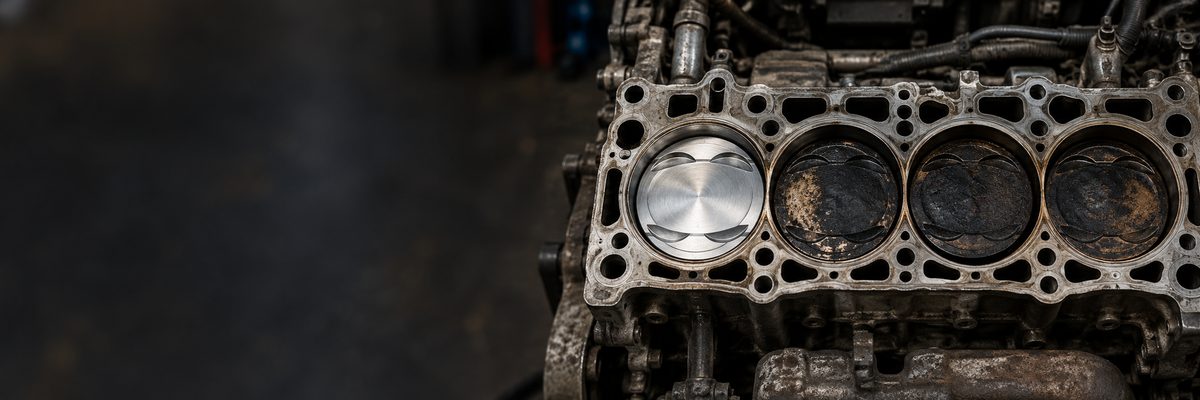
It doesn't prove a plug, coil or injector is bad. It says only that cylinder 1 is misfiring, and the fault can be inside the cylinder.
Code name from GM bulletin 19-NA-219.
The last digit is the cylinder, so P0302 is cylinder 2, and PO301 or P301 are the same code written wrongly. Which cylinder is number 1 depends on the engine's maker, and on a V engine it isn't reliably the one at the front, so look it up before pulling anything.
Can you drive with a P0301 code?
Not far, and not at all if any of these is happening. A steady light is a reason to book a shop soon, but these are reasons to stop:
- The light is flashing. It's the OBD-II rule's signal that the misfire is heavy enough to damage the catalytic converter, which the flashing light page covers.
- The coolant level keeps falling, or white smoke comes from the exhaust. On the engines in the coolant cause below, coolant getting into the cylinder is a written cause, and an engine losing coolant is losing what keeps it from overheating.
- The engine loses power or stalls, you smell burning or it overheats. Get off the road as soon as you safely can and have it towed.
A misfire that's only an inconvenience today can be a converter tomorrow. The converter costs more than the misfire.
What are the symptoms of a P0301 code?
A check engine light, steady or flashing, with lost power, shaking, stalling or a rough idle. Owners who reported P0301 to federal regulators name lost power most.
On a 1.5L or 2.0L EcoBoost Ford, white smoke and a falling coolant level belong on that list, the signs of coolant in the cylinder below. Here's what each of the others tells you:
- Lost power or hesitation. Cylinder 1 has stopped pulling its share. Our page on jerking when accelerating covers the other causes of that feel.
- Shaking or vibration. The engine turns unevenly because one cylinder isn't firing.
- Stalling or a rough idle. The miss is strong enough to show at a standstill, or to stop the engine.
- A flashing check engine light. The OBD-II rule's signal that the misfire could damage the catalytic converter, and driving with P0301 covers what to do.
What causes a cylinder 1 misfire?
Usually something that feeds that one cylinder: its spark plug, its coil or its injector. Past those is the cylinder itself, and carmakers have written that part down for specific engines.
Test before you buy, because the code names a cylinder, not a part. Each cause comes with its clue, the test that names it and what not to buy yet.
| Cause and its clue | The test that names it | What not to buy yet |
|---|---|---|
| Spark plug Due by the owner's manual, or worn or fouled when it comes out. | Check the plug's age and look at it. | A second new plug, if the last one fouled again: that points past the plug. |
| Ignition coil One coil per cylinder, and only cylinder 1 misfires. | With the engine off and cool, swap cylinder 1's coil with another cylinder's, clear the code and take a gentle drive, but only with a steady light and no coolant loss or overheating. | The coil, unless the misfire follows it. |
| Fuel injector The misfire stays in cylinder 1 after the coil and plug are cleared. | A shop test of the injector. | The injector, before the coil and plug are cleared. |
| Coolant in the cylinder The coolant level drops with no puddle, on a 1.5-liter or 2.0-liter Ford EcoBoost. | A cooling system pressure test. | Plugs and coils on those engines, before the coolant is checked. |
| Piston rings A new plug fouls again soon after it's fitted, on the Hondas Honda's bulletins name. | A compression test. | Another plug, when the last one fouled again. |
Spark plug
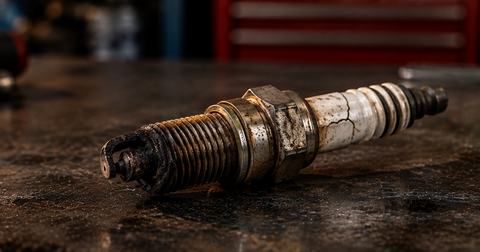
A worn or fouled plug can't make the spark that lights the fuel. It's the part owners name most in their federal complaints.
Plugs wear on a schedule printed in the owner's manual, so check when yours were last changed. A plug that fouls again soon after it's replaced points past the plug, to the cases further down.
Ignition coil
Many engines have one coil per cylinder, sitting on top of the plug and turning the battery's voltage into a spark. When it fails, only its own cylinder misfires, which is exactly what P0301 reports.
It's also the easiest part to test for free. Move it to another cylinder, as in the steps below, and see whether the misfire follows it.
Fuel injector
A clogged or failed injector leaves the cylinder too short of fuel to fire. No fuel, no fire, however good the plug and coil are.
A shop can test it once the coil and plug are cleared. On direct-injection engines, which spray inside the cylinder, the part costs more.
On some recent Honda Pilot, Ridgeline and Odyssey models a failing injector is a known cause, and Honda's extended warranty may cover it. The who-pays section below says how to check.
Coolant in the cylinder
Coolant that gets into a cylinder won't burn, so the cylinder misfires, and the level drops with no puddle under the car. Ford calls it coolant intrusion and has written it up for its 1.5-liter and 2.0-liter EcoBoost engines.
The signs Ford lists are low coolant, white exhaust smoke and a rough-running engine, beside the misfire codes. The test to ask for is a cooling system pressure test, then the plugs out to look for coolant, or a look with a borescope, a camera on a thin probe.
The fix is a new short block, the bottom half of the engine, or a long block, which comes with the cylinder head fitted. Ford's program for the 1.5-liter has ended for nearly every car, as the who-pays section explains.
Piston rings
Piston rings seal the cylinder, and if they let oil past, the oil fouls the plug, so a new plug fouls again soon after it's fitted. Honda's older bulletin says the rings on certain cylinders can rotate and line up, and its newer ones blame worn rings stuck by sludge. Both set P0301 through P0304 on some Honda V6s.
Honda extended the powertrain warranty for it on some older and some newer V6 models. So ask a Honda dealer to check the VIN before any engine work.
A separate Honda program covers the head gasket on many recent Civic, CR-V and Accord models, which can show P0300 through P0304. The P0300 page lists who it covers.

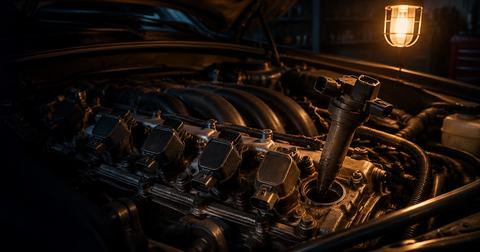
Cylinder 1's coil lifted out
How do you fix a P0301 code?
Rule out the free causes first. To fix a P0301 code, start by reading every code, and the first three steps cost nothing:
- Read every code, not just this one. P0301 alone points at cylinder 1. Beside P0316 (a misfire right after startup), P0217 (an overheating engine), P1285 or P1299 (Ford's cylinder head overheat codes) on a Ford, it's the pattern Ford's coolant bulletins list.
- Check the coolant level cold. If the reservoir keeps dropping with no leak underneath, ask the shop for a cooling system pressure test, then the plugs out to look for coolant.
- Move the coil. With the engine off and cool, swap cylinder 1's coil with another cylinder's, clear the code and take a gentle drive, but only with a steady light and no coolant loss or overheating. If the misfire follows the coil, it's the coil. If it stays, it's the plug, the injector or the cylinder.
- Check the plug's age and look at it. Change it if it's due by your owner's manual. A plug that comes out wet or fouls again points at coolant or rings.
- Ask whether a bulletin or program covers the car. Give the VIN, because a software update is the commonest bulletin fix for this code.
What to say to the shop
When a quote names a part before any test has run, ask:
- Can you check my VIN for bulletins, software updates and extensions first?
- Can you run a cooling system pressure test or a compression test before quoting an engine?
- Which test result points at the part you recommend?
“I have P0301 and these other codes stored: [codes]. Before you replace a coil, an injector or the engine, can you check my VIN for bulletins and programs, run a cooling system pressure test or a compression test, and tell me which test result points at the part you recommend?”
A good answer: the coil swap result, the coolant level and a pressure test before anyone quotes an engine.
The coil swap can't help on an engine with one coil for several cylinders, so there the plug and the injector come first. If the code returns after a new plug and coil, ask for an injector and wiring test, then a compression or leak-down test, so the shop can name the cause.

Use this image
Free to republish under CC BY 4.0: credit Oil & Miles and link to this page. The snippet does both.
<a href="https://oilandmiles.com/articles/p0301-code"><img src="https://oilandmiles.com/assets/img/diagrams/p0301-code-engine-bench.svg" alt="The front of a small SUV with the hood off and its four-cylinder engine underneath, with the cylinder 1 parts this page names in color and numbered to match its sections: 1 the spark plug, 2 the coil module's cylinder 1 tower, 3 the fuel injector, 4 the head gasket at cylinder 1, 5 the piston rings." width="1200" height="935"></a> <p>Diagram: <a href="https://oilandmiles.com/articles/p0301-code">Oil & Miles</a>, CC BY 4.0</p>What if P0301 comes back after new plugs and coils?
Then look past the plug and coil, to the injector, the wiring and the cylinder itself, and that's measured rather than swapped. When a P0301 code comes back after new plugs and coils, three findings tell you where to look:
- Coolant on the plug. On the Ford engines in the coolant cause above, a plug that comes out wet with coolant is exactly what Ford's dealer test ends by looking for.
- The new plug fouls again. On the Honda models in the piston ring cause above, that's the piston ring pattern Honda's bulletins describe.
- Anything else is shop work. A test of the injector and its wiring comes first, then a compression test, and that's where your own checks end and a shop's measurements begin.
How much does it cost to fix a P0301 code?
A coil, a plug or an injector is small money as a part, and the labor to reach it decides the bill. A coil, part only, runs $30–$174 from an online catalog, on three cars. The free checks in the fix steps come first, because they tell you which part, if any, to pay for.
Coolant in the cylinder or worn rings is engine work on another scale, with a new short or long block as Ford's fix. Give a dealer the VIN before you pay for that, since the who-pays section shows what the carmakers cover.
Will a P0301 code go away on its own?
The light can go out, but if cylinder 1 still misfires it will come back. For misfire, California's OBD II rule lets the light go out after three trips in a row under similar driving conditions without misfire over the limit.
The stored code lasts longer, and the computer erases it only after many fault-free drives. Clearing P0301 with a scan tool removes the record, not the cause, and the full rule is on our P0300 page.
Which codes come with P0301?
A second code beside P0301 tells you whether cylinder 1 is the whole story. Carmakers' bulletins list these codes with it, and each one moves the search somewhere specific.
| Code beside it | What the pairing tells you |
|---|---|
| P0300 or another cylinder's code | More than one cylinder may be missing. The P0300 page covers the causes that reach several at once |
| P0316, P0217, P1285, P1299 | Ford and Lincoln bulletins list P0316 with it, and on a 1.5L or 2.0L EcoBoost these four are the set Ford's coolant bulletins name. See coolant in the cylinder |
| P0172 | On some CR-Vs and Accord 2.0Ls, Honda's fix is an oil change and a software update, with a new A/C control unit on some CR-Vs, not a plug or coil |
| P0201, P0204 | Two injector circuit codes: on some Mazda CX-5, Mazda3 and Mazda6 models, Mazda replaces the engine computer. See fuel injector |
| P0351 | A coil circuit code: on some GM 3.6L V6s, GM warns the damaged coil may not sit in the cylinder causing it. See ignition coil |
If P0301 is the only code, cylinder 1 is the place to start. A second code changes the order of the checks, so bring the full list to the shop.
Is P0301 more common on some engines?
Any engine can set it, but the federal record leans heavily on two makers: Ford with Lincoln, and Honda. What sets the Ford filings apart is what's written beside the code, because most mention coolant. A complaint is a form an owner chose to fill in, so a make with fewer filings isn't proof of a better engine.
Who pays for a P0301 repair?
Ask a Honda dealer to check your VIN before you pay. Honda covers injectors on some Pilots, Ridgelines and Odysseys and ring repairs on some Pilots and Odysseys, and its own bulletins give the years.
Run the car through our free VIN checker first, which lists the recall campaigns for its model year. Then ask the dealer about bulletins and extensions, which a recall list doesn't show.
Is a coolant intrusion repair still covered?
Only on the 1.5-liter, and only if it's young enough, so it's worth one call. Ford's program paid for a one-time short block repair and passes to later owners, but it has ended for nearly every car.
The in-service date and the mileage decide it, and a Ford dealer can look both up from the VIN, the 17-character vehicle ID. For the 2.0-liter the bulletins are repair instructions, so whether Ford pays depends on the car's own warranty.

Use this image
Free to republish under CC BY 4.0: credit Oil & Miles and link to this page. The snippet does both.
<a href="https://oilandmiles.com/articles/p0301-code"><img src="https://oilandmiles.com/assets/img/diagrams/p0301-code-checklist.jpg" alt="P0301 code checklist: read every code, check the coolant level cold, swap the cylinder 1 coil, check the plug's age. Stop if the light flashes or the coolant keeps falling. Ask for Ford's pressure test, a compression test and a bulletin check by VIN before an engine quote." width="1200" height="1424"></a> <p>Infographic: <a href="https://oilandmiles.com/articles/p0301-code">Oil & Miles</a>, CC BY 4.0</p>From the carmakers
What do the makers' own bulletins say?
Ford names coolant intrusion and Honda names the piston rings, both with the cylinder misfire codes. Ford has issued six bulletin numbers for the 1.5-liter alone since 2019, and Honda issued its ring bulletin across four model lines.
Warranty extension NHTSA 10189942 and 10189943
Injectors covered, free only if the dealer finds the codes relate to the injectors or, on some earlier models, the engine software.
Customer satisfaction program 21N12
This program provides a no-cost, one-time repair (if needed) to the 1.5L short block, due to coolant intrusion to the cylinder bores
Bulletin 22-2322
May exhibit low coolant level, white exhaust smoke and/or runs rough condition with or without an illuminated malfunction indicator light (MIL) with only diagnostic trouble codes (DTCs) P0300, P0301-P0304, P0316, P0217, P1285 and/or P1299 stored in powertrain control module (PCM). This may be due to coolant intrusion into the cylinder.Ford Motor Company, August 12, 2022
Special service message SSM 47204
This may be due to coolant intrusion due to corrosion on the engine block. To diagnose this concern, with the engine at normal operating temperature, pressurize the cooling system to 138 kPa (20 psi) and hold for 5 hours.Ford Motor Company, March 30, 2018
Warranty extension 13-081
The piston rings on certain cylinders may rotate and align which can lead to spark plug fouling. This can set DTCs P0301 through P0304 and cause the MIL to come on.American Honda Motor Co., April 25, 2017
- Parts owners name. Of the 355 complaints naming P0301, 106 name the plug, 70 the coil and 47 the injector, and 60 name lost power.
- Ford and Lincoln. Of the 154 filings, 129 mention coolant, and P1285 and P1299 appear beside P0301 24 times each.
- Hyundai and Kia. Together they have 50 filings and nothing points one way, with plugs in 11 and coils in 12.
- Honda. Of the 87 complaints, 23 mention piston rings. The June 2025 dealer message and bulletin 25-060 extended that coverage to newer models, and since February 1, 2026 bulletins 26-001 and 26-002 carry it, 10 years from purchase or 150,000 miles. The August 26, 2026 message covers the head gasket.
- Toyota. Toyotas account for 6 of the complaints. Bulletin T-SB-0116-15 books about 1.5 hours for the intake manifold on 2010–2015 Prius models.
- Bulletin index. Of the 411 bulletins naming P0301, 183 are software updates, against coolant in 46, plugs in 44, injectors in 23 and coils in 21, read October 4, 2026, leaving out 13 Volkswagen VIN batch notices.
- Codes beside it in bulletins. Another cylinder's code in 397, the Ford coolant set in 47, P0172 in 31, P0201 or P0204 in 5 and P0351 in 2.
- Codes beside it in complaints. Of the 355 owners who named P0301, 161 also named P0300 or a code for cylinders 2 to 6, and 16 named P0172, 9 of them with a Honda CR-V. Ford's coolant codes came up 48 times, all of them on a Ford or Lincoln.
- Years in those bulletins. Honda's P0172 fix covers 2017–2018 CR-Vs and 2018–2022 Accord 2.0Ls, Mazda's covers the 2013–2016 CX-5 and 2014–2016 Mazda3 and Mazda6, and GM's coil warning the 2008 and 2009 3.6L V6.
- Clearing the code. The rule lets the computer erase a stored code after at least 40 warm-up cycles without the fault, each a drive that warms the coolant by at least 40°F to at least 160°F.
Conclusion
What to do next about a P0301 code
Check the coolant level cold before you buy a plug, stop if the light flashes or the coolant keeps falling, and swap the coil to see whether the misfire follows it. Give a dealer the VIN before any big repair, because Honda's ring and head gasket extensions cover some of these engines.
Oil & Miles checks each step here against the carmakers' own bulletins, the owner's manuals and NHTSA's complaint file.
Other OBD-II misfire codes and what each one means
Common questions
Asked most often
What is the most common cause of a P0301 code?
A spark plug or an ignition coil, the parts owners name most in their federal complaints. On Fords the record points elsewhere, because most Ford and Lincoln filings mention coolant.
What does P0316 with P0301 mean?
On a Ford Escape, Edge or Fusion with the 1.5L or 2.0L EcoBoost, it's a pairing Ford's bulletins list for coolant getting into the cylinder. In the federal complaints, it shows up only on Fords and Lincolns.
Will Ford pay for a P0301 coolant repair?
Almost certainly not anymore: program 21N12, which paid for a one-time short block repair on a 2017–2019 Escape or Fusion 1.5L for 7 years or 84,000 miles from the warranty start, has ended for almost every car, as has its companion computer update, program 19B37. A Ford dealer can still check a car first sold late in 2019 from the VIN.
Is P0301 the same as P0300?
No: P0300 means random or multiple-cylinder misfires, while P0301 names cylinder 1. They can arrive together, and many filings name both.
Can you fix a P0301 code yourself?
Partly: reading every code, checking the coolant level cold and swapping the coil cost nothing, and you can check the plug's age yourself. The injector test, the cooling system pressure test and a compression test are shop work.
Is P0301 serious on a Toyota?
It can be on a Prius: Toyota ties a misfire under light acceleration to the exhaust gas recirculation system and replaces the intake manifold. On other Toyotas start with the plug, coil and injector.
What people ask next
Sources
- Honda bulletins 26-097, 26-098 and 26-099, revised September 25, 2026, for the 2016–2017 Civic 1.5L turbo and 2017 CR-V 1.5L turbo term to May 31, 2027. Honda via NHTSA, read October 2, 2026
- Ford Technical Service Bulletin 22-2322, August 12, 2022, 1.5L EcoBoost in the 2014–2019 Fusion and 2017–2019 Escape, for the symptoms, the codes and the short block repair. Ford Motor Company, read September 22, 2026
- Ford Technical Service Bulletin 22-2229, June 10, 2022, 2.0L EcoBoost, for the models covered and the long block repair. Ford Motor Company, read September 22, 2026
- GM PIP5147A, for GM's coil swap. GM via NHTSA, read October 3, 2026
- Ford Special Service Message 47204, March 30, 2018, 2.0L EcoBoost, for the block corrosion cause and the pressure test. Ford Motor Company, read September 22, 2026
- Ford program 21N12, June 9, 2022, all 12 pages, for the coverage terms, the dates and the models. Ford Motor Company, read September 22, 2026
- Toyota Technical Service Bulletin T-SB-0116-15, November 19, 2015, revised August 11, 2016, 2010–2015 Prius, Prius Plug-in and Prius V, for the EGR misfire, the intake manifold fix and the 1.5 hour labor time. Toyota Motor Sales, USA, read September 22, 2026
- Honda Service Bulletins 13-078 to 13-082, for the piston ring condition, the four model lines and the 8 year extension, with Honda's June 17, 2025 dealer message and bulletin 25-060. American Honda Motor Co., read September 22, 2026
- Honda owner letters on the fuel injector warranty extension, March 2021 (NHTSA documents 10189942 and 10189943), for the models, the codes and the terms. Honda via NHTSA, read October 6, 2026
- Honda bulletins 18-114 and 23-026, Mazda bulletin 01-017-16, GM PIP5038B and GM bulletin 19-NA-219, for the codes carmakers list beside P0301 and each one's fix. Via NHTSA, read October 6, 2026
- Honda dealer message, August 26, 2026, with bulletins 26-003 to 26-019, for the head gasket extension. American Honda Motor Co., read September 22, 2026
- NHTSA's technical service bulletin index, for the 411 bulletin numbers naming P0301 and what they fix. NHTSA, read October 4, 2026
- 13 CCR 1968.2, subsection (e)(3), for how the misfire monitor counts misfires over 200 and 1,000 revolutions, and (d)(2.4) and (e)(3.4.6) for when the light goes out and the code is erased. California Air Resources Board, read September 25 and October 6, 2026
- Owner's manuals: 2012 Ford F-150 owner's guide page 13 (3rd printing, read in the Wayback Machine capture of May 13, 2015) and 2020 Chevrolet Silverado pages 135 and 136, for what to do when the light flashes. Ford and GM, read October 6, 2026
- NHTSA's consumer complaint database, for the 355 complaints, the makes and models, the codes filed beside P0301 and the owners' quotes. NHTSA consumer complaints received through September 30, 2026
- RockAuto catalog, 2017 Ford Escape 1.5L, 2017 Ford Edge 2.0L and 2013 Honda Odyssey 3.5L, for the part prices read, part only. RockAuto, read September 22, 2026
AI illustration by Oil & Miles
How this was compiled
The complaints cover model years 2010 to 2025, and a code is included in every form owners write it: P030100 with its fault byte, PO301 with a letter O, or run into the next word. What owners name comes from the words they wrote: coolant, spark plug, coil, injector, piston ring.
What we didn't do
We didn't price the repair for every car: the part prices read cover three models, part only. We didn't give Ford's labor time for the engine repair, because the bulletins' text is stored in a form we couldn't read reliably, and a number we can't check doesn't go on the page.
We didn't confirm coverage for any car, because program 21N12 depends on the build date, the in-service date and the mileage, and only Ford can check those from a VIN. We didn't open a car, and everything above is the manufacturers' own documents, the federal complaint record and a parts catalog.
Prices are ranges compiled in October 2026 for the US market: part prices are from a large online parts catalog. Prices from $10 up are rounded to the nearest dollar, so $14.13 reads as $14 and $14.52 as $15. Below $10 they're exact. This article is general information, not advice about your specific vehicle. See the disclaimer.