
Key takeaways
- Safety: Stop and have the car towed if the light flashes, it loses power, smells of burning, overheats or keeps losing coolant.
- Swap coil 2 with another cylinder's coil, and if the misfire moves with it, the coil is bad.
- A misfire that stays after new plugs and coils points inside cylinder 2, so ask for a leak test before more parts.
- Cylinder 2's position depends on how the carmaker numbered the engine, so have the shop point to it first.
- A dealer can check your VIN for coolant, ring or injector coverage before you pay for engine work.
Cylinder 2 keeps failing to fire, and your car's OBD-II computer has noticed: a P0302 code is its record of a cylinder 2 misfire detected. The fuel in that cylinder isn't burning, so the computer lit your check engine light, and the engine may be shaking at idle while it's at it.
The cheapest fix is a new spark plug. On Chrysler's 3.6L V6, though, a bulletin tests cylinders 2, 4 and 6 for leaks before it replaces the left cylinder head, so swap the coil first, then test the cylinder before you buy more parts.
What does P0302 mean?
P0302 means the engine computer counted too many misfires in cylinder 2, enough to raise emissions or overheat the catalytic converter, the part that cleans the exhaust. You may see it written as PO302, with a letter O, or P302, and a scan tool may print P030200. All of them are the same code.
Misfire in cylinder 2
Cylinder 2 Misfire Detected
What the computer saw
The engine computer counted enough misfires in cylinder 2 to raise emissions or harm the catalytic converter.
- Code
- P0302
- System
- Powertrain
- Area
- Ignition system or misfire
- Standard
- Generic OBD-II
- Checks
- Whether cylinder 2 misfires enough to raise emissions or harm the converter
What it doesn't prove
It doesn't prove a plug, coil or injector is bad. The code names a cylinder, not a part, and the fault can be inside the cylinder.
Code name from Toyota bulletin T-SB-0010-24.
The computer spots a misfire by timing the crankshaft, which slows for a moment when one cylinder fails to fire. How it decides between one cylinder's code and P0300, the random misfire code, is on our P0300 page, the guide to every misfire code. A P0302 on its own points at one cylinder. When P0300 sits beside it, the trouble may reach past cylinder 2.
Can you drive with a P0302 code?
Yes, gently and not for long, if the light is steady. If it flashes, the engine loses power, you smell burning or it overheats, get off the road as soon as you safely can and have it towed. If your coolant tank keeps going down, don't drive on, because an engine that loses coolant can overheat.
The owner's manuals agree on the flashing light: ease off, and if it keeps flashing, stop when it's safe and have the car towed. Honda's is the strictest, and it adds a 31 mph limit for the drive to the dealer if the light blinks again after a restart.
A flashing light means unburned fuel is reaching the catalytic converter, where it burns instead and heats the converter far past its normal temperature. A cheap coil, left alone, can turn into a converter, which is the expensive way to fix a cheap problem. Stalling is the other risk. If yours has stalled once, have it towed or checked before you drive it again.
What are the symptoms of a P0302 code?
Owners mention lost power and stalling most, and here's what each sign means:
- Lost power or hesitation. The engine feels flat because one cylinder has stopped pulling its weight.
- Stalling or shutting off. It's the sign that turns a misfire from a nuisance into a risk.
- Shaking or vibration. A rough idle is the shake you feel at a stop.
- Overheating or white smoke. They're the signs that coolant may be reaching the cylinder.
- A flashing check engine light. It's the sign of a misfire heavy enough to damage the converter.
None of these signs says which part failed, because a bad coil, plug or injector and a leaking cylinder all leave cylinder 2 misfiring the same way. The tests in the fix section sort them out.

Misfires counted in one cylinder
Where is cylinder 2?
The location of cylinder 2 depends on how the carmaker numbered that engine, so the answer is in its service information, not in a rule of thumb. On a V6, cylinder 2 can sit on the other side of the engine from cylinder 1.
Some V6 engines number the cylinders by alternating sides, so the odd numbers sit on one cylinder head and the even numbers on the other. Chrysler's 3.6L is laid out that way, and Honda's 3.5L isn't:
- Chrysler, Dodge and Jeep 3.6L V6. Cylinder 2 is on the left head with 4 and 6, the head Chrysler's bulletin tests and replaces. Chrysler's manuals call it the left front, so ask the shop to point to it rather than guess a side.
- Honda 3.5L V6 in the Pilot and Odyssey. Cylinder 2 is on the rear head with 1 and 3. Honda's ring bulletins send the technician to that head for P0301 to P0303.
On any other engine, ask the shop to show you coil 2 before anything gets unplugged. Why counting from the front of the car is only a guess is on the P0300 page.
How do you fix a P0302 code?
Test before you buy, and buy only what a test points at. To fix a P0302 code, work through the 7 steps below, in order. The free coil swap is step 4, and the section after the steps shows how to read it.
What are the steps to fix a P0302 code?
Each step rules out a cause before you pay for the next part, so keep to this order:
- Read every code and save the freeze frame. The freeze frame is the snapshot the computer saves when the code sets. A P0300 beside P0302, or a P0316 on a Ford, changes where the search goes.
- Check the coolant with the engine cold. A level that keeps dropping with no visible leak means stop driving and ask for a cooling system pressure test.
- Check the VIN. A dealer can tell you whether Chrysler's, Ford's or Honda's coverage ever applied to your car and whether it still does. Our free VIN checker shows recalls and complaints first.
- Swap coil 2 with another cylinder's. Do it with the engine off and cool. Clear the code and drive gently, only with a steady light and no coolant loss or overheating. If the misfire moves, replace that coil.
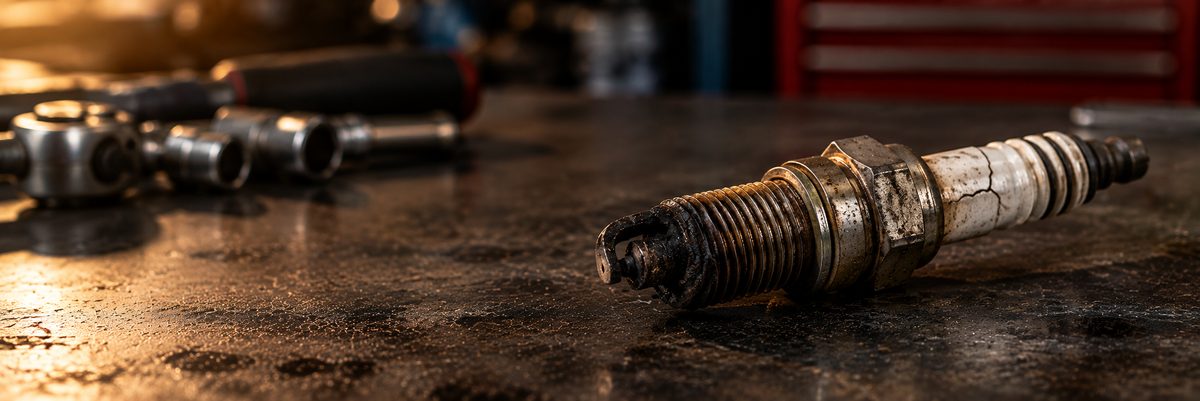
- Pull and read the cylinder 2 plug. Replace it if it's worn, and treat oil, coolant or a crack as a clue about what's below it.
- Have the injector tested. A balance test, or swapping injectors where that's practical, before a new one goes in.
- Then test the cylinder. A compression test and a leak test show whether a valve, the rings or the head gasket is at fault, and a carmaker bulletin, where your engine has one, sets the fix.
Steps 1–5 you can do yourself if you can reach the coils, with a code reader and basic hand tools. From the injector test on, it's shop work.
What to say to the shop
“I have P0302 and these other codes stored: [codes]. Before you replace a coil, an injector or the engine, can you check my VIN for bulletins and programs, run a compression test or a leak test on cylinder 2, and tell me which test result points at the part you recommend?”
A good answer: the coil swap result, the plug and the leak test come first.
How do you tell the coil from the cylinder?
Swap coil 2 with a coil from another cylinder, clear the code and drive. If the misfire moves with the coil, the coil is bad. If P0302 comes back, the coil is fine and the plug is next.
The swap costs nothing but a few minutes, and it saves you from buying parts the car doesn't need. If the misfire stays put, steps 5–7 above look inside cylinder 2.

Use this image
Free to republish under CC BY 4.0: credit Oil & Miles and link to this page. The snippet does both.
<a href="https://oilandmiles.com/articles/p0302-code"><img src="https://oilandmiles.com/assets/img/diagrams/p0302-coil-swap.svg" alt="P0302 code coil swap test: an inline four-cylinder engine with four coils standing in their plug wells, coil 2 highlighted and a two-way arrow swapping it with coil 4, one well cut away to show the coil boot reaching the spark plug." width="1600" height="900"></a> <p>Diagram: <a href="https://oilandmiles.com/articles/p0302-code">Oil & Miles</a>, CC BY 4.0</p>What causes a cylinder 2 misfire?
A misfire needs one of three things to go missing in cylinder 2: the spark, the fuel or the seal that holds the pressure in. The first three causes below are parts that feed cylinder 2. The rest are inside the engine, where a new plug or coil won't help.
P0302 alone confirms none of them, because it says only that cylinder 2 is misfiring. Each cause below comes with the test that finds it.
Spark plug
The plug makes the spark that lights the fuel. A worn plug needs more voltage than the coil can give, and a plug soaked in oil or coolant can't spark at all, so the cylinder stays dark.
Owners name spark plugs more than any other part. When you or the shop pull the old plug, look at it before it goes in the trash: wet, oily or cracked means the cause sits below it. On some Chrysler, Jeep and Ram V6s, the plugs were cracked from the factory.
Ignition coil
The coil turns the battery's 12 volts into the high voltage the plug needs. On a coil-on-plug engine, each plug has its own coil sitting right on top of it, so coil 2 serves cylinder 2 alone.
An insulating rubber boot covers the joint between coil and plug, and on one Chrysler four-cylinder the fix for P0302 is new boots, not new coils. The layout is also what makes the free coil swap work.
Fuel injector
The injector sprays a measured shot of fuel into cylinder 2, or just ahead of it. A clogged, leaking or dead injector leaves the cylinder too lean to fire, or floods it.
A shop can check it with a balance test, which compares cylinder 2's injector against the others. On some Pilots, Ridgelines and Odysseys, a failing injector is a known cause.
Worn valve or valve seat
Each cylinder has valves that open to let air in and exhaust out, then close against a ring of hard metal called the valve seat. When a valve guide or seat wears, the valve stops sealing, so the cylinder leaks pressure and can't fire properly however good the plug and coil are.
You can't see it from outside, but a leak test shows it: the shop pumps air into the cylinder and measures how fast it escapes. That's the test the carmakers' bulletins use, and why another coil won't fix this kind of P0302.
Chrysler documented this wear on its 3.6L V6, on the left cylinder head that carries cylinders 2, 4 and 6. Owners of later models describe valve trouble in cylinder 2 too, though Chrysler's program covered only the first years.

Where the valves sit
Coolant in the cylinder
Coolant is the fluid that carries heat out of the engine, and it can seep into a cylinder through a failing head gasket or a crack. The plug gets wet, your coolant tank keeps dropping with no puddle under the car, and a new plug won't cure it while the coolant keeps coming.
On Ford's 1.5L and 2.0L EcoBoost engines this is the documented cause, and our P0301 page explains how it happens and what Ford covers. If the coolant tank keeps dropping, stop driving, as the driving section explains.
Worn piston rings
Piston rings seal the gap between the piston and the cylinder wall and keep oil out of the fire. When they stick, oil reaches the plug and fouls it, so the misfire keeps coming back after every new plug.
Honda documents it on the 3.5L V6 in the Pilot and Odyssey. For P0302, its bulletin sends the technician to the rear cylinder head, the one with cylinders 1–3.
Cylinder deactivation hardware
Some engines switch off some cylinders on a light load to save fuel, using an oil valve that turns their rocker arms off. If that oil leaks away, or a rocker arm fails to latch, the cylinder stays switched off when it should be firing, and the computer counts a misfire.
GM documents this on its 3.0L and 3.6L V6, where cylinders 2 and 5 are the ones that switch off. Its bulletin tells technicians to rule out ignition and fuel first, then inspect the oil control valve for that cylinder, and an earlier GM bulletin replaced the valve the first time P0302 set.
Why does P0302 keep coming back after new plugs and coils?
Usually because the fault is inside cylinder 2, or in its injector, not in the plug or coil. A worn valve seat, sticking piston rings and coolant from a head gasket all keep the cylinder misfiring however good the plug and coil are.
That's when the leak test pays for itself, because it shows whether cylinder 2 holds pressure before anyone sells you another coil. One owner's plug, coil and injector were all replaced while the misfire went on.
How much does it cost to fix P0302?
Often little if it's the coil or the plug, and a lot more if cylinder 2 itself is leaking. A coil or a plug is the small end of the bill, and on a cylinder repair most of the money is labor.
On Chrysler's 3.6L V6, six new plugs run $330–$660 on a 2021 Jeep Grand Cherokee at an independent shop, parts and labor. The whole left head on a 2012 Grand Cherokee 3.6L, the head and the left gasket plus Chrysler's hours, runs $2,262–$2,982, before head bolts.
A leak test on cylinders 2, 4 and 6 comes first, about $100 – $139 for Chrysler's one hour of labor, because it shows whether the head is the problem. Chrysler's X56 program once paid for the head, and it has run out for every car.
A misfire left to run can also take out the catalytic converter. When coolant is getting in and no program pays, our page on head gasket replacement cost breaks down that bill.
Will a P0302 code go away on its own?
The light can go out, but if cylinder 2 still misfires it will come back. For misfire, California's OBD II rule lets the light go out after three trips in a row under similar driving conditions without misfire over the limit.
The stored code lasts longer, and clearing P0302 with a scan tool removes the record, not the cause. The full rule is on our P0300 page.
Which codes come with P0302?
A second code beside P0302 tells you whether cylinder 2 is the whole story. Carmakers' bulletins list these codes with it, and each one moves the search somewhere specific.
| Code beside it | What the pairing tells you |
|---|---|
| P0300 or another cylinder's code | More than one cylinder may be missing. The P0300 page covers the causes that reach several at once |
| P0316, P0217, P1285, P1299 | On a 1.5L or 2.0L EcoBoost these four are the set Ford's coolant bulletins name. See coolant in the cylinder |
| P0172 | On some CR-Vs and Accord 2.0Ls, Honda's fix is an oil change and a software update, with a new A/C control unit on some CR-Vs, not a plug or coil |
| P0202, P0203 | Two injector circuit codes: on some CX-5, Mazda3 and Mazda6 models, Mazda replaces the engine computer. See fuel injector |
| P0352 | A coil circuit code: on some GM 3.6L V6s, GM warns that the damaged coil may sit on a different cylinder from the misfire. See ignition coil |
If P0302 comes with Ford's coolant set on an EcoBoost, tell the shop before any part goes in. It can mean coolant is getting into the cylinders.
Two narrower causes
Two narrower causes have a document behind them, and you'll only meet each on one engine. Ford blames a restricted air pipe on the right turbo of its PowerBoost hybrid F-150, where P0302 comes with P0299.
Honda fixes a misfire on one Accord engine with an oil change and an engine software update. If you drive one, a dealer can tell you by VIN whether yours has had it.
Which cars get P0302 most?
P0302 complaints cluster on a handful of models: the Ford Escape, Edge and Fusion, the Dodge Grand Caravan and the Honda CR-V. Complaints show who wrote in, not how likely you are to see the code on your car.
If you drive an Escape, keep an eye on the coolant level, because Escapes file the most P0302 complaints and most Ford reports mention coolant. A falling level with no puddle is the clue.

Use this image
Free to republish under CC BY 4.0: credit Oil & Miles and link to this page. The snippet does both.
<a href="https://oilandmiles.com/articles/p0302-code"><img src="https://oilandmiles.com/assets/img/diagrams/p0302-code-checklist.jpg" alt="Checklist for a P0302 code: slow down if the light flashes, read every code, check the coolant and the VIN. Swap coil 2 with another cylinder and read the plug. Ask the shop for injector, compression and leak tests. Chrysler's program has run out, but Ford and Honda still cover some cars." width="1200" height="1712"></a> <p>Infographic: <a href="https://oilandmiles.com/articles/p0302-code">Oil & Miles</a>, CC BY 4.0</p>From the carmakers
Is a P0302 repair still covered?
Sometimes. Chrysler's left-head program has run out, while Ford's coolant program on the 1.5L and Honda's ring, head gasket and injector coverage can still apply to some cars. A dealer can check your car by its 17-character vehicle identification number.
- Chrysler, Dodge and Jeep 3.6L V6. Program X56 covered the left cylinder head for 10 years or 150,000 miles from the date the car was first put in service. That ran out for every car by about 2024.
- Ford Escape and Fusion 1.5L. Ford's program covers coolant reaching the cylinders for 7 years or 84,000 miles, so the last of these cars run out around 2026 or 2027. Our P0301 page sets out who's still inside it.
- Honda Pilot and Odyssey rings. Worn piston rings are covered for 10 years from purchase or 150,000 miles, so only the newest Odysseys can still be inside it, and a dealer can check by VIN.
- Honda Accord, Civic and CR-V. Honda covers the head gasket when a dealer finds coolant in a cylinder, with misfire codes P0300 to P0304. The P0304 page lists the model years.
- Honda Pilot, Ridgeline and Odyssey injectors. Honda covers the injectors to 10 years or 150,000 miles, free only if the dealer finds the codes relate to the injectors or, on some earlier models, the engine software. Honda also warns these owners that with the light on, a car
may fail a state or local emissions inspection
.
An expired program still helps, because its bulletin tells your shop which test to run, what the fix is and how many hours it takes. On a used car, ask the seller for proof the head or rings were already done.
Warranty extension 26-002
P0301, P0302, or P0303 Remove the rear cylinder head and inspect cylinder bores 1-3 for scratching or scoring using the cylinder head inspection tool.
Warranty extension NHTSA 10189942
Injectors covered, free only if the dealer finds the codes relate to the injectors or, on some earlier models, the engine software.
Warranty extension 26-097
Coolant leaking into a cylinder, covered to May 31, 2027, whatever the age or mileage.
Customer satisfaction program 21N12
This program provides a no-cost, one-time repair (if needed) to the 1.5L short block, due to coolant intrusion to the cylinder bores
Warranty bulletin D-14-12
The warranty extension coverage period is 10 years/ 150,000 miles (whichever occurs first) from the vehicles In-Service Date.
- Mentions in complaints. Of the 449 complaints naming P0302, owners mention spark plugs in 116, coils in 80, injectors in 46, 19 of them from Honda owners, and a compression or leak test in 13, as mentions and not confirmed causes.
- Signs in complaints. The signs are lost power or hesitation 92, stalling 82, shaking 61, overheating 49, a rough idle 31, white smoke 28 and a flashing light 29, and 62 complaints mention a tow.
- Other codes. Of those, 337 name no other cylinder's code, 112 name another cylinder's code, 87 name P0300, and P0172 comes up 12 times, 7 of them on a Honda CR-V.
- Codes in bulletins. NHTSA's index since 2010, Volkswagen VIN batch notices left out, lists P0300 or another cylinder's code with P0302 in 369 bulletins, Ford's coolant set in 26, P0172 in 29, P0202 or P0203 in 2 and P0352 in 1.
- By model. The five named most hold 241 complaints: the Ford Escape 99, Edge 66, Fusion 40, Dodge Grand Caravan 20 and Honda CR-V 16.
- By make. Fords and Lincolns file 226, with 192 mentioning coolant, against 154 on P0301, 151 on P0303 and 134 on P0304, Toyota owners file 9, and 63 of 70 on Chrysler, Dodge, Jeep and Ram name no other cylinder code.
- What owners report. One owner's plug, coil and injector were all replaced while the misfire went on, and another's technician found almost 85% leakage past cylinder 2's intake valve on a van that needed a new head.
- Repair hours. Chrysler allows 1.0 hour for the leak test on the 2011–2013 3.6L, with a 25% leakage limit, and 8.2–10.2 hours base for the left head, 8.7–10.6 on the Grand Cherokee (10.6 with 4x4 and air suspension), and Honda 8.9 for the rings in cylinders 1–3 on a 2013–2015 Pilot.
Conclusion
What to do next about a P0302 code
Swap coil 2 to another cylinder first, replace the coil if the misfire follows it, and leak-test cylinder 2 before you buy more parts. If the light flashes or the coolant tank keeps dropping, stop driving, and have a dealer check your VIN for Chrysler, Ford or Honda coverage before you pay.
Oil & Miles checks each step here against the carmakers' bulletins, the owner's manuals and owner complaints.
Other OBD-II misfire codes and what each one means
Common questions
Asked most often
What is the most common cause of a P0302 code?
Owners name the spark plug most in federal complaints, then the coil and the injector. On Ford's 1.5L and 2.0L EcoBoost engines, coolant reaching the cylinder is the documented cause.
Can a P0302 damage my engine?
It can damage the catalytic converter first, because unburned fuel from cylinder 2 burns inside it. If the cause is coolant in the cylinder, driving on can also overheat the engine.
Can a dirty air filter cause P0302?
The carmakers' P0302 documents don't name an air filter, and a clogged filter starves all the cylinders, not just one. Ford's PowerBoost bulletin does blame a restricted air pipe after the filter, on one side of one engine.
What people ask next
Sources
- Chrysler bulletin 09-002-14 Rev. B, with 09-013-20 on plugs for the 3.6L and 08-027-20 on coil boots for the 2.4L. FCA via NHTSA, read October 2, 2026
- Chrysler warranty bulletin D-14-12, program X56, with its owner letter. FCA via NHTSA, read October 2, 2026
- Ford bulletin 24-2257, with program 21N12 on the 1.5L, SSM 47204 on the 2.0L and SSM 50412 on the coil swap. Ford via NHTSA, read October 2, 2026
- Honda bulletins 26-001 and 26-002 on the 3.5L V6 piston rings, the head gasket coverage bulletins, and 23-026 on the 2018–2022 Accord 2.0L. Honda via NHTSA, read September 26, 2026
- GM bulletins 21-NA-036, PIP5486F and PIP5493B on the 3.0L and 3.6L V6 cylinders that switch off. GM via NHTSA, read October 2, 2026
- Nissan and Infiniti misfire bulletins, 2010–2025 models, screened for P0302. Nissan via NHTSA, read October 2, 2026
- GM misfire diagnostic bulletins PIP5628G, for the injector balance test and the compression-then-leak order, and PIP5062C, for the coil swap. GM via NHTSA, read September 26, 2026
- Owner's manuals: 2012 Ford F-150 owner's guide page 13 (3rd printing, read in the Wayback Machine capture of May 13, 2015) and 2020 Chevrolet Silverado pages 135 and 136, read October 6, 2026, and 2018 Honda Accord, read September 25, 2026, for what to do when the light flashes. Ford, GM and Honda
- Honda owner letters on the fuel injector warranty extension, March 2021 (NHTSA documents 10189942 and 10189943). Honda via NHTSA, read October 6, 2026
- 13 CCR 1968.2, California's OBD II rule, sections (d)(2.4) and (e)(3.4.6), for when the light goes out and the code is erased. California Air Resources Board, via Cornell's Legal Information Institute, read October 6, 2026
- NHTSA's consumer complaint database, every complaint naming the code, 2010–2025 model years. NHTSA consumer complaints received through September 30, 2026
- Parts and labor figures: FCA bulletin 09-013-20, for the six-plug time on the 2021 Jeep Grand Cherokee 3.6L, with catalog part prices. FCA via NHTSA, read November 2, 2026
- Toyota T-SB-0010-24 Rev2, for the code's name. Toyota via NHTSA, read October 31, 2026
- GM PIP6073, June 2025, for the coil swap time on the 2025 Silverado 1500, and Ford program 25H03, August 28, 2025, for the plug time on the 2024–2025 Escape. GM and Ford via NHTSA, read October 31, 2026
- RockAuto catalog, part only, for the spark plug, ignition coil and fuel injector prices on the 2019 Toyota Corolla 1.8L, 2019 Toyota Camry 2.5L and 2012 Jeep Grand Cherokee 3.6L, read October 2, 2026, and the 2018 Honda Accord 1.5L, 2012 Ford F-150 3.5L and 2017 Ford Escape 1.5L, read September 22 and 26, 2026. RockAuto
- PartsTech's September 2025 survey of about 700 US independent shops, as reported by Ratchet+Wrench (August 19, 2026), for the $100 to $139 an hour that nearly half of them charge. Ratchet+Wrench, read October 17, 2026
AI illustration by Oil & Miles
How this was compiled
The part prices in Sources are for six cars, the Escape among them, since it leads the complaints. The Accord, Corolla, Camry and Grand Cherokee are read in a model year with P0302 complaints.
A complaint that mentions a coil or coolant names a suspect, not a confirmed cause.
What we didn't do
- We didn't test an engine or read a code ourselves. The Camry's injector listings mix two kinds of injector, because its engine has both, and don't say which is which, so we left that price out rather than show a range that misleads.
- We found no document that places cylinder 2 on any engine except Chrysler's 3.6L and Honda's 3.5L, so we don't guess at others. We read no Hyundai or Kia bulletin naming P0302, Toyota's T-SB-0010-24 gives only the code's name, and the Nissan and Infiniti bulletins we screened list it only beside every other cylinder's code.
- We found no carmaker document naming a vacuum leak at cylinder 2 for this code, so it isn't listed as a cause. A shop may still check the intake for one when the plug, coil and injector all test good.
Prices are ranges compiled in October and November 2026 for the US market and vary by region, engine and shop rate. Prices from $10 up are rounded to the nearest dollar, so $14.13 reads as $14 and $14.52 as $15. Below $10 they're exact. This article is general information, not advice about your specific vehicle. See the disclaimer.