
Short answer
Check the oil first. When it ticks says the rest.
An engine ticking noise can be a normal injector sound, a lifter short of oil or an exhaust leak, and only some need fixing. Check your oil first, stop if the oil pressure light comes on, and get a tick with a misfire checked before you drive on.
What to do now
- Find what it follows: note whether it ticks only after a cold start, at a warm idle, or with a misfire. When it ticks
- Stop the engine if the oil pressure light comes on, because the manuals tell you to stop the car in a safe place. Is it safe?
- Start here: read the dipstick on level ground and top off to the mark with the oil grade in your manual. How to fix it
An engine ticking noise is a light, fast tapping you hear from under the hood. It can be a part doing its job, a part short of oil, or a small exhaust leak.
Several carmakers tell their dealers in writing that some ticks are normal and must not be repaired. GM's bulletin on its direct-injection V6s says it in capital letters, which is about as loud as a service bulletin gets.
The same light tick on a GM V8 can mean a lifter is damaging the camshaft. So the moment you hear it matters more than the sound: after a cold start, at a warm idle, or with a misfire.
When does your engine tick?
Is it safe to drive with an engine ticking noise?
It depends on your oil and your warning lights: if the oil pressure light comes on, stop the engine as soon as it's safe. Toyota's manual says to stop in a safe place immediately, and Ram's says not to drive until the cause is fixed.
A tick with a misfire, a flashing check engine light or lost power also needs a shop before you drive on. GM links lifter tick on its V8s to a misfire, and our P0300 misfire code page explains a flashing light.
If your dipstick is full, no light is on and the car drives normally, no document we read calls the tick a stop signal. No manual or bulletin we found gives you a safe distance either, so have it checked rather than waiting.

Use this image
Free to republish under CC BY 4.0: credit Oil & Miles and link to this page. The snippet does both.
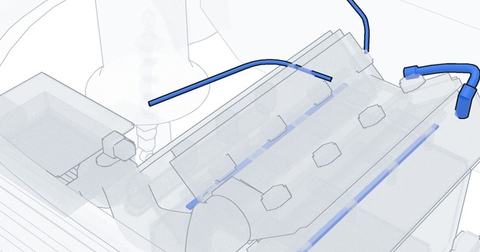
<a href="https://oilandmiles.com/articles/engine-ticking-noise"><img src="https://oilandmiles.com/assets/img/diagrams/engine-ticking-noise-causes-bench.svg" alt="A see-through V8 engine shows where an engine ticking noise can start: the oil on the dipstick, the high-pressure fuel pump and injectors, a hydraulic lifter on the camshaft, the exhaust manifold and its bolts, and the valve gap at a rocker arm." width="1200" height="1050"></a> <p>Diagram: <a href="https://oilandmiles.com/articles/engine-ticking-noise">Oil & Miles</a>, CC BY 4.0</p>When the manuals say stop 3 documents
- 2021 Toyota Avalon owner's manual, pages 436 and 448. Oil pressure warning: “stop the vehicle in a safe place immediately and contact your Toyota dealer”.
- 2023 Ram 2500/3500 owner's manual, page 113. The oil pressure light “does not indicate how much oil is in the engine”; “do not operate the vehicle until the cause is corrected”.
- GM 15-06-01-002K, 2014–19 GM 5.3L and 6.2L V8s. “Some customers may comment on a malfunction indicator lamp (MIL) on and/or an engine misfire/tick noise.”
Why is my engine ticking?
Your engine is ticking because a fuel injector, a fuel pump, a valve part or an exhaust leak is making a small, fast noise. Some of these are normal and some need a part, so each engine tick cause has a check that comes before any part:
| Cause and clue | Test this first | Don't replace yet |
|---|---|---|
| Low oil or the wrong oilA low dipstick, or oil of another grade. | Read the dipstick and check the grade against your manual. | Lifters, before the oil is right. |
| Normal injector and fuel pump tickA fast tick on a cold start or at idle. | Ask whether your engine has a bulletin calling it normal. | Any part, until you know whether it's normal for your engine. |
| Lifter tickA tick from the top of the engine, worse with a misfire. | Read the codes, then have the shop find it with a stethoscope. | A camshaft, before the lifters come out. |
| An exhaust manifold leakLoud on a cold start, quieter as the engine warms. | Have the manifold and its bolts checked for a crack or a break. | Lifters, before the manifold is checked. |
| Valve clearance that needs adjustingA steady tick on an engine with adjustable valves. | Check your maintenance schedule for a valve clearance check. | Valve parts, before the clearance is measured. |
These patterns come from the carmakers' bulletins and manuals on this page.
A click when you turn the key and the engine won't start is a different problem, which our car won't start page covers. A rattle for the first seconds after a cold start is a different sound too, and our timing chain and belt page covers it.
1. Low oil or the wrong oil
Your engine's oil does more than lubricate: on engines with hydraulic lifters or lash adjusters, it also fills the small parts that keep the valves quiet. When the level is low or the oil is too thin or too thick for the engine, those parts can run short and tap.
GM lists low oil or the wrong viscosity, meaning how thick the oil is, among the oil causes of V8 lifter tick. One Mazda bulletin for a tapping engine also starts with the oil level, so start at your dipstick.
2. Normal injector and fuel pump tick
Some engines use direct injection, which sprays fuel straight into each cylinder at very high pressure. The pump and injectors snap open and shut many times a second, and you hear it as a fast, light tick.
GM, Ford, Subaru and Mercedes-Benz each tell dealers this tick is normal on the engines they name. If your engine has direct injection, ask whether one of these bulletins covers it before you pay for a part.
3. Lifter tick
A lifter is the small part that opens a valve, and a hydraulic lifter uses oil pressure to take up any slack. When one doesn't fill with oil, or sticks, the slack comes back as a lifter tick from the top of the engine.
If you drive a GM V8 with Active Fuel Management, or AFM, it uses special lifters that can switch cylinders off. GM's bulletin blames AFM lifters that collapse or stick, and tells dealers to check the camshaft for damage while the lifters are out.
So if your lifter tick sound comes with a misfire, take it to a shop rather than waiting to see if it goes away. Lifters also turn up among the causes on our P0304 misfire page, one more reason to have your codes read.
4. An exhaust manifold leak
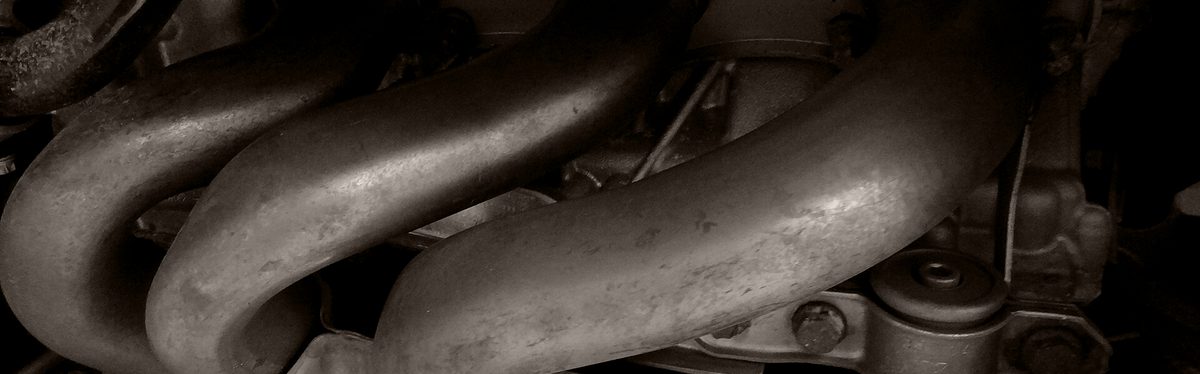
The exhaust manifold is the pipe that collects exhaust from your engine's cylinders. If it cracks, or a bolt holding it breaks, exhaust escapes through the gap, and owners describe that leak as a tick.
The tell is the timing: it's loudest on a cold start and fades as the engine warms. FCA fixes this cold tick on Ram 1500 5.7 V8 pickups with a new manifold, and owners of earlier Rams describe broken bolts.
Ram's manifold tick 2 sources
- 2019–24 Ram 1500 5.7L (FCA 09-001-24). “The customer may describe a ticking noise from the exhaust manifold location(s) when cold.” The fix is a new manifold kit; the dealer first inspects for a cracked manifold.
- 2013–18 Ram 1500, NHTSA complaints. Owners describe broken or sheared manifold bolts and a tick on cold starts that fades as the engine warms. We found no FCA document for these years.
5. Valve clearance that needs adjusting
Not every engine has hydraulic parts that take up the slack in the valves. On engines with adjustable valves, the small gap at each valve, called valve clearance or lash, is checked and set by hand.
If that gap grows too wide, the parts tap each other on every turn. Honda's schedule lists a valve clearance check and says to adjust noisy valves, so look for that line in your manual.
Honda's valve check 1 manual
- 2018 Honda Odyssey owner's manual, pages 642–643. Maintenance sub item 4 includes “Inspect valve clearance”, and the service notes say “Adjust the valves during services A, B, 1, 2, or 3 if they are noisy.”
What the data says
Of 2,661 NHTSA complaints on 2010–25 models describing an engine tick or tap, 446 name a lifter and 146 an exhaust leak. These are owners' accounts, not confirmed causes, and a complaint can name more than one part.
From NHTSA complaints on 2010 to 2025 models, in the complaint file dated October 2, 2026.
What owners report
A 2013 Ram 1500 owner traced the tick to broken exhaust manifold bolts. THIS CAUSED A TICKING NOISE UPON START UP THAT WOULD THEN GO AWAY AFTER THE ENGINE WARMED UP.
A 2017 Silverado 1500 owner's dealer blamed the AFM lifters. The engine started ticking and I was instantly limited to 30mph with cars going highway speeds around me.
NHTSA complaints 11164534 (2013 Ram 1500) and 11427970 (2017 Chevrolet Silverado 1500), in the owners' own words.
When does it tick: cold start, idle, with rpm, or when warm?
When your engine ticks narrows the cause faster than how it sounds, because each cause shows up at its own moment. The carmakers' bulletins describe each tick by when you hear it, from a cold start to a warm idle.
Mazda describes a tap that keeps time with engine speed, so speeding up with the revs doesn't single out one cause. Watch for when the tick starts and stops instead, at one of these three moments:
1. Only after a cold start
A tick that starts with the engine and fades within minutes points to three cold-start causes in the documents, each with its own timing:
- Fuel pump building pressure. GM says the rapid tick on a cold start of its direct-injection V6s is the fuel pump, and calls it normal.
- A lifter refilling with oil. On some GM V8s, a lifter can tick for two seconds to ten minutes after the truck sits two hours or more.
- An exhaust manifold leak. It ticks loudest on a cold start and fades as the engine warms.
Time the tick from the moment you start the engine, and note whether it comes back only after the car sits for hours. Both details help a shop tell these three apart.
2. At idle, once the engine is warm
A ticking sound in your engine while idling, once it's warm, can be the injectors on a direct-injection engine. Ford calls a warm idle tick on its Focus ST normal, and GM says the idle clicking on its direct-injection V6s is the injectors.
Subaru fixed a warm tapping on early BRZ engines, which owners compared to a sewing machine, with new valve parts. If your engine has adjustable valves, a warm, steady tick is the time to ask about a clearance check.
3. With a misfire, a warning light or lost power
A tick that arrives with a stumble, a check engine light or lost power is the one to act on now. GM ties a tick with a misfire and the check engine light to a collapsed or stuck lifter on its V8s, and the fix can include the camshaft.
Have your codes read and tell the shop when the tick started, because a misfire code names the cylinder. A deep knock from low in the engine is a different complaint, and no carmaker document we read tells the two apart by ear.
Which ticks do carmakers call normal, and which do they fix?
Carmakers call a tick normal when a part is doing its job, and fix it when a part has failed. When a carmaker tells its dealers to leave a tick alone, you want to know that before you pay for a part.
The first table lists the ticks the bulletins call normal, each for the engines named. So don't treat your tick as “normal” unless your engine is listed, because no carmaker says it for every engine:
| Engine | Where the tick comes from | What the carmaker says |
|---|---|---|
| 2008–15 GM 3.0L and 3.6L direct-injection V6 | Fuel pump ticking on a cold start or at idle; injectors clicking | Don't repair or replace parts |
| 2014–17 Ford Focus ST 2.0L turbo | Idle tick when warm | Normal, no repair |
| 2013–16 Subaru BRZ | High-pressure fuel pump | Normal, no repair |
| Mercedes-Benz engines 276, 278, 157 and 152 | High-pressure pump and injector tips | Normal sound level; compare with another car |
| 2017–22 GM 6.6L Duramax diesel | Injectors, the intake airflow valve, the turbo and the exhaust fluid injector | Normal, don't repair |
| 2011–19 Ford Super Duty 6.7L diesel | The exhaust fluid injector | No repair without drivability symptoms or codes |
From the carmakers' bulletins filed with NHTSA. A tick on another engine isn't covered by these.
If your tick needs a fix, the documents trace it to a lifter, a lash adjuster or an exhaust manifold. A lash adjuster is a small oil-filled part that keeps the valve gap closed, and the second table lists the fixes:
| Engine | What causes the tick | The fix |
|---|---|---|
| 2014–19 GM 5.3L and 6.2L V8 with AFM | An AFM lifter that collapsed or stuck | Lifter oil manifold and a bank of lifters; camshaft if damaged |
| 2007–11 GM V8 with AFM | Lifter tick after two hours or more parked | Check oil level and grade first, then all 8 AFM lifters |
| 2025–26 GM 2.7L turbo and 2.5L | Debris inside a lash adjuster | Replace the soft adjusters and their followers |
| 2019–24 Ram 1500 5.7L | A cold tick from the exhaust manifold | A new manifold kit |
| 2022–23 FCA 3.6L V6 | Sticking intake lash adjusters | All 12 intake adjusters on listed VINs |
| 2018 Mazda CX-5 and Mazda6 with cylinder deactivation | Tapping after short cold starts | Check the oil level, then a bleed run at 2,500 to 3,000 rpm |
| 2019–20 Mazda3, 2018–20 Mazda6 and CX-5 | Air bubbles in a switchable lash adjuster | Run at 2,000 rpm; replace adjusters a finger can press down |
| 2013 Subaru BRZ | A warm tapping from the left cylinder head | Revised rocker arms, camshaft and valves |
| BMW 3 Series N20, built January to June 2012 | Vibration inside the high-pressure fuel pump | An acoustic cover over the pump |
From the carmakers' bulletins filed with NHTSA. FCA ended its 3.6L service action in June 2024.
Press it with your finger, says one carmaker; don't trust your finger, says another. Mazda and GM replace a soft lash adjuster, while FCA says its exhaust adjusters are meant to compress by hand.
So the finger test only means something with your carmaker's own instructions in hand. If a shop wants to replace lash adjusters because they feel soft, ask which bulletin it's following for your engine.
Will an engine tick go away on its own?
A tick can go away on its own when a lifter refills with oil after the engine sits, or when it's a normal cold-start tick. GM says one V8 lifter tick lasts up to ten minutes, and Mazda has dealers rev the engine to bleed air out.
If your tick stays once the engine is warm, or gets louder over weeks, it isn't going to fix itself. Neither is a cracked manifold, which FCA fixes with a new one, not a wait.
Thicker oil can seem like an easy cure, but GM lists the wrong viscosity as a cause of lifter tick. So use the grade in your owner's manual, not a heavier one to quiet the noise.
We didn't find a carmaker document that recommends an oil additive or an engine flush for a tick. If your oil is right and it still ticks, you need a shop that can find the source, not a bottle with a confident label.
How much does it cost to fix an engine tick?
Engine tick parts run $2.95 to $505 apiece on the three vehicles we priced, and a tick your carmaker calls normal costs nothing. Labor is your bigger bill in every job we priced, at 2.0 to 10.9 booked hours a job.
What it costs
What this box shows
Prices for this repair, drawn from the sources named at the foot of the box. Each figure states whether it covers the part alone or parts and labor.
Parts cost to fix an engine ticking noise
Each part priced alone, by the piece where the catalog sells it singly. Labor is the last row.
| AFM valve lifterPrice for one; GM replaces a whole bank.2015 Chevrolet Silverado 1500 5.3L · $12 to $36, | $12 – $36Part only, each |
|---|---|
| Valve lifter guidePrice for one, the holder GM replaces if a lifter has turned.2015 Chevrolet Silverado 1500 5.3L · $7.03 to $15, | $7.03 – $15Part only, each |
| CamshaftOnly if a lifter has damaged the old one.2015 Chevrolet Silverado 1500 5.3L · $117 to $505, | $117 – $505Part only, at the counter |
| Hydraulic lash adjusterPrice for one; the only listing doesn't say intake or exhaust, and FCA replaces all 12 intake adjusters.2022 Ram 1500 3.6L · $31, | $31Part only, each |
| Exhaust manifoldPrice for one side, without gaskets or bolts.2015 Chevrolet Silverado 1500 5.3L · $77 to $146, 2019 Ram 1500 5.7L · $141, | $77 – $146Part only, at the counter |
| Exhaust manifold kitListed as kits; FCA's bulletin kit holds the manifold, gasket, fasteners, heat shield and tie bar.2019 Ram 1500 5.7L · $145 to $163, | $145 – $163Part only, at the counter |
| Exhaust manifold gasketPrice per listing; some fit one side, some both.2015 Chevrolet Silverado 1500 5.3L · $2.95 to $42, 2019 Ram 1500 5.7L · $12 to $30, 2022 Ram 1500 3.6L · $18, | $2.95 – $42Part only, at the counter |
| Exhaust manifold boltsBolt and stud sets for the manifold.2015 Chevrolet Silverado 1500 5.3L · $8.96 to $26, 2019 Ram 1500 5.7L · $22 to $27, | $8.96 – $27Part only, at the counter |
| LaborBooked hours at $120 to $159 an hour: 2.0 to 4.7 hours for Ram 3.6L adjusters, 3.1 to 4.5 for Ram 5.7L manifolds, 9.4 to 10.9 per side for Silverado lifters. | $240 – $1,733Labor only, estimated |
Prices are every brand a large online parts catalog lists for a 2015 Chevrolet Silverado 1500 5.3L, a 2019 Ram 1500 5.7L and a 2022 Ram 1500 3.6L, read October 9, 2026. Performance parts, closeouts and out-of-stock listings are left out, and the Silverado lifters and guides are the AFM type only.
Labor comes from the hours carmakers book for each job, times $120 to $159 an hour. Almost half of the US shops in a 2025 survey charged that rate.
We couldn't price the lifter oil manifold GM replaces with the lifters, because the catalog doesn't list it. Ask for it as its own line on your quote, along with any camshaft the shop finds damaged.
Booked hours by job 5 jobs
- 2014–19 Silverado and Sierra 1500, GM 15-06-01-002K. Lifter oil manifold and lifters, left side 9.4 hours ($1,128 to $1,495), right side 10.9 hours ($1,308 to $1,733). The camshaft adds time the bulletin doesn't print.
- 2019–24 Ram 1500 5.7L, FCA 09-001-24. Both manifolds 4.5 hours ($540 to $716), right only 3.1 ($372 to $493), left only 3.4 ($408 to $541); add 0.9 hours on a 4X4.
- 2022–23 FCA 3.6L V6, FCA 09-009-23. One bank of intake lash adjusters 1.7 to 4.1 hours ($204 to $652), both banks 4.7 to 6.0 hours ($564 to $954), by model; on the Ram 1500, 3.3 hours left, 2.0 right, 4.7 both ($564 to $747).
- 2019–20 Mazda3, 2018–20 Mazda6 and CX-5, Mazda 01-006/20. 0.4 hours for the bleed-and-check procedure.
- 2013 Subaru BRZ, Subaru 02-151-14. Engine out 2.8 hours (manual) or 3.3 (automatic), plus 5.2 for the left head, 0.8 for the intake valves and 0.3 for diagnosis.
How do you fix an engine ticking noise?
Fix it in the order of the checks, cheapest first, so you only pay for the part a test names. Work through the 6 steps below, in order:
- Check the oil level and grade. Read the dipstick on level ground with the engine off, top off to the full mark, and make sure the grade matches your owner's manual.
- Note when it ticks. Write down whether it ticks after a cold start and for how long, at a warm idle, or with a misfire, a warning light or lost power.
- Get the codes read. AutoZone and O'Reilly say they read codes for free, and Advance says most of its stores offer a free scan. A misfire code names the cylinder to look at.
- Check for bulletins by VIN. Give the dealer your VIN, the 17-character ID on your registration, and ask whether a bulletin calls your tick normal or names a fix.
- Ask the shop to locate the tick. Ask for the source to be found with a mechanic's stethoscope and for the oil pressure to be read with a gauge and compared with your engine's figure.
- Fix only what the test found. Replace the part the stethoscope and the bulletin point to, and ask for what the shop found to be written on your invoice.
If the shop can't hear the tick that day, hand over your notes on when it happens. If there's no bulletin for your VIN, ask how the shop found the tick and whether it tested the oil pressure.
Oil pressure, in a manual 1 manual
- 2018 Ram 2500 diesel owner's manual, page 130. Minimum oil pressure of 10 psi at idle and 30 psi at full speed and load, at normal operating temperature. Your engine's figure is in its own manual or service information.
What to say to the shop
When a quote names lifters, a camshaft or a manifold for a tick, ask these before you approve it:
- Where on the engine is the tick coming from, and how did you find it?
- Is this tick normal for my engine, or is there a fix the carmaker names?
- If a lifter damaged the camshaft, is the camshaft in the quote, and how many labor hours?
“Before I approve parts, can you tell me where the tick comes from and how you found it, whether it's normal for my engine, and whether the quote covers the camshaft and the labor hours?”
A good answer names a spot on the engine, how the shop found it, and a parts list with the booked hours. At a dealer, also ask whether a bulletin or your warranty covers the repair, which the dealer checks by VIN.
From the carmakers
Does a warranty or bulletin cover an engine tick?
No recall on 2010–25 models names an engine tick, and we found no warranty extension for one. Your warranty can pay for some tick repairs, and carmakers tell dealers to leave the normal ones alone.
The cards show who pays in each document. Ask your dealer to check your VIN before you pay for lifters or a manifold yourself.
Service bulletin 09-001-24
The customer may describe a ticking noise from the exhaust manifold location(s) when cold.
Service bulletin 15-06-01-002K
Inspect the camshaft for damage while the lifters are removed from the engine. If damage is found, replace the camshaft per SI.
Service bulletin 01-006/20
If they can be pressed down with a finger, replace the affected sets of the HLA, the switchable HLA and the rocker arms
Diagnostic tip GPOP 9100614
EXHAUST lash adjusters are designed to be COMPRESSIBLE by hand.
Special service message SSM 46814
This is considered a normal operating characteristic and no repair should be attempted.
Service bulletin 07-06-04-025J
DO NOT attempt to repair or replace any parts for this kind of clicking or ticking concern.
Conclusion
Check the oil, then let a test name the part
An engine ticking noise can be a part doing its job, and the moment it ticks tells you whether it's one to fix. Here's what to do, drawn from the manuals, bulletins and complaints:
- Check the oil. Top off to the mark with your manual's grade.
- Watch the lights. Stop if the oil pressure light comes on.
- Time the tick. Cold start, warm idle or with a misfire each point somewhere else.
- Ask about normal. Some carmakers tell dealers not to repair certain ticks.
- Test before parts. A stethoscope and an oil pressure gauge come before lifters.
Check your oil, time the tick, and let the shop's test name the part. Oil & Miles reads the carmakers' own manuals and bulletins before a list of parts.
Common questions
Asked most often
Is it safe to drive a car with a ticking noise?
It can be, if the oil level is right and no warning light is on, but no document gives a safe distance. Stop if the oil pressure light comes on, and have a tick with a misfire or lost power checked before you drive on.
Will engine ticking go away?
Sometimes: a lifter can stop ticking within minutes once it refills with oil after the car sits. A tick that stays once the engine is warm, or gets louder, won't fix itself.
Is engine ticking expensive to fix?
It can be: labor alone runs $1,128 to $1,733 a side for GM V8 lifters and $372 to $716 for a Ram 1500 manifold job. It costs nothing when your carmaker calls the tick normal.
Does engine ticking mean low oil?
It can: GM lists a low oil level or the wrong oil viscosity among the causes of lifter tick. Check the dipstick first, but a full dipstick doesn't rule out the other causes.
How serious is lifter tick?
It ranges from harmless to serious. A short tick after a long stop can be a lifter refilling, while GM ties a stuck AFM lifter with a misfire to camshaft damage on its V8s.
How do you fix a ticking lifter?
Start with the oil level and grade, then have the shop confirm the source with a stethoscope. If a lifter has failed, the carmaker's fix is a new lifter set, and on GM's AFM V8s the lifter oil manifold too.
Do lifter ticks go away?
A lifter that's short of oil after the engine sits can go quiet once it refills, which GM says can take up to ten minutes. A lifter that's collapsed or stuck stays noisy until it's replaced.
Why is my car ticking when I turn it on?
A ticking noise when you start your car that fades within minutes can be a direct-injection fuel pump building pressure, a lifter refilling with oil, or an exhaust manifold leak. If it stays once the engine is warm, have it checked.
What can be mistaken for lifter tick?
The fuel pump and injectors on a direct-injection engine, and an exhaust manifold leak, both make a similar tick. A manifold leak is loudest on a cold start and fades as the engine warms.
Sources
- GM 07-06-04-025J, cold-start and idle tick on direct-injection V6s, with GM 16-NA-372 on Duramax diesel tick. GM via NHTSA, read October 2, 2026
- GM 15-06-01-002K, AFM lifter misfire and tick, with 10-06-01-007E, PIP5606B, PIP5817 (a stethoscope locates the noise) and PIP6101. GM via NHTSA, read October 2, 2026
- Ford SSM 46814, Focus ST idle tick, and SSM 47836, 6.7L diesel exhaust fluid injector tick. Ford via NHTSA, read October 2, 2026
- FCA 09-001-24, Ram 1500 cold exhaust manifold tick, with 09-009-23, its REV. C, 09-015-24 and GPOP 9100614. FCA US via NHTSA, read October 2 and 9, 2026
- Mazda 01-006/20, tapping from switchable lash adjusters, and SA-015/18, tapping after short cold starts. Mazda North American Operations via NHTSA, read October 2 and 9, 2026
- Subaru 09-54-12R, BRZ fuel pump tick, and 02-151-14, BRZ warm tapping and its labor. Subaru of America via NHTSA, read October 2, 2026
- Mercedes-Benz LI07.02-P-054717, high-pressure pump and injector noise, and BMW SI B13 05 12, N20 fuel pump tick. Mercedes-Benz USA and BMW of North America via NHTSA, read October 2, 2026
- 2018 Honda Odyssey Owner's Manual, pages 642–643, for the valve clearance check and adjusting noisy valves. Honda, read October 9, 2026
- Owner's manuals: 2021 Toyota Avalon pages 436 and 448, 2023 Ram 2500/3500 page 113 and 2018 Ram 2500 diesel page 130, for the oil pressure warning and minimum pressures. Toyota and Ram, read August 27 and October 6, 2026, as cited on our oil light page
- NHTSA complaint and recall files, complaints on 2010 to 2025 models that describe an engine tick or tapping, three owners' complaints quoted, and recalls on the same model years. NHTSA, files dated October 2, 2026
- AutoZone free parts testing, O'Reilly free check engine light testing and Advance Auto Parts free scan, for the free code reading each chain describes. Each chain's own page, read October 6, 2026, as cited on our check engine light on and off page
- PartsTech's 2025 survey of 752 US shops, as reported by MOTOR, for the $120 to $159 an hour that almost half of them charge. MOTOR, read September 27, 2026, as cited on our catalytic converter cost page
- RockAuto catalog, every lifter, lifter guide, camshaft, lash adjuster, exhaust manifold, gasket and bolt listing for the three vehicles in the cost box. Read October 9, 2026
How this was compiled
The sections follow what a driver needs when the engine ticks: whether it's safe, what causes it, how the moment it ticks narrows it down, and what a fix costs. The causes come from carmakers' bulletins, and the safety advice from their owner's manuals.
The complaint figures count NHTSA complaints on 2010 to 2025 models that describe an engine tick or tapping, and the part figures count the ones that name that part. The parts owners name are their own words, not confirmed causes.
What we didn't do
We didn't test a car, and we didn't find a carmaker document on an evaporative purge valve clicking at idle, so it isn't listed as a cause. We also found no FCA document for the broken manifold bolts owners describe on 2013–18 Ram 1500 trucks.
We read the bulletins listed here, not every carmaker's, so your engine may have one we haven't seen. For valve clearance we read only Honda's maintenance schedule, not every carmaker's.
What people ask next
Prices are ranges compiled in October 2026 for the US market and vary by region, engine and shop rate. Prices from $10 up are rounded to the nearest dollar, so $14.13 reads as $14 and $14.52 as $15. Below $10 they're exact. This article is general information, not advice about your specific vehicle. See the disclaimer.
AFM valve lifter, each
2015 Chevrolet Silverado 1500 5.3L V8
| Brand | Part | Price |
|---|---|---|
| MELLING | JB2079 | $12 |
| SEALED POWER | HT2148AB | $17 |
| HT2148A | $18 | |
| SBI | VL559 | $23 |
| ENGINETECH | L2303K | $26 |
| GM GENUINE | 12698945 | $27 |
| SKP | SK12740071 | $36 |
AFM valve lifter guide, each
2015 Chevrolet Silverado 1500 5.3L V8
| Brand | Part | Price |
|---|---|---|
| ENGINETECH | EG596 | $7.03 |
| EG608 | $7.94 | |
| EG365 | $8.95 | |
| SEALED POWER | HT2322K | $11 |
| HT2323K | $12 | |
| SBI | VL558FG | $15 |
| VL558RG | $15 |
Camshaft
2015 Chevrolet Silverado 1500 5.3L V8
| Brand | Part | Price |
|---|---|---|
| GM GENUINE | 12619823 | $117 |
| SKP | SKMC1423 | $145 |
| MELLING | MC1423 | $236 |
| MC1429 | $381 | |
| ENGINETECH | ES5438 | $350 |
| ES1429 | $505 |
Hydraulic lash adjuster, each
2022 Ram 1500 3.6L V6
| Brand | Part | Price |
|---|---|---|
| AJUSA | 85009300 | $31 |
Exhaust manifold, per side
2015 Chevrolet Silverado 1500 5.3L V8
| Brand | Part | Price |
|---|---|---|
| DORMAN | 674495 | $77 |
| 674496 | $84 | |
| DAVICO | 662991 | $78 |
| ATP | 101714 | $82 |
| 101715 | $82 | |
| GM GENUINE | 12629338 | $143 |
| 12629337 | $146 |
Exhaust manifold, per side
2019 Ram 1500 5.7L V8
| Brand | Part | Price |
|---|---|---|
| DORMAN | 674497 | $141 |
| 674498 | $141 |
Exhaust manifold kit
2019 Ram 1500 5.7L V8
| Brand | Part | Price |
|---|---|---|
| MOPAR | 68365739AA | $145 |
| 68591572AC | $163 |
Exhaust manifold gasket
2015 Chevrolet Silverado 1500 5.3L V8
| Brand | Part | Price |
|---|---|---|
| GM GENUINE | 12657093 | $2.95 |
| APEX | AMS13512 | $11 |
| FEL-PRO | MS97405 | $20 |
| MAHLE / CLEVITE | MS19936 | $21 |
| VICTOR REINZ | 111082602 | $42 |
Exhaust manifold gasket
2019 Ram 1500 5.7L V8
| Brand | Part | Price |
|---|---|---|
| ELRING | 940060 | $12 |
| 940040 | $12 | |
| ULTRA-POWER | MS97083 | $13 |
| SKP | SK940060 | $16 |
| APEX | AMS11891 | $17 |
| FEL-PRO | MS97083 | $24 |
| MAHLE / CLEVITE | MS19832 | $30 |
Exhaust manifold gasket
2022 Ram 1500 3.6L V6
| Brand | Part | Price |
|---|---|---|
| MAHLE / CLEVITE | MS19877 | $18 |
Exhaust manifold bolts and studs
2015 Chevrolet Silverado 1500 5.3L V8
| Brand | Part | Price |
|---|---|---|
| DORMAN | 03413 | $8.96 |
| 675226 | $11 | |
| 03413HP | $16 | |
| FEL-PRO | ES75120 | $26 |
Exhaust manifold bolts and studs
2019 Ram 1500 5.7L V8
| Brand | Part | Price |
|---|---|---|
| SKP | SKY01589 | $22 |
| DORMAN | 03442 | $23 |
| 32134 | $26 | |
| 32135 | $27 |