
Short answer
A valve cover gasket job costs $300 to $500 in 2026
The gasket is under $75 of that, and the rest is labor, which is why the car and not the part decides the bill. On a four-cylinder with the cover exposed, this is one of the cheapest real repairs on a car. Four specific things push it well past $500, and you can check every one of them before anyone quotes you.
OilAndMiles.com - Look up valve cover gasket replacement cost and five estimators give five different ranges: the lowest starts at $200, the highest ends at $600. They crowd the same middle, though. Three of the five cover $300 to $500 in full, and that's where a mainstream car lands.
From a local shop on a common four-cylinder, expect the middle of it.
The gasket alone is $7.98 to $46 on a four-cylinder Accord, topping out at $46 for the version with the spark plug tube seals in it, and a V8 buys two. The oil pan gasket underneath costs about the same and is nothing like as easy to reach.
How much does valve cover gasket replacement cost?
$300 to $500 for most cars, and almost all of it is labor. The gasket itself is $7.98 to $71 across the three cars priced below, so the price is the hours it takes to reach the cover, and the box below keeps the two apart on purpose.
What valve cover gasket replacement costs, part and job
A part price and a whole job are different kinds of figure, so there's no total.
| Valve cover gasketWhat the part costs moves with the car. Every brand listed for each one, read twice.2017 Honda Accord 2.4L · $7.98 to $46, 2013 BMW 328i 3.0L L6 · $20 to $55, 2015 Ford F-150 5.0L V8 · $39 to $71 for the pair, | $7.98 – $71Part only, at the counter |
|---|---|
| Published all-inMost cars. Where five estimators crowd. The tightest span is $250 to $350, the widest $200 to $600, and three of the five cover this band in full | $300 – $500Parts and labor, estimated |
| Across actual model pagesThe same estimator's own per-model pages. A Nissan Pathfinder is $155 to $218; a Nissan Rogue is $460 to $649. Two Nissans, and this is the whole argument of this article | $155 – $649Parts and labor, estimated |
All-in ranges read September 2, 2026 from RepairPal, YourMechanic, Car Talk, CarParts.com and TheCostGuys, and the per-model figures from RepairPal's own vehicle pages. Gasket prices are every brand RockAuto lists for a 2017 Honda Accord 2.4L, a 2013 BMW 328i 3.0L and a 2015 Ford F-150 5.0L, read September 3, 2026, each page read twice. Left out after reading them: seven Elring listings restricted to one F-150 body code, two per-side Dorman gaskets whose pair sits inside the range, a BMW listing for the coupe body, and a $5.19 listing with nothing to say what it was.
That overlap is genuine, and for most readers it's the whole answer. Which raises a question worth asking: if the number is settled, why are the two loudest threads on this subject a Lexus owner and a BMW owner both asking what they should expect to pay?
Because the confident range is right for the cars it describes and wrong for theirs, and nobody publishing it says which is which. That's what this article is for.

What a valve cover gasket seals
What is a valve cover gasket?
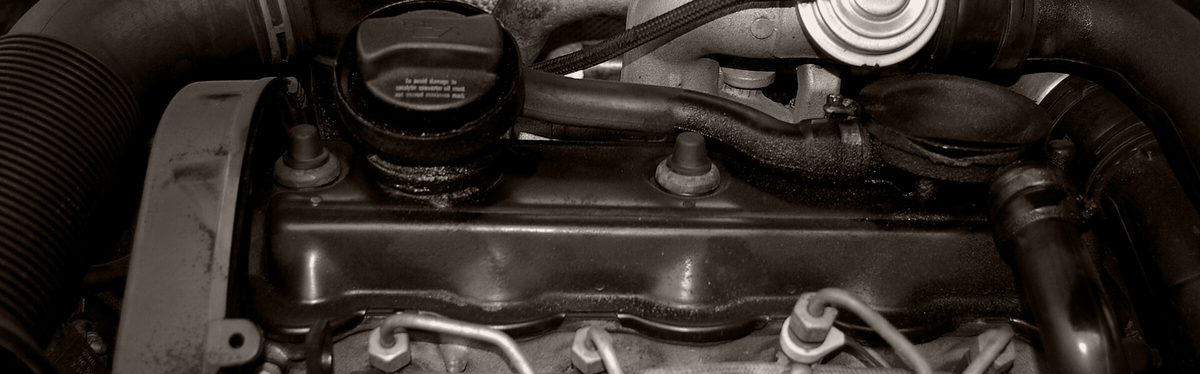
The seal between the valve cover and the cylinder head. The valve cover sits on top of the engine: the lid over the valvetrain, usually the most visible thing when you open the hood, often with the manufacturer's name cast into it.
You'll also see it called a rocker cover, which is the same part under a different name. Its gasket seals the joint between that lid and the head, and its one job is to keep the oil that bathes the valvetrain inside.
It's a rubber or cork ring that hardens with heat cycles. When it does, it stops springing back against the lip, and oil weeps at the rim rather than pouring. That's why this leak is found by smell and by looking, and why the part is cheap.
What are the symptoms of a bad valve cover gasket?
Four, and the first is a smell rather than a puddle. Because it sits at the top of the engine, a bad valve cover gasket announces itself differently from every other oil leak: oil escapes at the rim and runs down the outside of the engine. So the tells are:
- A burning smell after driving, with no smoke. Oil creeping down the back of the engine reaches the exhaust manifold, which is hot enough to cook it off. That acrid smell when you park is the classic valve cover symptom, and it's usually the first thing an owner notices. A burning smell after driving has several causes, and this is the cheapest of them.
- Oil visible on the outside of the engine. Open the hood and look at the seam where the cover meets the head. A dark, wet, dust-caked band along that edge is the leak, and this is one of the few car faults you can diagnose standing up in daylight.
- Little or nothing on the driveway. Most valve cover leaks never reach the ground; the oil burns off on the way down. If you have a puddle under the middle of the car and a dry engine top, look at the oil pan gasket instead, or work back from the fluid itself with what each fluid leak costs to fix.
- Misfires, on an engine with the coils seated inside the cover. Oil filling those wells sits around the coil, and a coil sitting in oil misfires, so the leak arrives as a running fault rather than a smell. This is the expensive version of the same leak: now you're buying coils as well as a gasket.
Why does a V engine cost more?
Because a V6 or V8 has two cylinder heads, so it has two covers, two gaskets and twice the reaching. It's the first and biggest exception, and it's simple arithmetic.
An inline four or six has one cylinder head, so it has one valve cover and one gasket. A V6 or V8 has two heads, so it has two of everything. Shops generally replace both at once, because the second one is the same age as the first and half the labor is already paid for.
That pushes a $350 job toward $600. It isn't an upsell and it isn't unusual: the engine layout requires it.
It also isn't quite double, because the draining, the reaching and the cleaning up are paid once however many covers come off. Ford books 3.8 hours to do both covers on a Mustang V8, against 3.7 for a single cover on an Explorer.
So if you drive a V6 crossover and the quote is well above what the internet told you to expect, this is very likely why, and the question to ask is simply "is that for both banks?"
Worth knowing
On many V engines, the rear valve cover sits against the firewall with very little room in front of it. Reaching it can mean removing the intake manifold, or on some transverse V6 layouts, rocking the engine forward on its mounts.
The front cover on the same engine is a far shorter job. This is why some shops quote the two banks at different prices, and why a quote covering only the leaking side is sometimes the sensible choice rather than a cut corner.
What pushes valve cover gasket replacement cost past $500?
Beyond the second cover on a V engine, four specific conditions push this job into territory the published range doesn't cover. All four are checkable before you commit:
- The intake manifold is in the way. On a number of modern engines the plastic intake manifold sits directly over the valve cover and has to come off first. That adds hours and adds gaskets, and the manifold gaskets are usually replaced while it's apart.
- The cover is plastic and has warped. Many manufacturers moved from stamped steel or cast aluminum to molded plastic covers. Plastic covers can distort with heat cycling, and a warped cover will leak again with a perfect new gasket fitted. When that happens the cover is replaced, not just the gasket, and the part is no longer $30. It can be several hundred on its own.
- The cover carries components. On some engines the valve cover isn't just a lid: it houses the PCV system, ignition coils, or on certain BMW and Mercedes designs, integrated crankcase ventilation that fails as a unit. Replacing it means replacing more than a seal.
- Dealer labor rates. The same three hours at $160 an hour instead of $120 is a $120 difference before parts. On a job this small, rate is a bigger proportion of the bill than on almost anything else.
Is a valve cover gasket leak serious?
Not urgently, but not indefinitely either, and the reason isn't the oil you're losing. It's what the oil lands on.
A valve cover gasket usually weeps rather than pours. Many cars lose so little that the dipstick barely moves between services, and on a car with a modest value that is a defensible thing to live with for a while.
What makes it worth doing anyway is where the oil goes. Running down the back of the engine, it lands on two things that don't tolerate it:
- Rubber engine mounts and suspension bushings. They soften and fail early when soaked in oil, so a cheap leak quietly shortens the life of parts that cost more than the gasket.
- The exhaust manifold. It runs hot enough to set oil alight rather than just cook it off. Flammable liquids in the engine bay are what caught first in 21% of US vehicle fires, across an annual average of 215,096 between 2018 and 2022. What that figure doesn't say is how likely any one seeping gasket is to start one, because no published figure answers that. Our article on what a burning smell actually is has the rest of that data.
There's one more, and it only applies to engines with the coils sitting in the cover. A coil sitting in oil misfires, and a misfire pushes unburned fuel into the catalytic converter, which is a ceramic honeycomb built to burn what reaches it. Walker, which manufactures converters, lists melted substrate from engine misfires among the five things that destroy one.
A converter runs $650 to $2,500, and we set out the temperatures that do the damage in what a flashing check engine light costs. That is the road from a $7.98 gasket to a four-figure bill, and it runs through a part nobody was worried about.
So the rule of thumb: a faint smell and a dry-ish seam can wait for your next service. Oil you can see actively running, or wet bushings and mounts underneath, shouldn't.
What should you do about a leaking valve cover gasket?
You've already done the diagnosis if you checked that seam. What decides the price is everything around it.
Then answer four questions before you call anyone. They decide which side of the published range you land on, and your owner's manual and a look under the hood settle every one of them:
- Inline or V? A V has two heads, so two covers and two of the same gasket.
- Is the intake manifold sitting over the cover? If it is, the manifold comes off first, and that's where the hours go.
- Metal or plastic? A warped plastic cover has to be replaced rather than re-gasketed, or you pay the labor twice.
- Do the ignition coils sit down inside the cover? Pull one coil connector and look. If they seat in wells in the cover, oil that gets past the seals reaches them, and the quote should say whether coils are included or merely inspected.
When you get the quote, ask whether it covers one bank or two, and whether the cover itself is being replaced or just the gasket. On a four-cylinder with a metal cover and clear access, anything much above $500 deserves a second opinion. On a V6 with the manifold in the way and a warped plastic cover, $900 can be entirely fair.
From the documents
What does Ford book for this job?
No estimator on this page publishes hours. One carmaker does, in bulletins it sends its own dealers, and NHTSA hosts them openly. We read the documents rather than the coverage of them:
Ford Motor Company, TSB 19-2309
Some 2015-2017 Mustang vehicles equipped with a 5.0L engine may exhibit an oil leak from either valve cover gasket. This may be due to the valve covers warping due to excessive heat. Labor Times: Remove Both (2) Valve Covers, Update Following The Service Procedure, Includes Time To Verify Leak And Check And Correct Engine Oil Level, 3.8 Hrs.
Ford Motor Company, TSB 25-2361
Labor Times: Verify Build Date And Replace The RH Valve Cover Includes Time To Road Test To Verify Repair. 2025 Transit 3.5L, 2.2 Hrs. 2024-2025 Explorer 3.3L TiVCT, 3.7 Hrs. 2024-2025 Explorer 3.3L Duratec Hybrid, 3.9 Hrs.
Three things fall out of them:
- The labor alone can pass the whole-job range. Ford books 2.2 to 3.9 hours for a single valve cover and 3.8 for a V8's pair. At the $120 to $160 an hour this page already quotes, one cover is $264 to $624 in labor alone, and the top of that is above the top of the range five estimators publish for the entire job.
- The warped plastic cover isn't a workshop rumor. Ford names it as the cause in its own issue statement, and fixes it by drilling the cover for four extra fasteners.
- The job takes sealant as well as a gasket. Ford's parts list for the job includes silicone gasket sealant alongside the gasket, which is the honest answer to whether this joint needs it: on that engine, Ford says yes.
What we couldn't find is the same for anyone else. These are Ford operations on Ford engines, with a leak check or a road test folded into the time, and no other manufacturer publishes hours for this repair where we could read them. So treat them as the shape of the job rather than as your car's number.
Conclusion
The average isn't your car
Both of those numbers are theirs, and only the second is about a particular car.
That's the whole difficulty with this repair: the average is real, and it describes an engine you may not own. What separates the two isn't the gasket, which costs less than a tank of fuel on every car on this page. It's how much has to come off before anyone can reach it, and that's a question you can answer yourself, standing at the front of the car, before you make the call.
Oil & Miles prices a repair by what decides the bill rather than by what averages well, across repair costs and symptoms.
Common questions
Asked most often
Why does my car smell like burning oil but there's no leak on the ground?
That combination is close to a signature for a valve cover gasket. The oil escapes at the top of the engine and burns off on the hot exhaust before it can reach the driveway.
Is a valve cover gasket a DIY job?
On an accessible four-cylinder with a metal cover, it's one of the more approachable jobs. The main risks are over-torquing the bolts and disturbing the sealing surface. On anything requiring intake manifold removal, the job changes character entirely.
The shop wants to replace the cover, not just the gasket. Fair?
Fair if the cover is plastic and warped, or if it carries PCV or ventilation components that have failed. Ask them to show you the sealing flange. A new gasket on a distorted cover will leak again, and you'll have paid the labor twice.
Can a valve cover gasket cause a misfire?
Yes, on engines with the ignition coils seated in wells inside the cover. Oil that gets past the seals fills those wells and sits around the coil, and a coil sitting in oil misfires. That's what turns a $300 gasket into a $300 gasket plus coils, and it's the main reason not to leave this one indefinitely.
How long does it take to replace a valve cover gasket?
Half a day, not the quick job it is often described as. Ford books 2.2 to 3.9 hours for a single cover and 3.8 for a V8's pair, and those are the only published hours we could read. The panel above lists each one with its document number.
How long does a valve cover gasket last?
No manufacturer we read publishes a replacement interval for it. It isn't a service item, which is why Ford's own document on it is a repair bulletin rather than a line in a maintenance schedule: it gets replaced when it starts to leak. What ages it is heat cycles rather than miles.
Is a valve cover gasket the same as a head gasket?
No. The valve cover gasket seals the lid on top of the engine and leaks oil outward, and that's this $300 to $500 job. A head gasket seals the head to the block and holds back combustion pressure, coolant and oil at once, at $1,200 to $5,500. Oil outside the engine with a steady coolant level is the cover.
Should I replace both sides on a V6?
Usually yes if both are accessible, since they're the same age and much of the labor overlaps. If the rear cover requires substantially more work than the front, doing only the leaking side is a reasonable decision rather than a corner cut.
What people ask next
- Transmission Leak Repair Cost: Does It Come Out? 19 min
- Oil Pan Gasket Replacement Cost: Parts, Labor and Quotes 18 min
- Car Fluid Leak Repair Cost: Which Ones Can Wait 16 min
- Brake Fluid Leak Repair Cost: Caliper or Master Cylinder 16 min
- Coolant Flush Cost: $107 to $231, Not $450 16 min
- Catalytic Converter Replacement Cost: When It's $0 19 min
Sources
- Five published estimators, read September 2, 2026 for the headline range, RepairPal re-read September 7 after its figure moved: RepairPal, Car Talk, CarParts.com, TheCostGuys and YourMechanic. The wider span is RepairPal's own per-model pages. RepairPal, YourMechanic, Car Talk, CarParts.com, TheCostGuys
- Walker, a converter manufacturer, for melted substrate from misfires, and NFPA with the US Fire Administration for the vehicle fire shares. Both were read for our flashing check engine light and burning smell articles and are quoted from there. Walker, NFPA, US Fire Administration
- AutoZone for the counter price of the gasket itself, every brand listed as fitting a 2017 Honda Accord 2.4L, read September 1, 2026. AutoZone
- Parts-supplier and manufacturer technical documentation. The cost multipliers: twin covers on V engines, intake manifold removal, plastic cover distortion, and covers with integrated PCV or coil housings. Parts-supplier and manufacturer technical pages, none named here. Weakest source on this page
How this was compiled
The five published estimators overlap enough that the figures are quoted as a range rather than averaged into a single number. The observation that owners asking "what should I expect to pay" are disproportionately driving German and Japanese luxury cars comes from reading the ranking forum threads on this question in August 2026.
What we didn't do
- We didn't build the published range up from labor times. We do compute one figure from Ford's booked hours, and say so where it appears, but a manufacturer's operation covers that manufacturer's cars - so the $300 to $500 here stays a market range rather than a calculation.
- We don't list which specific engines have warping plastic covers or manifold-over-cover layouts. We couldn't source a list accurate enough to publish, and a wrong entry would be worse than none.
- We didn't inspect a car for this article. Checking your own engine, as described above, is the reliable route.
Prices are ranges compiled in August and September 2026 for the US market and vary by region, vehicle and shop rate. Prices from $10 up are rounded to the nearest dollar, so $14.13 reads as $14 and $14.52 as $15. Below $10 they're exact. This article is general information, not advice about your specific vehicle. See the disclaimer.
Valve cover gasket
2017 Honda Accord 2.4L L4
| Brand | Part | Price |
|---|---|---|
| APEX | AVC174w/o grommets and spark plug tube seals | $7.98 |
| AVC174S | $30 | |
| Mahle | VS50916 | $12 |
| Fel-Pro | VS50953R1OE covers w/o replaceable tube seals | $16 |
| VS50953ROE covers w/ replaceable tube seals | $46 | |
| Beck/Arnley | 0362067 | $28 |
Valve cover gasket
2015 Ford F-150 5.0L V8
| Brand | Part | Price |
|---|---|---|
| APEX | AVC1378SSet, both covers | $39 |
| Fel-Pro | VS50902RSet, both covers | $52 |
| Victor Reinz | 151126601Set, both covers | $59 |
| Mahle | VS50836Set, both covers | $71 |
Valve cover gasket
2013 BMW 328i 3.0L L6
| Brand | Part | Price |
|---|---|---|
| APEX | AVC945S | $20 |
| Mahle | VS50532 | $26 |
| Victor Reinz | 153715901 | $29 |
| Fel-Pro | VS50859R | $30 |
| Ajusa | 56044600 | $43 |
| Beck/Arnley | 0361989 | $55 |