

- How old?
- Find the date code on the sticker or stamp on the case. Read the code
- Starting slow?
- Have it load tested, not just read with a voltmeter. How to test
- Replacing it?
- Match the type the car came with: flooded, EFB or AGM. Choose right
- Just bought one?
- Keep the receipt: the free-replacement period starts that day. Warranty
Heat wears a battery out, and cold cuts the power it has left. So a battery that started fine all summer can fail on the first freezing morning, which is why the test belongs in the fall.
How long does a car battery last?
A car battery lasts about three to five years, the rule of thumb AAA uses. Heat, short trips and the way the car is charged decide where in that range yours lands.
Climate matters most. A battery can last five years or longer in the cooler north, while around three years is more typical in the hot south.
Treat the range as a cue to test, not an expiry date. The owner's manuals we read set no replacement interval, so a test decides whether a battery stays.
What are the signs a car battery is dying?
A slow crank is the early sign to watch for, and the rest can follow. These are the signs your car battery is near the end:
- A slow or lazy crank. The engine turns over sluggishly, worst on cold mornings.
- Clicking when you start. Rapid clicks with no crank mean the starter isn't getting enough power.
- Dim lights at idle. Headlights look weak, or dim as you start the car.
- Electrical glitches. The radio resets, or windows and screens act up.
- Repeat jump starts. Needing more than one points to the battery, or to something draining it, so have both checked.
- A swollen, cracked or leaking case, or a rotten-egg smell. Each can mean damage, so have it checked before anyone jump-starts or charges it, and see our guide to a rotten egg smell in the car.
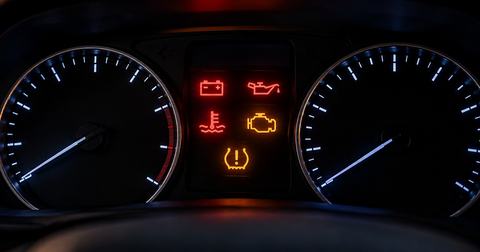
A battery warning light on the dash can point to the charging system, not only the battery. Our guide to the battery light covers that, and a car that won't start has its own guide.
When should you replace a car battery?
Replace a car battery when it fails a battery test after a full charge, or when the case is cracked, leaking or swollen. Age alone is a reason to test, not to replace.
Once a battery is three years old, have it tested every year, and do it in the fall in a cold climate. A battery that coasts through summer can quit on the first freezing morning.
A battery that keeps going flat can still be good, since a power drain, a loose clamp or a weak alternator does the same. Our guide to a bad alternator or battery sorts out which one it is.
How do you test a car battery?
Test a car battery with a battery tester that checks its starting power, because a voltmeter only shows how charged it is. A battery can read a healthy 12.6 volts and still lack the strength to start the car.
A load test works the battery the way a cold start does. The handheld tester many parts stores use is a different, quicker check, so ask which test was run. A flat battery has to be charged before it can be tested, and an AGM battery needs a tester set for AGM.
Parts stores test batteries for free. We'd ask for the result in writing, so the next test has something to compare against.

A resting 12.4 volts
A voltmeter is still useful for the charge, read with the car off for a few hours. Here's what a resting reading means on a standard battery at about 80°F, from full to flat:
| Resting voltage | What it means |
|---|---|
| 12.6 volts | Fully charged. An AGM battery reads about 12.8 when full. |
| 12.4 volts | About three quarters charged, and the point below which it needs a charge before any test. |
| 12.2 volts | About half charged. |
| 12.0 volts | About a quarter charged. |
| Below 12.0 volts | Close to flat, so charge it and have it tested. |
How do you tell how old your car battery is?
Look for a date code on a sticker or stamped into the case, on the top or the side. On the chart from East Penn, a battery maker, a code like 1/23 means January 2023.
Other brands use letters and numbers instead, so check the maker's own chart if the code isn't plain. The code marks when the battery was made, which can be months before it went into your car.
Your receipt or a shop's sticker gives the install date. We'd buy from a store that sells a lot of batteries, so the stock on the shelf is fresh.
What shortens car battery life?
Time wears every battery down, and a few habits speed it up. These are the things that shorten car battery life, starting with heat:
- Heat. It speeds up the chemistry that ages a battery, and under-hood temperatures can pass 200°F in summer.
- Short trips. Starting takes a big draw, and a short drive doesn't give the alternator time to put it back.
- Sitting for weeks. A parked battery slowly discharges itself, and the car's electronics keep drawing a little power.
- Running it flat. Letting a battery go completely dead shortens its life, even if it recharges.
- Vibration. A loose or missing hold-down lets the battery shake, which breaks down its insides.
- Charging faults. Under- or overcharging ages it, and one charge above 15.4 volts can badly shorten the life of an AGM (absorbed glass mat) battery.
Cold is the odd one out, because it exposes a weak battery more than it wears one out. A battery loses about 35% of its strength at 32°F and about 60% at 0°F, so summer's damage shows up in winter.
A battery that isn't fully charged can also freeze in extreme cold and crack. That's one more reason to keep a battery charged through the winter, rather than leaving it to sit.
Worth knowing
A short drive takes more out of a battery than the alternator puts back. A longer drive now and then helps put the charge back, and a maintainer keeps a car parked for weeks charged.

Heat next door
How do you choose a replacement battery?
Match what the car came with, because its charging system is set up for that battery. Here's what to match on a replacement car battery:
- The type. Standard flooded, EFB (enhanced flooded) or AGM. Replace a stop-start car's battery with the same type it came with, and a carmaker's manual for an AGM car warns a standard battery in its place will have reduced life.
- The group number. It sets the size, the hold-down and where the terminals sit, so the battery fits and the cables reach.
- Cold cranking amps. The CCA rating, the battery's starting power in the cold, should meet or beat the original's. A much higher rating can mean a shorter life in a hot climate.
- The replacement number. The label on the original battery can carry the part number to ask for.
Some newer cars need a setup step after a new battery so the car charges it correctly. Check your owner's manual or ask the installer whether it's part of the job.
What does a car battery warranty cover?
A car battery warranty replaces a defective battery free within its free-replacement period, 90 days to 4 years on the lines we checked. After that, some warranties give only a discount on the next battery.
The period starts on the day you buy, and the receipt proves it. Without one, a store may go by the date code, which can make the battery look older than it is.
A replacement under warranty doesn't restart the clock, it carries on from the first purchase date. A battery that's only discharged gets recharged, not replaced, and labor to fit the new one may cost extra.
What to ask at the counter
Before you buy a battery, ask:
- How many years of free replacement, and what happens after that?
- Is this the same type and group as the one in my car?
- How old is this battery, going by its date code?
“I need the same type and group as my original. How many years of free replacement does it have, and how old is this one?”
If a shop quotes the job, check the total with our car repair estimate before you say yes. A longer free-replacement period is the number worth comparing, and AAA suggests looking for three years or more.

Use this image
Free to republish under CC BY 4.0: credit Oil & Miles and link to this page. The snippet does both.
<a href="https://oilandmiles.com/articles/car-battery-life"><img src="https://oilandmiles.com/assets/img/diagrams/car-battery-life-checklist.jpg" alt="Car battery life checklist: three to five years, less in the hot south, and heat, short trips and sitting shorten it. Watch for a slow crank, clicking, dim lights and repeat jump starts. Test it every year from year three, charge it first, and replace it when it fails a test or the case is swollen. Match the type, group and cold cranking amps, and keep the receipt for the warranty." width="1200" height="1516"></a> <p>Infographic: <a href="https://oilandmiles.com/articles/car-battery-life">Oil & Miles</a>, CC BY 4.0</p>From the makers
What do carmakers and battery makers say?
The carmakers' manuals cover the battery type and the cold, and the battery makers' papers cover charging and the warranty. Each card quotes the document in its own words.
None of them sets a replacement interval, which is why the testing steps above matter more than the battery's age. The warranty card shows what a free-replacement period does and doesn't promise.
Battery warranty DieHard and Autocraft
When a battery is replaced during the ‘Free Replacement Period’, the warranty does not renew, it continues on from the original date of purchase.
Battery care guide Basic Rules for Battery Care and Maintenance
Charging a Gel or AGM battery on a typical shop charger that exceeds 15.4 volts – even one time – may greatly shorten its life.
Owner's manual 2025 Chevrolet Equinox, Battery
Installation of a standard 12-volt battery will result in reduced 12-volt battery life.
Conclusion
What to do next about an old car battery
If it's three years old or more, have it tested once a year, in the fall where it freezes. If it fails the test after a full charge, replace it like for like: the same type, group and cold cranking amps or more.
Oil & Miles checks each step here against carmakers' manuals and battery makers' own documents.
Common questions
Asked most often
Should I replace a 5-year-old battery that still starts fine?
Have it load tested first, after a full charge. If it passes, it can stay, but test it again before winter, because it's near the end of the usual range.
Can a car battery read 12.6 volts and still be bad?
Yes. A voltmeter shows the charge, and only a load test shows whether the battery can still deliver the current a cold start needs.
How long does a car battery last without driving?
There's no single figure, because every car draws a little power while it's parked. A battery maintainer keeps it charged if the car will sit for weeks.
Do AGM batteries last longer than regular batteries?
No battery maker or carmaker document we read gives a lifespan by type. A car built for an AGM battery needs one, and one carmaker warns a standard battery there will have reduced life.
Does a 3-year warranty mean the battery lasts 3 years?
No. The free-replacement period is how long the seller replaces a defective battery for free, and a battery can fail sooner or last well past it.
What people ask next


Sources
- Know When to Replace the Car Battery, for the three-to-five-year rule, the north and south split, heat, vibration, testing after three years, replacing like for like and the warranty advice. AAA, read October 23, 2026
- Cold Weather Is Hard on Your Car Battery, for the battery's strength at 32°F and 0°F. AAA Hudson Valley, January 22, 2026, read September 24, 2026
- Basic Rules for Battery Care and Maintenance, for the date code chart, the resting voltage readings, charging before a load test, the load test and the AGM charging limit. East Penn Manufacturing, February 2026, read October 23, 2026
- 2025 Chevrolet Equinox Owner's Manual, Battery, for the AGM battery, the replacement number and the charger limit. GM, read October 23, 2026
- 2015 Nissan Altima Owner's Manual, cold weather driving, for a battery freezing when it isn't fully charged. Nissan North America, read October 23, 2026
- Interstate Batteries' Limited Warranty, United States, for the free-replacement and discount periods, the purchase date, carried-over coverage and what isn't covered. Interstate Batteries, edition for purchases May 2019 to July 2020, read October 23, 2026
- Automotive Battery Limited Warranty, for the DieHard and Autocraft free-replacement periods, the warranty not renewing and discharged batteries. Advance Auto Parts, read October 23, 2026
- Parts guides and dealers: AutoZone, CarVision, Holman and Walser, on short trips, how long a drive tops a battery up, cars left parked, testing before winter and the signs of a weak battery. Read October 23, 2026
How this was compiled
The lifespan and the testing steps come from AAA and a battery maker's own care guide, and the battery type and the cold from carmakers' manuals. The warranty terms come from a battery maker's and a parts chain's published warranties, and parts guides and dealers are used only where two or more agreed.
What we didn't do
We didn't test batteries ourselves, and none of the manuals or battery makers' documents we read sets a replacement interval or a lifespan by battery type, so we give neither. This page gives no prices, and electric and hybrid drive batteries are a different product it doesn't cover.
Compiled in October 2026 for the US market. This article is general information, not advice about your specific vehicle. See the disclaimer.