
Key takeaways
- Safety: If the temperature gauge reaches the red or a coolant warning comes on, pull over where it's safe, let the engine cool and never open the coolant cap while it's hot.
- A thermostat stuck open keeps the engine cold, so the gauge stays low and the heater is weak.
- One stuck closed overheats the engine, and you shouldn't keep driving it.
- A check engine light with P0128 can point at a thermostat stuck open, though other faults can set it too.
- Low coolant or a bad water pump can look the same, so a shop confirms which way it sticks before replacing the part.
The thermostat is a valve in the cooling system that controls the flow of coolant to keep the engine within its operating range. It stays shut while the engine warms up and opens to let hot coolant into the radiator, so one stuck in either position throws the temperature off.
Is it safe to drive with a bad thermostat?
If the temperature gauge reaches the red or a coolant warning comes on, pull over where it's safe, let the engine cool and never open the coolant cap while it's hot. A thermostat stuck closed overheats the engine, so don't keep driving it once the gauge climbs. Only while you get to a safe spot, turn the A/C off and set the heater to full heat and full fan, because it carries some heat away from the engine.
A thermostat stuck open keeps the engine cold, which costs fuel economy and raises emissions, so have it checked soon instead of ignoring it. If the check engine light comes on, have the car checked as soon as you can.
What are the symptoms of a bad car thermostat?
The thermostat holds the engine cold when it sticks open and holds the heat in when it sticks closed. Most signs show on the gauge and in the heater:
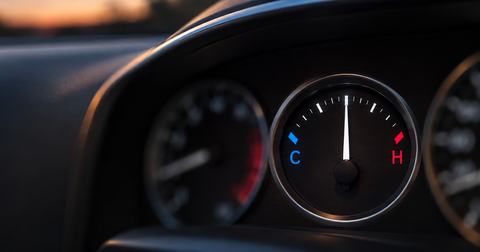
- The gauge stays low. The needle barely rises or stays at its lowest setting, and the engine is slow to warm up.
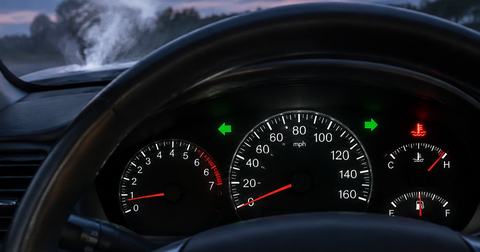
- The gauge climbs fast. It goes from cold to too hot, and a coolant temperature warning can light.
- The gauge swings. A needle that spikes and drops can mean a thermostat that opens only part of the way.
- The heater blows lukewarm. Poor cabin heat can be blamed on the heater when the thermostat is the cause.
- Fuel economy drops. A thermostat stuck open raises fuel use and emissions.
- The check engine light comes on. P0128 means the coolant stays below the temperature the thermostat should hold. A thermostat stuck open is one cause, and a faulty coolant temperature sensor or low coolant can set it too. For more, see the P0128 code.
- Coolant leaks at the thermostat housing. A leak shows up at the housing, its gasket or seal, or a hose joined to it.
- A hoot, gurgle or swoosh from the cooling system. A noise alone isn't always a fault, as on the 2012 to 2014 Chevrolet Impala with the 3.6-liter engine, where GM lists no performance concern.
A leak or a noise alone doesn't name the thermostat, so read the gauge and the heater first. They point to which way it may stick and whether you stop or get it checked.
The fix for a leak depends on which part leaks, so have it traced before a part is replaced. On some cars the cure is a different part altogether, as on the 2007 to 2015 Mazda CX-9, where a modified lower radiator hose fixed a leak at the housing.
Is the thermostat stuck open or stuck closed?
A thermostat stuck open keeps the engine cold, and one stuck closed overheats it. The gauge tells them apart:
| What you notice | Stuck open | Stuck closed |
|---|---|---|
| The gauge | Barely rises or stays at the lowest setting. | Climbs from cold to too hot. |
| The warning | The check engine light, which can come with P0128. | The coolant temperature warning can light. |
| Can you keep driving? | Have it checked soon. | No. Pull over and let the engine cool. |
Either way, a shop confirms which one it is before replacing the part, because other faults give the same signs. A code or a coolant leak can add to the picture.

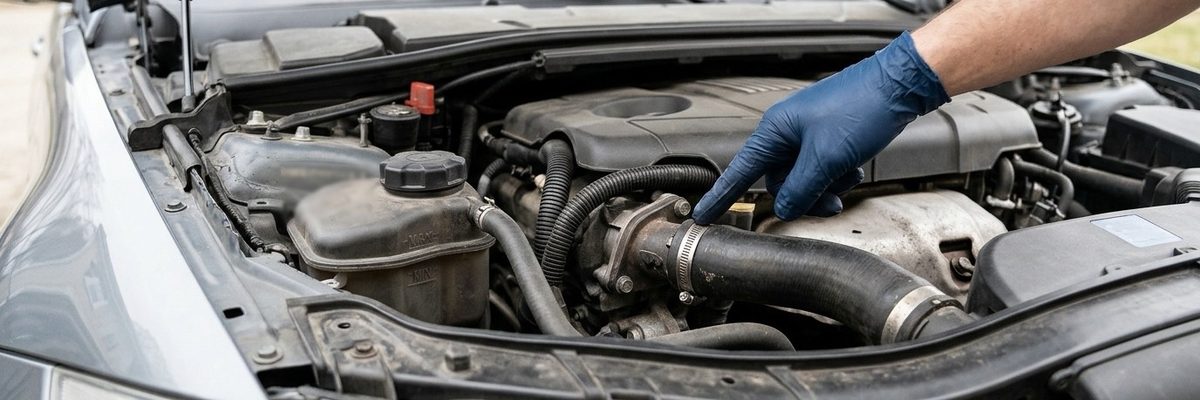
A removed thermostat
Is it the thermostat or something that looks like it?
Low coolant and a bad water pump overheat an engine the same way, so a rising gauge doesn't prove the thermostat. For the others, see bad water pump symptoms, a coolant leak and an overheating engine.
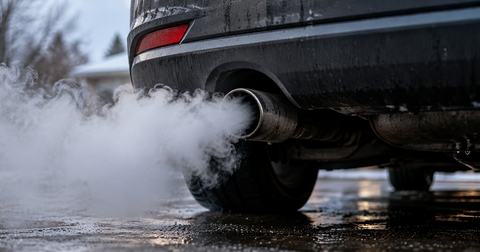
Vapor from the radiator area in rain, snow or humid weather can be normal, because moisture on the radiator turns to vapor when the thermostat opens and lets hot coolant in, as on the 2018 Jeep Wrangler. If the weather doesn't explain it, check for a leak.
How can I test a car thermostat?
You can't see the thermostat without taking it out, so the home check is what the gauge and the heater do once the engine has warmed up: a gauge that stays low with a weak heater, or a gauge that climbs. That's enough to tell a shop what you saw.
A shop confirms it with the coolant temperature reading on a scan tool and a look at the coolant level, before it replaces the part. Which way it sticks decides the repair.
What should I tell the shop?
Tell the shop what the gauge and the heater do, when it started and whether a code is stored, because those point at the thermostat or away from it:
- What the gauge does. Low, climbing or swinging, and how long after the start.
- The heater. Warm, lukewarm or cold once the engine has run.
- Any code. A stored code, such as P0128.
- When it started. Suddenly, slowly or after a coolant service.
With the gauge reading and the code in hand, the shop can test the thermostat first instead of guessing at the parts around it. Say how long the engine ran before the gauge moved.
What to say to the shop
When the gauge sits low or the heater is weak and you suspect the thermostat.
- Is the thermostat stuck open or stuck closed?
- Is there a stored code, and is it P0128?
- Could low coolant or the water pump cause the same signs?
“The gauge stays low and the heater is weak. Is the thermostat stuck open, and is there a code?”
A good answer: it names which way the thermostat sticks and what the code and the gauge showed.

A scan tool
What fixes a bad thermostat?
Fix it in this order:
- Note which way it sticks. A cold gauge and a weak heater point one way, and a climbing gauge the other.
- Have the shop confirm it. A code, the warm-up and a look at the coolant level separate a bad thermostat from a look-alike.
- Replace the thermostat with the correct type. Other designs can mean poor coolant performance, poor gas mileage and higher emissions, as on the 2018 Jeep Wrangler.
- Fix any leak at the housing. Have the leak traced first, because the fix depends on which part leaks.
- Refill and bleed the system. After the job the coolant is refilled and the air bled out, as on the 2014 Ford Focus ST.
- Recheck the gauge. It should warm up and hold steady.
From the makers
What do the makers say about the thermostat?
None of these cards is a recall, and each one covers only the vehicle it names. A dealer or shop can say how the same rule applies to your vehicle.
Owner's manual Hyundai Elantra 2022
Do not continue driving with an overheated engine.
Owner's manual Jeep Wrangler 2018
If replacement is ever necessary, install ONLY the correct type thermostat.
Owner's manual Toyota Camry 2007
The thermostat is designed to control the flow of coolant to keep the temperature of the engine within the specified operating range.
Owner's manual Ford Focus ST 2014
Idle the engine until the upper radiator hose is warm (this indicates that the thermostat is open and coolant is flowing through the entire system).
Service bulletin 09-56-13
The thermostat may open at a temperature which is lower than specified and cause DTC P0128 to be stored in the ECM memory.
Service bulletin PIP4957B
The customer may complain of a Hoot, Gurgle, Howl, or Swoosh noise from the engine cooling system. There are no performance or durability concerns.
Conclusion
What to do next about a bad car thermostat
If the gauge climbs or a warning comes on, stop and let the engine cool before anything else. If the gauge stays low or the heater is weak, have the shop check the thermostat and any code.
Oil & Miles checks each statement here against carmaker manuals and bulletins and named parts sources.
Common questions
Asked most often
Can you drive with a bad thermostat?
Don't keep driving an engine that is overheating. A thermostat stuck open keeps the engine cold, so have it checked soon.
Can a bad thermostat make the heater weak?
Yes. A thermostat stuck open keeps the engine cold, and weak cabin heat can be blamed on the heater when the thermostat is the cause.
Can a thermostat set the check engine light?
Yes. A thermostat stuck open can set a code such as P0128, though other faults can set it too.
Can I just take the thermostat out?
No. Removing it can make the engine overheat, because the thermostat keeps the temperature in its operating range, as on the 2007 Toyota Camry.
Is a noise from the cooling system a bad thermostat?
Not by itself. A hoot, gurgle or swoosh can come from the cooling system with no performance concern, as on the 2012 to 2014 Chevrolet Impala with the 3.6-liter engine.
What people ask next
Sources
- Hyundai Elantra 2022 owner's manual, for the overheating warning. Hyundai and Kia, read November 13, 2026
- Chrysler group owner's manuals, Jeep Wrangler 2018, for the correct thermostat type and vapor from the radiator. Chrysler, read November 13, 2026
- Toyota Camry 2007 owner's manual, for what the thermostat does. Toyota, read November 13, 2026
- Ford Focus ST 2014 owner's manual supplement, for the warm upper radiator hose after a coolant service. Ford, read November 13, 2026
- Subaru bulletin 09-56-13, for the thermostat and P0128 after a cold soak. Subaru, read November 13, 2026
- Mazda bulletin 01-008/16, for a leak between the lower radiator hose and the thermostat housing. Mazda, read November 13, 2026
- GM bulletin PIP4957B, for the cooling system noise. GM, read November 13, 2026
- Denso Europe, thermostat news page, for the signs of a thermostat stuck open or closed. Denso, read November 13, 2026
- YourMechanic, bad thermostat symptoms (Jeff Engstrom), for the gauge pattern within the first 15 minutes. YourMechanic, read November 13, 2026
AI illustration by Oil & Miles
This article is general information, not advice about your specific vehicle. See the disclaimer.