
Short answer
Usually uneven pad deposits, not a bent rotor
If the wheel shakes only under braking, the cause is nearly always at the front brakes, but "warped rotors" is the wrong description of it, and it changes what the correct fix is. If it shakes when you're not braking too, the problem is somewhere else entirely. Five faults produce this shake and they run $20 to $650, two of them sometimes costing nothing.
When a steering wheel shakes when braking, start by separating two symptoms, because a shake only under braking and a shake at a steady speed lead to different places, and the wrong answer wastes real money:
- Shakes only when braking. The brake system, almost always the front discs. Keep reading.
- Shakes at a steady speed whether or not you brake, typically getting worse around 50–70 mph: wheel balance, a tire problem, or a worn suspension component. The brakes are innocent.
Where you feel it also narrows things down. Vibration through the steering wheel points to the front; vibration through the seat and floor points to the rear.
That single observation saves a lot of guessing, so pay attention to it on the next drive and be ready to describe it.
How it feels is worth a sentence of its own at the counter, because the two words people reach for describe different things. A wheel that vibrates is buzzing quickly under your palms, and that fine, fast rhythm is the front discs.
A wheel that shakes is swinging slowly enough to see, and that usually means something looser than a rotor.
1. Is uneven pad transfer why the steering wheel shakes when braking?
Typical cost: $230 to $896 per axle, or sometimes nothing.
This is the cause shops name most often, and the popular name for it is misleading. We couldn't trace a published figure for how often it turns out to be the answer, so read that as the trade's consensus rather than a measured share.
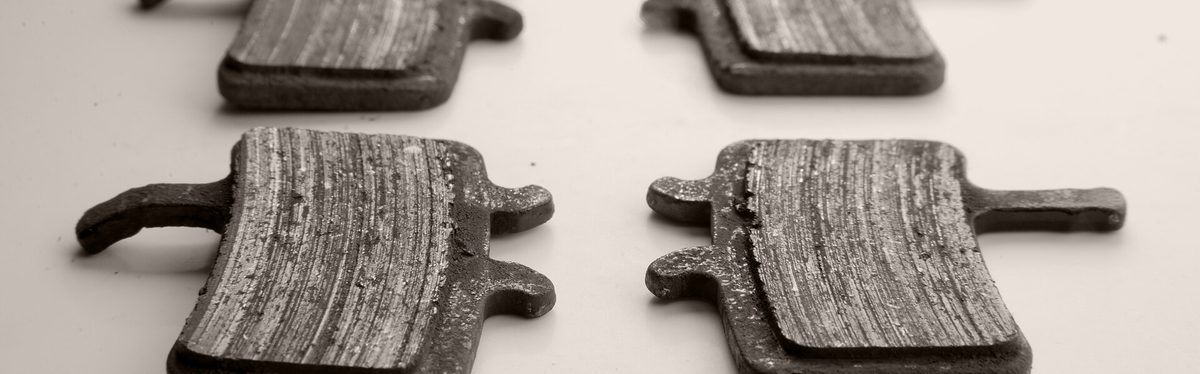
Rotors rarely bend. What happens is that pad material transfers onto the rotor face unevenly, leaving patches that are fractionally thicker and harder than the surrounding surface.
The word survives anyway. It's the wrong noun for the right symptom, and what the word actually covers is three different faults with three different bills.
Each time a patch passes under the pad, the is pushed back a little. Repeat that at wheel speed and you get a pulsing you feel through the steering wheel.
The usual trigger is heat followed by standing still. A hard stop down a long hill, then sitting at a light with the pedal held, leaving pad material pressed against one hot spot.
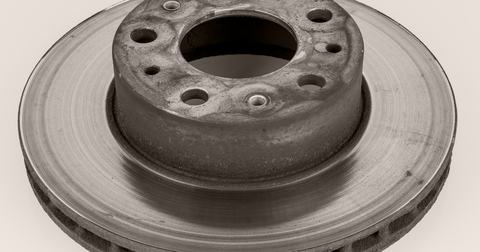
The fix is normally new pads and rotors. Machining can work if the rotors still measure comfortably above , but on modern thin rotors there's often not enough material to justify it.
See brake pad and rotor replacement cost for what that should cost.
Worth knowing
The pattern that costs money is the same car going in twice. Rotors and pads get replaced, the shake goes for a few weeks, then returns, and the second visit is where somebody finally looks at the slide pins or the wheel bearing.
Two habits prevent most of it: First, bed new pads and rotors in: moderate stops from moderate speed, then a few minutes without sitting on the pedal at a standstill. That step alone prevents a large share of repeat vibration.
Second, holding the car on the foot brake at a light straight after hard braking lays down exactly the uneven deposit that causes this. Use the parking brake, or roll forward a few feet.
2. Is a caliper slide pin sticking?
Typical cost: $80 to $220, or $300 to $600 if the caliper itself is dead.
A floating caliper slides on two greased pins inside rubber boots. When a boot splits, water gets in, the pin corrodes, and the caliper stops releasing cleanly.
One pad drags, that corner runs hot, and you get uneven wear plus vibration.

Where a braking shake is built
The tells are easy to spot: one pad much thinner than the one opposite it, a wheel noticeably hotter than its partner after a gentle drive, or a smell of hot brake after normal driving. Often the car also pulls slightly to one side.
Caught early this is a cheap job: clean the pins, new boots, correct high-temperature grease. Caught late, the caliper is seized and the rotor is cooked, and you're paying for both.
3. Are the front suspension or steering parts worn?
Typical cost: $150 to $500 per side.
Braking loads the front suspension hard. If a ball joint, tie rod end, control arm bushing or wheel bearing has play in it, that load makes the play show up as a shudder that only appears under braking.
It's also the one most likely to be quoted as a bigger job than it is, so read the estimate line by line before agreeing. This one matters more than the others, because these components hold the wheel onto the car.
If a shop finds play in a ball joint or tie rod end, that's not a comfort item to defer. It's the failure that ends with a wheel at an angle it should never reach.
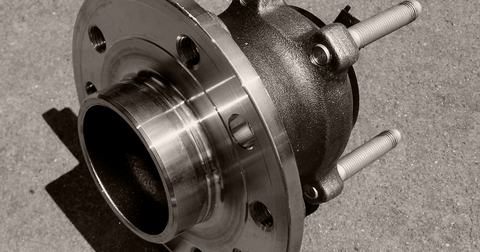
A worn wheel bearing usually announces itself first as a hum that changes pitch when you sway the car gently left and right at speed. If you have that hum and a shake under braking, mention both together.
4. Is it the wheels or the tires?
Typical cost: $20 to $120 to check and rebalance.
Normally a balance problem shows at a steady cruise rather than under braking. A shake that turns up at speed but not on the brakes is a different question, and one worth ruling out before spending on brakes at all, because the cheap checks come first here for the same reason they do in everything that starts costing money with age.
But there are exceptions worth ruling out because they're so cheap to check: a bent wheel rim, a tire with a separated belt, or an uneven flat spot from a hard emergency stop.
A belt separation often looks like a subtle bulge or a wobble in the tread as the wheel turns slowly. Since it's inexpensive to have wheels checked and balanced, and since the same visit gets the tires inspected properly, this is a sensible early step if the diagnosis isn't obvious.
5. Is it rust, or how the wheel was fitted?
Typical cost: often nothing.
Two overlooked ones.
Corrosion on the . Rust builds up between the hub and the back of the rotor, so the rotor no longer sits perfectly flat, and you get the same pulsing as a thickness variation, from a brand new rotor.
This is why a good shop cleans the hub face before fitting.
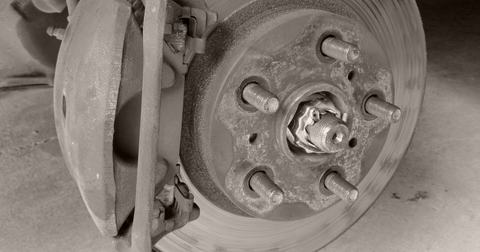
Wheel nuts tightened badly. Rattled on with an impact gun in a random order and to no particular torque, they can distort the rotor hat enough to cause vibration.
Correct practice is a star pattern to the manufacturer's torque figure with a torque wrench.
Both of these have a distinctive fingerprint: the shake appeared shortly after brake work or a tire change. If that describes your car, mention the timing.
It points straight at the cause.
How much does it cost to fix a steering wheel shake?
$20 to $650, and sometimes nothing at all. Five separate faults cause this shake, so you're paying for the one that is yours rather than for all five.
The order below runs cheapest first rather than most likely first, and that's deliberate: the most likely cause is also the most expensive, and two of the five can come to nothing once somebody has looked.
What it costs
What this box shows
Prices for this repair, drawn from the sources named at the foot of the box. Each figure states whether it covers the part alone or parts and labor.
Repair cost for a shaking steering wheel
Estimates by fault, cheapest first. No total: one causes your shake, not all five.
| Rust or a dirty hub faceDirty hub face or unevenly tightened lug nuts; often free | often nothingNothing to buy |
|---|---|
| Wheel and tire balanceCheck and rebalance; the shake shows at speed too | $20 – $120Labor only, estimated |
| Sticking caliper slide pinEarly: clean and re-grease. Late: a dead caliper, $300 to $600 | $80 – $220Parts and labor, estimated |
| Loose front suspension or steeringPer side. Worn ball joint or tie rod end, shows under braking | $150 – $500Parts and labor, per side |
| Pads and rotorsPer axle; shops' most common cause. Deposits can sometimes be driven off | $230 – $896Parts and labor, per axle |
Two of the five can come to nothing, which is why the order here runs cheapest first rather than most likely first. The most likely is the most expensive.
How should you describe the shake to a shop?
Shops diagnose faster with better information. Four things about the shake tell a shop where to look, so note them before you go:
- Only when braking, or all the time? This rules out half of it. A vibration that never goes away is a wheel or a suspension part, not the disc.
- Steering wheel, or seat and floor? This says which axle. The wheel carries front-axle vibration; the seat and floor carry the rear.
- At what speed? High-speed-only braking vibration behaves differently from a shudder at walking pace.
- What changed just before it started? New tires, new brakes, a long descent, a curb strike, a pothole. Each one points somewhere else.
None of these diagnose the car. They decide which of the five causes gets checked first, which is the difference between one visit and three.
What should you do about the shake?
Brake vibration isn't usually an emergency, but it's not something to live with either. It lengthens stopping distances and it's often the visible end of a problem that's still developing.
When you do get a quote, what a pad and rotor job should cost tells you whether the number fits the fault.
Get it looked at within a couple of weeks. Ask for the pad and rotor measurements, ask specifically whether the slide pins move freely, and ask whether there's any play in the front suspension.
If the answer to all three is a shrug, find another shop before spending money.
We ranked the five by cost, not by how often each one happens. We did that because the cheap checks are the first thing dropped once an expensive answer is already sitting on the estimate.
Stop driving and get it towed if any of these are also true: the pedal has gone soft or drops slowly, the shake is accompanied by a grinding noise, the car pulls hard to one side under braking, or the brake warning light is on.
Conclusion
The shake names the brakes, not the part
Five faults produce one sensation, and the most expensive is the one shops name first. A shake only under braking is almost always at the front brakes, but which of the five it is decides whether you pay nothing, $20, or $650.
Two of them can come to nothing once somebody has actually looked.
So describe when it happens rather than what you think it is, and ask which of the five was ruled out before the quote names pads and rotors. Oil & Miles orders causes by what they cost rather than by what sells, across symptoms.
Common questions
Asked most often
Why does my steering wheel shake when I brake?
Most often uneven pad material transferred onto the rotor face, not a bent rotor. Other causes are a sticking caliper slide pin, worn front suspension, a wheel or tire fault, or corrosion behind the rotor.
Can warped rotors be fixed?
Machining works only if the rotors still measure comfortably above their minimum thickness. On modern thin rotors there's often not enough material left to justify it.
Is it safe to drive with a shaking steering wheel?
Usually not an emergency, but don't live with it, it lengthens stopping distances. Stop and get it towed if the pedal has gone soft, there's grinding, or the car pulls hard to one side.
How much does it cost to fix brake vibration?
Pads and rotors on one axle run about $230 to $896. A sticking slide pin caught early is $80 to $220; left late it becomes a seized caliper and a cooked rotor.
What people ask next
How this was compiled
The five causes are ordered by what they cost to fix, which is the order a shop should work through them, and where a cause involves steering or suspension the article says so rather than treating it as a comfort complaint. Prices are US ranges compiled in August 2026 on the same basis as our other cost guides: parts at typical retail plus at prevailing shop rates.
What we didn't do
We didn't measure how often each cause is the answer, because no frequency data we could check exists.
The order is a checking order, not a ranking, so a cheap cause listed first isn't a prediction that yours will be cheap.
Prices are ranges compiled in August 2026 for the US market and vary by region, vehicle and shop rate. Prices from $10 up are rounded to the nearest dollar, so $14.13 reads as $14 and $14.52 as $15. Below $10 they're exact. General information about a common symptom, not a diagnosis of your vehicle. Braking systems are safety-critical, so have any brake complaint inspected by a qualified mechanic. See the disclaimer.
Caliper
The clamp that presses the pads against the disc, driven by hydraulic pressure from the pedal.
Minimum thickness
The thinnest a disc may be machined to and still go back on the car.
Book time
The published number of hours a repair is deemed to take, from an industry labor guide.