
Key takeaways
- Safety: If the temperature gauge reaches the red or a coolant warning comes on, pull over where it's safe, let the engine cool and never open the coolant cap while it's hot. If the A/C is on, turn it off.
- Weak vents are an airflow problem, and a clogged cabin filter is one cause.
- Check both temperature settings, the condenser and the fan before you spend money.
- A recharge can bring the cold back for a while, but it doesn't fix a leak.
- Opening the system or adding refrigerant belongs in a shop.
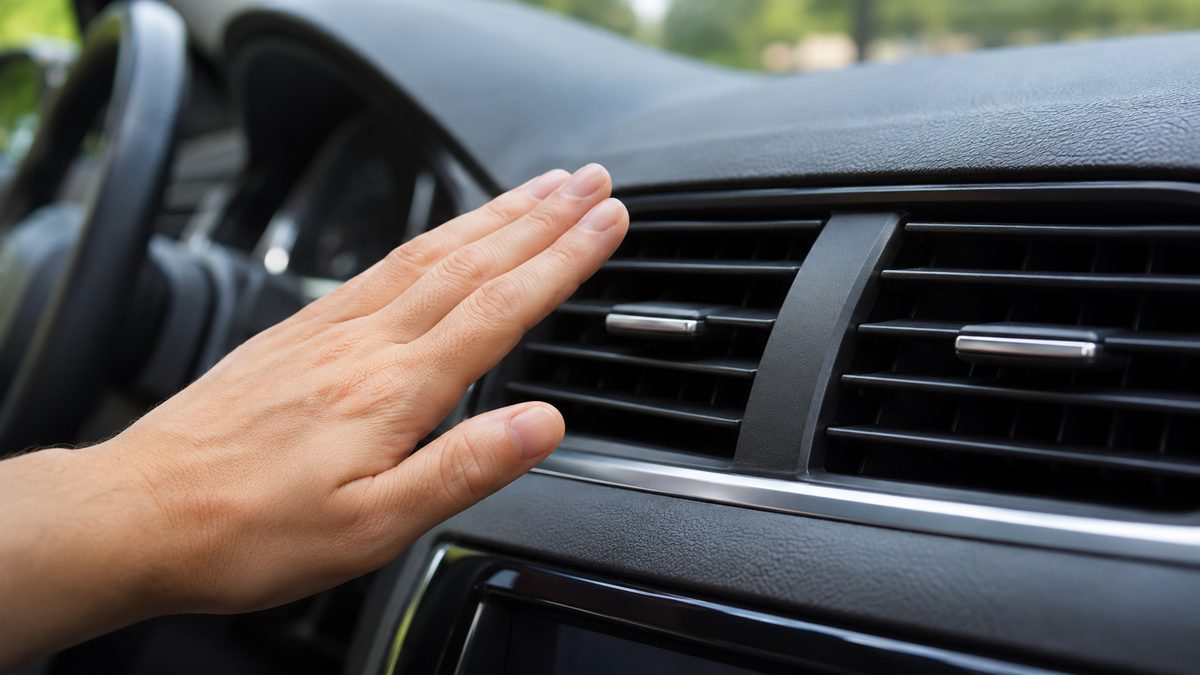
A car A/C that doesn't blow cold air can be missing refrigerant, short of airflow across the condenser (the part in front of the radiator), or short of airflow into the cabin. These faults have different fixes, and a failed part such as the compressor (the pump that moves the refrigerant) can also be the cause.
Why is my car AC not blowing cold air?
Low refrigerant is one cause, and refrigerant only runs low when it leaks out. Topping it off brings the cold back for a while, but only repairing the leak fixes it.
Warm air and weak air are two different problems. Weak vents with windows that fog easily can mean a clogged cabin filter, which is an airflow problem and not a cooling one.
If the air is cold while you drive but warm when you stop, check the cooling fans and the condenser. At idle less air moves across the condenser, so a fan problem or a blocked condenser shows up there.
What should you check first?
Do these checks outdoors, in this order. Never run a car inside a garage attached to a house, even with the garage door open.
- Check both temperature settings. On a car with dual-zone climate control the driver and passenger sides are set separately, so check both before you suspect a fault on one side.
- Allow for cold weather. On some cars the A/C won't run when it's below about 40°F outside, and that's normal.
- Look at the condenser. Look through the grille at the condenser in front of the radiator for dirt, leaves or insects. Cleaning it is regular maintenance, and on some cars grille covers also cut the airflow it needs.
- Watch the fan. With the engine running and the A/C on, see whether the fan that pulls air through the condenser runs. Keep hands, hair and clothing clear of the fan and the drive belts while the engine runs, and remember the radiator fan can start on its own, even with the engine off.
- Check the cabin filter if the vents are weak. You can change it yourself.
Anything that opens the system or adds refrigerant is a job for a trained technician, because the system holds refrigerant under high pressure. These checks only look and listen.
What does your symptom mean?
When and where the air goes warm points to the cause. Warm only when you stop points to the fans or the condenser, a difference between the two sides to the settings or the blend door, and weak airflow to the cabin filter or the evaporator.
| What you notice | What it points to first |
|---|---|
| Warm when stopped Cold while you drive, warm at a light or in traffic. | The cooling fans or a blocked condenser, because less air moves across the condenser at idle. |
| Cold on one side only The driver and passenger sides feel different. | Both temperature settings first, then the blend door (the flap that mixes hot and cold air). |
| Weak airflow The vents blow weakly, even on high. | A clogged cabin filter, or a dirt-coated evaporator behind the dash. |
| Pulley spins, air is warm The compressor pulley turns but the vents stay warm. | A shop check, because a spinning pulley doesn't prove the compressor is pumping. |
| Noise and no cooling Rattling, grinding or squealing from the engine bay. | A failing compressor can cause it, and that's a shop job. |
| Musty smell A damp smell when the A/C first comes on. | Mold on the evaporator, which a shop cleans or treats. |
| Won't come on in the cold The A/C does nothing on a cold day. | Normal on some cars below about 40°F. |
| Engine dips slightly The engine speed drops a little when the compressor cycles. | Normal on some cars. |
| No air at all Nothing comes out of the vents on any fan speed. | The blower circuit: its fuse, its relay or the blower motor. |
A symptom that fits no row needs a proper diagnosis at a shop before any part is replaced. A shop can start with a leak test.

The A/C compressor under the hood
Why is no air coming out of the vents?
No air on any fan speed points to the blower, the fan behind the dash, and not to the refrigerant. The blower motor has its own fuse, and some cars also list a blower relay, as on the 2010 Ford Escape, so a blown fuse or a dead relay can stop all the airflow.
A blower that runs only on high is a different fault. A failed blower resistor or its connector can leave the blower working only on high, as on some 2014 Toyota Tacoma models. Water in the blower control module area can stop the blower completely, and the fix is to reseal the plenum water deflector and replace the wet parts.
What are the common causes?
In my shop, the A/C problems I see most are a leaking line, a failed condenser fan, a dirty cabin filter and a dirty evaporator, and a failing compressor is the other common cause:
- A leak. It lets the refrigerant run out. A shop can find most leaks with an electronic leak detector, but small leaks can be hard to find.
- A fan that doesn't run. The A/C runs warm, most of all at idle or in slow traffic. It's the fan that pulls air through the condenser, and a dirty condenser cuts the same airflow.
- A dirty cabin filter. It cuts the air at the vents, so they blow weak even on high, and it can leave a smell in the cabin.
- A dirt-coated evaporator. The cold core behind the dash blocks the air, so the vents blow weak and the A/C cools poorly. A musty smell when the A/C first comes on can be mold on the evaporator, and a shop cleans or treats it.
- A failing compressor. It can stop the cooling. It can rattle, grind or squeal, and the drive belt can slip on its pulley or the compressor can seize.
Should you recharge it yourself?
No, leave a recharge to a shop. Adding refrigerant should improve the cooling, but neither a top-off nor a recharge permanently fixes a leak.
In my shop, owners decide straight away that the A/C just needs refrigerant. But too much refrigerant makes the A/C cool worse, the same as too little.
Most newer cars use R-1234yf and older ones use R-134a, and the label under the hood or the owner's manual tells you which yours has. R-1234yf is flammable and can catch fire during service if the right steps aren't followed, so a shop should do the recharge. On the 2010 Toyota Prius, the compressor is a high-voltage part with orange cables, so leave it to a dealer or a hybrid-trained shop.
Releasing refrigerant into the air on purpose is illegal. Anyone paid to work on a car's A/C must be EPA certified and use approved equipment.
Liquid refrigerant can cause frostbite on skin, and the vapor is heavier than air and can push out the oxygen in a closed space. If someone breathes in refrigerant, move them to fresh air without breathing the fumes yourself, get emergency medical care right away and call Poison Help (1-800-222-1222).
When should you see a mechanic?
Go to a shop when your own checks don't find the cause. A shop can start with a leak test, and it may add some refrigerant to find the leak. Ask the shop whether it ran a leak test before it quoted a part, and whether it found the leak or only added refrigerant.
My advice is to have the whole system checked first and pay only for the part that failed. Don't let anyone replace parts on a guess, except the cabin filter, which you can change yourself.
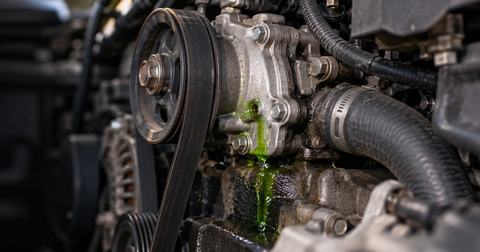
If the temperature gauge reaches the red or a coolant warning comes on, pull over where it's safe, let the engine cool and never open the coolant cap while it's hot. If the A/C is on, turn it off. An engine that overheats is a car overheating problem of its own.
If you see smoke or smell burning from under the hood, pull over and switch the engine off as soon as it's safe, and keep the hood shut until the smoke stops. If you see flames, get everyone out of the car, move at least 100 feet away from it and well away from traffic, and call 911.
What to say to the shop
When a quote names a part before any leak test, ask:
- Did you run a leak test before you quoted a part?
- Was refrigerant added to find the leak?
“My A/C is not cold. Can you run a leak test before you quote a part, and tell me if you added refrigerant to find the leak?”
A good answer: a leak test before any part, and a clear answer on any refrigerant added.
From the carmakers
What do the carmakers and agencies say about car AC?
The rules below come from the EPA and from the carmakers' own documents. Every card names the car or the program it covers.
None of these cards is a recall. They show what the books and bulletins say about the A/C system itself, and your dealer can tell you whether a warranty applies to your car.
Agency page Options for recharging your air conditioner
Topping off or recharging a system should improve cooling the passenger compartment, but neither service permanently fixes refrigerant leaks.
Owner's manual Air conditioning
Refrigerant in your vehicle's air conditioning system is flammable and can be ignited during servicing if proper procedures are not followed.
Owner's manual Air conditioning maintenance
…check the front of the A/C condenser (located in front of the radiator), for an accumulation of dirt or insects…
Owner's manual Climate controls
The A/C does not work when the outside temperature is below 4°C (40°F).
Owner's manual Hybrid system safety
Take care when handling the hybrid system, as it contains a high voltage system (about 650 V at maximum)…
Service message SSM 54738
…may exhibit a lack of cooling from the heating, ventilation, and air conditioning (HVAC) system, which may be accompanied by abnormal rattling, grinding and/or squealing…
Service bulletin 25-NA-170
…scoring on the inside of the desiccant chamber … causing a slow leak of refrigerant at the receiver/dryer desiccant cap.
Conclusion
What to do next about a car AC that's not cold
If the air is cold only while you drive, check the condenser and the fans, and if the vents are weak, check the cabin filter. If the air is simply warm, have a shop diagnose it before any refrigerant goes in.
Oil & Miles checks each step here against the EPA and the carmakers' own documents.
Common questions
Asked most often
Why is my AC running but not cooling?
One cause is low refrigerant, which has leaked out, and topping it off doesn't fix the leak. On some newer cars a spinning compressor pulley doesn't prove the compressor is pumping.
How do I fix a car AC that's not blowing cold air?
Find the cause first: clean a dirty condenser and change a clogged cabin filter. Refrigerant and compressor work belong to a shop, because the system holds refrigerant under high pressure.
How can I tell if my car AC needs refrigerant?
You can't tell for sure from the driver's seat, because warm air has other causes too. Low refrigerant means it has leaked out, so a shop finds the leak with a leak test instead of only adding refrigerant.
Why is my car AC cold on one side only?
On a dual-zone car, check that both temperature settings match first. If they do, the blend door, the flap that mixes hot and cold air, is the next place to look.
Why does my car AC blow cold only when driving?
Less air moves across the condenser at idle, so a fan that doesn't run or a blocked condenser shows up when you stop. Check those two first.
Is water dripping under the car normal with the A/C on?
On some cars, water dripping under the passenger side while the A/C runs is normal. Your owner's manual says whether yours does that.
What people ask next
Sources
- EPA, Options for Recharging Your Air Conditioner, for the top-off, leak check and leak detector rules. EPA, read November 8, 2026
- EPA, Regulatory Requirements for MVAC System Servicing, for the rule on releasing refrigerant and the certification of anyone paid to work on a car's A/C. EPA, read November 8, 2026
- EPA, Acceptable Refrigerants and their Impacts, for R-1234yf and R-134a. EPA, read November 8, 2026
- 2019 Honda CR-V Owner's Manual (US), PDF page 610, for the refrigerant label, the flammable refrigerant and the cabin filter. Honda, read November 8, 2026
- 2015 Chrysler 200 Owner's Manual (US), PDF pages 398 and 593, for the condenser and the high-pressure refrigerant. Chrysler, read November 8, 2026
- 2011 Buick Enclave Owner's Manual (US), PDF pages 231, 232 and 306, for the cold-weather rule, the dual-zone settings and the cooling fan. The 2013 Buick LaCrosse and 2012 Buick Regal books agree. GM, read November 8, 2026
- 2010 Toyota Prius Owner's Manual (US), PDF page 32, for the high-voltage compressor. Toyota, read November 8, 2026
- 2022 Hyundai Elantra Owner's Manual (US), PDF pages 226 and 516, for the compressor cycling, the water under the car and the cooling fan. Hyundai, read November 8, 2026
- 2020 Ford Escape and 2012 Hyundai Sonata Hybrid Owner's Manuals (US), PDF pages 385 and 171, for the high-pressure refrigerant. Ford, Hyundai, read November 8, 2026
- Ford Special Service Message SSM 54738, for the compressor noise and the lack of cooling. Ford, read November 8, 2026
- GM Service Bulletin 25-NA-170, for the slow leak at the receiver/dryer cap. GM, read November 8, 2026
- 2010 Ford Escape, 2011 Ford Edge, 2015 Chrysler 200 and 2017 Chrysler Pacifica Owner's Manuals (US), fuse and relay tables, for the blower fuse and relay. Read November 10, 2026
- Toyota T-SB-0025-14, Kia CLI042 and GM PIC5757, for the high-only blower and the wet blower module. NHTSA, read November 10, 2026
- CDC, Carbon Monoxide Poisoning Basics, for the attached-garage rule. CDC, read November 8, 2026
- MedlinePlus, Refrigerant poisoning, for the fresh-air and emergency-care steps. NLM, read November 8, 2026
The refrigerant rules come from the EPA, and the checks come from the owner's manuals and bulletins listed here, all US editions.
AI illustration by Oil & Miles
This article is general information, not advice about your specific vehicle. See the disclaimer.