

- Message on?
- Note the exact wording on the dash before you call. What it means
- Won't release?
- Press the brake pedal, then the switch, with the car on. Release it
- After battery work?
- On many Hondas, drive a short way above 12 mph with the brake fully off. What clears
- Before you pay
- Check the VIN for a free recall fix. Free fixes
On many cars an electric parking brake is a small motor at each rear brake, not a cable you pull, so its faults arrive as messages. That changes the fixes too, because a weak battery or a software update can be the whole repair.
What does a parking brake malfunction message mean?
A parking brake malfunction message means the electric parking brake found a fault, and some clear by themselves, as a section below shows. Carmakers word it differently, so here's what each parking brake message means, with what to do:
| What you see | What it means | What to do |
|---|---|---|
| Park Brake Malfunction Service Now or Parking Brake Malfunction | The system found a fault that needs service | Stop safely, check the brake is fully off, then see a dealer |
| Park Brake Limited Function Service Required | Some of the brake's functions still work | Book a service soon |
| Electric Parking Brake Problem, Service Parking Brake or an amber EPB light | The system isn't working properly | See a dealer as soon as possible |
| Park Brake System Overheated, or a light that blinks after repeated use | The brake stopped itself to cool down | Wait a minute or two |
| Release Park Brake as you drive off | You're moving with the brake still on | Release it with the switch |
The wording comes from Ford, Toyota, Honda, GM and Chrysler owner's manuals and bulletins, and it changes by model. Check the warning page in your own manual.
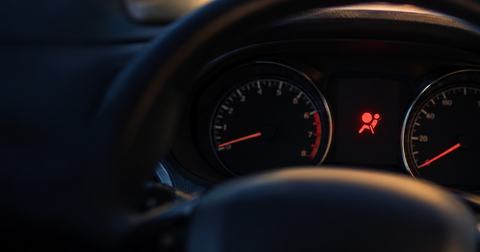
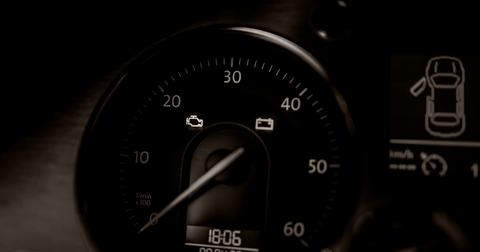
The red parking brake light usually shows the brake is applied, and the amber one warns of a fault. A red BRAKE light can also mean low brake fluid. Our brake warning light guide covers the red BRAKE light when the parking brake is off.

The amber parking brake light
Can you drive with a parking brake malfunction?
You can drive to a shop if the car drives, brakes and parks normally, but don't count on the parking brake to hold it. GM goes a step further: other safety functions that rely on the parking brake may be limited too.
When you park, put the car in P, or in gear on a manual, and block the rear wheels if the brake won't apply. Driving with the brake stuck on is the bigger risk, because the rear brakes overheat and wear fast.
Stop and get help instead when the fault reaches the brakes you drive with, or it can't hold the car parked, in any of these 6 cases:
- It applies or drags while you drive. Two recalls cover parking brakes that could switch on by themselves, so pull over and switch off.
- Smoke from a wheel, or a soft pedal. A dragging brake overheats, and one recall warns that the heat may start a fire. Have it towed.
- The red and amber brake lights together. Honda treats that pair as a stop-now warning, so pull over somewhere safe and call a dealer.
- The red parking brake light flashes. On the recalled 2016 Civic the brake may not have applied, so check that it holds the car and see a dealer.
- It's stuck on and won't release. Don't drive on it, because the rear brakes can fail. Have it towed on a flatbed.
- It won't apply and the car could roll. Park in P, or in gear on a manual, block the rear wheels and get it serviced.
When the brake won't release, Hyundai wants the car carried on a flatbed, so the rear wheels stay off the road. Turn on your hazard lights while you wait, and don't touch a hot wheel.
Why is the parking brake malfunction light on?
The light comes on when the parking brake can't do what it was told, from a weak battery to a failed actuator (the brake's motor). Here's what sets a parking brake malfunction, with the test for each cause:
| Cause and clue | Test this first | Don’t replace yet |
|---|---|---|
| Weak or dead battery Slow starts, several lights, or right after a jump start. | A battery and charging test. | The actuator. |
| Heat from repeated use It blinks after the switch was used several times. | Wait a minute or two. | Any part. |
| A setting or another light It didn't apply at switch-off, or the stability light is on too. | The auto-apply setting, and that system's codes. | The parking brake parts. |
| Damaged wiring or a wet connector It applies by itself, won't release, or the message comes and goes. | A recall check, then a harness and connector check. | The actuator. |
| Brake module software A message with a brake module code. | A VIN check for a software update. | Any part. |
| The actuator motor The brake won't move at all on one side. | The codes and a test of that motor. | Both sides at once. |
The first three causes are the cheapest to rule out. The sections below explain each one, from the cheapest check to the dealer's.
1. A weak or dead battery
A dead battery leaves an electric parking brake unable to apply or release. A drained one can also set faults.
So charge or jump the battery before anyone tests the brake. Our guide to a bad alternator or battery covers the charging test.
2. Heat from repeated use
Work the switch several times in a row and the system stops itself to keep from overheating. The light blinks, or a message says it overheated.
A Honda is ready again after about a minute, while Ford allows two. If it comes back without the repeated use, have the codes read.
3. A setting or another system
Some cars apply the brake at switch-off only when a menu setting is on, and Honda delivers its cars with that setting switched off. On others, the parking brake warning comes on because the stability control light is on, not because of a parking brake fault.
Some warning lights also stop the brake from releasing by itself as you drive off. Then it stays on until you use the switch, which can look like a fault.
4. Damaged wiring or a wet connector
The wiring to each rear brake runs close to the axle, and a harness that rubs through can switch the brake on by itself. Two recalls cover harnesses that wore or corroded, which is why a brake that applies while you drive is a stop sign.
Water in a connector does the same on a smaller scale. Jeep dealt with this in a bulletin, fixing a brake that won't release by replacing a corroded connector, and the module where needed.
5. Brake module software
Several carmakers fixed the parking brake malfunction message with a software update to the brake control module. The stored code points to it, so ask for a VIN check before any part is ordered.
Software can also stop the brake from engaging right after you switch off. One recall fixed exactly that with an update.
6. The actuator motor
The actuator clamps the rear pads for parking. When one fails, the brake can stop working on that side, and one recall replaced the actuators on cars whose brake might not engage.
A failed actuator is the last cause to accept, after the battery, the wiring and the software. Ask which side the code names, because only that side may need a part.
What if the parking brake is stuck or won't release?
An electric parking brake that won't release needs power, the brake pedal and the switch together. Work through the 4 steps below to release a stuck electric parking brake, in order:
- Switch the car on. Turn the ignition fully on or start the engine, because the brake's motors need power to move. If the dash stays dark or the engine won't crank, skip to step 3.
- Press the brake pedal, then the switch. With the car on, keep your foot firmly on the brake pedal and press the parking brake switch once. You may hear a short whir from the rear wheels, and the red parking brake light should go off.
- Charge the battery if nothing moved. A weak battery leaves the brake stuck where it was, so jump or charge it, then go back to steps 1 and 2 with the power back on.
- Don't hold the switch down. Holding it doesn't reset anything, and a Jeep lights a fault lamp if you hold it past 20 seconds. If the red light stays on after the battery is charged, stop trying, because the car needs a flatbed tow.
Some cars also release the brake by themselves when you drive off with the seat belt on and the engine running. The owner's manuals we read give no mechanical release, so if nothing works, have it towed on a flatbed instead of driving on it.

The electric parking brake switch
A cable parking brake that sticks
A lever or foot-pedal parking brake works on a cable, and a stuck one is a different job, because the cable can rust or freeze. Nissan's advice for freezing weather is to leave the parking brake off below 32°F.
Water can also rust the parking brake shaft inside a rear caliper until it binds. Mazda and Mitsubishi both recalled cable-brake cars over exactly that, so check the VIN before a shop quotes a caliper.
Rear pads rusted to the rotors
Rear pads can rust onto the rotors when a car sits unused for weeks, something shops see often. The brake then feels stuck even after the electric parking brake has released.
Ford's storage advice is to leave the parking brake fully released and move the car at least every 15 days. If the car still won't roll after a release, a shop has to free the rear brakes.
Worth knowing
A dead battery leaves an electric parking brake exactly where it was, on or off. So jump the car before you call a tow, because the brake may release once there's power.
What clears by itself and what doesn't
No carmaker manual we read gives owners a general reset for a parking brake malfunction, but three cases clear on their own. A message that keeps coming back needs a dealer or a shop with a scan tool:
- After battery work. On many Honda models the warning goes off after a short drive above 12 mph, so see your manual. If it stays on, have a dealer check it.
- After repeated use. A light that blinks because the switch was used many times clears in a minute or two.
- After rear brake work. On some cars the brake leaves its service mode when you press the brake pedal and apply the switch with the car stopped.
The tricks in videos, holding the switch for a set time or disconnecting the battery for a few minutes, aren't in any carmaker manual we read. Some shops find a light clears after a one-off glitch, but if it comes back, the fault is real, so have it scanned and checked before anything is repaired.
Why do several lights come on with the parking brake light?
Several lights come on together because the parking brake shares its control module and sensors with the main brakes on some cars. Here's what each of the 4 light groups with the parking brake warning can point to:
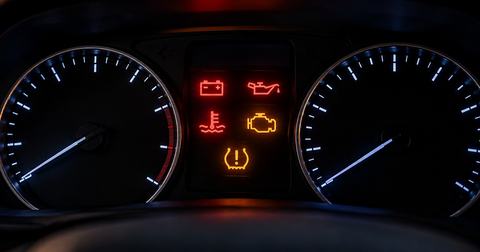
- Red and amber brake lights together. Stop in a safe place and call a dealer, because the fault may reach the brakes you drive with.
- The stability control or ABS light. On some cars the stability light alone turns on the parking brake warning, so have those codes read first. Our ABS light guide covers the anti-lock side.
- The check engine or transmission light. On some cars these stop the brake from releasing as you drive off, so release it with the switch.
- The battery light. Suspect the battery or charging first, because low voltage stops the parking brake working. Our battery light guide covers the charging side.
Which parking brake problems are fixed for free?
A parking brake fault is fixed for free when a safety recall covers your car and a dealer does the repair. The recalls we found cover software, wiring, the actuator and rusted shafts in cable brakes, and they're cards in the documents section.
Check your VIN on NHTSA's recall lookup, or start with our free VIN decoder for your model year's recalls. Bulletins aren't free programs, so a bulletin fix is paid by the warranty or by you.
How do you fix a parking brake malfunction?
A parking brake malfunction is fixed by finding which part or signal failed before anything is replaced. Unless the brake drags or won't release, which means a tow first, start with these 4 checks you can do yourself:
- Note the exact message and the lights. Photograph or write down the words on the dash and whether a light is red, amber or blinking. Then find that message in the warning section of your owner's manual, which says whether you can keep driving.
- Test the battery and check the fuse. Low voltage stops the brake working, so charge or jump a weak battery first and try the switch again. If the brake still does nothing, find the parking brake fuse in the manual's fuse chart and check whether it has blown.
- Give it the chance to clear by itself. After battery work on many Hondas, drive a short way above 12 mph with the parking brake fully off and watch whether the light goes out. If it came on after you pressed the switch many times, leave the switch alone for a minute or two and try once more.
- Check your VIN for a recall. Enter the 17-character VIN from the windshield or the door frame on a recall lookup. An open recall is fixed free by a dealer, so if you find one, book that dealer before paying any other shop.
If the message is still on after those checks, the fault needs a scan tool that reads the brake module, so book a dealer or a shop and bring your notes on the message. A good shop works through these 4 checks before it replaces a part:
- Read the codes and test the battery. Ask the shop to read the brake module codes, not just the engine codes, and to test the battery and charging. A brake code points to the circuit and the side, so it shows where to look next, not yet which part failed.
- Check for a software update. With the code in hand, the shop checks your VIN for a brake module update, because several carmakers fixed parking brake faults that way. If an update matches the code, it comes first, before any part is ordered.
- Inspect the wiring and connectors. If no update fits, the shop checks the harness near the rear axle, where it can rub through, and the connectors, where water can get in. A damaged harness or a wet connector is repaired before anyone blames the actuator.
- Replace the actuator or caliper only when the tests point to it. When the codes and tests lead to one side, the shop replaces that part and takes the brake out of its service mode, which on some cars needs a scan tool. Then it checks that the brake applies and releases.
Rear brake work on these cars starts with the brake in its service mode, so the pistons can move back. Our brake pad and rotor replacement cost guide covers the brake job itself.
What to say to the shop
When a quote names an actuator or a caliper, ask:
- Which brake code is stored, and which side does it name?
- Is there a recall or a software update for my VIN?
- Were the battery and charging tested first?
“My car shows [the message]. Before you replace an actuator, can you give me the brake code, check my VIN for recalls and updates, and test the battery?”

Use this image
Free to republish under CC BY 4.0: credit Oil & Miles and link to this page. The snippet does both.
<a href="https://oilandmiles.com/articles/parking-brake-malfunction"><img src="https://oilandmiles.com/assets/img/diagrams/parking-brake-malfunction-checklist.jpg" alt="Parking brake malfunction checklist: stop and tow it if the brake drags while driving, a wheel smokes, the red and amber brake lights come on together or it won't release; release it with the car on, the brake pedal down and the switch, jump a weak battery and don't hold the switch; a short drive after battery work or a short wait after repeated use can clear it; check the VIN for a recall and ask the shop for the brake code and a battery test before an actuator." width="1200" height="1562"></a> <p>Infographic: <a href="https://oilandmiles.com/articles/parking-brake-malfunction">Oil & Miles</a>, CC BY 4.0</p>From the carmakers
What do carmakers say about parking brake malfunctions and free fixes?
These recalls and bulletins show where carmakers found the fault, and the recalls pay for the repair. The bulletins were paid under each car's basic warranty, which has run out on the years they cover.
Safety recall 26V-031
General Motors, LLC (GM) is recalling certain 2024-2025 Chevrolet Blazer EV vehicles that may have been repaired incorrectly under recall 25V433.
Safety recall 25V-433
Unintended activation of the parking brake while driving increases the risk of a crash.
Safety recall 23V-509
Contact with the rear axle housing may damage the wiring harness, causing the electric parking brake to activate unexpectedly.
Safety recall 22V-661
An electronic parking brake that cannot be engaged while in “park,” may result in a vehicle rollaway, increasing the risk of a crash.
Safety recall 18V-626
The electronic parking brake (EPB) may not engage as intended, allowing the vehicle to rollaway…
Safety recall 18V-070
Water may enter the rear brake calipers causing the parking brake actuator shafts to corrode and possibly bind.
Safety recall 17V-717
…possibly causing the parking brake not to disengage after it is applied or prevent it from being applied…
Safety recall 17V-393
Water could possibly enter the brake caliper causing the parking brake actuator shaft to corrode and possibly bind.
Safety recall 16V-725
The electric parking brake (EPB) may not engage if it is applied immediately after turning the ignition off.
Safety recall 14V-541
Brake pads that remain partially engaged with the rotors may cause excessive brake heat that may result in a fire.
Bulletin T-SB-0078-21
…may exhibit a Parking Brake Malfunction warning message on the Multi-information Display (MID) with Diagnostic Trouble Code (DTC) C059746…
Bulletin T-SB-0168-19
…may exhibit a Parking Brake Malfunction or Cruise Control Malfunction warning message on the MID (multi-information display) with Diagnostic Trouble Code (DTC) C13B0…
Bulletin 08-060-16
…the Electronic Parking Brake (EPB) may not release and a service message is present…
Bulletin 08-038-16
The customer may describe the EPB does not engage with the “Auto Apply” feature selected.
Conclusion
What to do next about a parking brake malfunction
If the brake drags or applies while you drive, pull over, switch off and have it towed. If it drives normally, park in P, block the rear wheels if the brake won't hold, and check battery, wiring and recalls before any actuator.
Oil & Miles checks each step here against the carmakers' manuals and bulletins and NHTSA's recall records.
Common questions
Asked most often
Can a weak battery cause a parking brake malfunction?
Yes, because the electric parking brake needs power to move. Honda puts it plainly: with a dead battery the brake can't be applied or released, so test or charge the battery first.
How do you release an electric parking brake?
Switch the car on, keep the brake pedal down and press the parking brake switch. If nothing moves, check the battery, and have the car towed rather than driven if the brake stays on.
Can you reset a parking brake malfunction yourself?
Sometimes. A short drive after battery work or a short wait after repeated use can clear it, and a one-off glitch may clear after a battery disconnect, but a light that comes back needs a scan.
What happens if the parking brake is pulled while driving?
On many cars with an electric parking brake, holding the switch while moving brakes the car through the ABS, and letting go of the switch or pressing the accelerator ends it, so a short pull gives a jolt and then normal driving. We've had exactly that in our own car, and Ford's advice is to use it while moving only if the main brakes fail.
What people ask next
Sources
- Honda owner’s manuals: 2017 CR-V (pages 510–511), 2018 Accord (pages 81, 572 and 681), 2018 and 2019 CR-V (pages 485 and 483), on releasing the brake, the battery, the blinking light and the drive after battery work. Honda, read October 24, 2026
- Ford owner’s manuals: 2018 F-150 (pages 112 and 140), 2017 and 2020 Escape and 2016 Fusion, on the parking brake messages, overheating, brake service mode and applying it while moving. Ford, read October 24, 2026
- Ford owner’s manual: 2013 Edge, vehicle storage section, on releasing the parking brake and moving a stored car every 15 days. Ford, read October 25, 2026
- GM owner’s manuals: 2022 and 2025 Equinox (page 215 in 2022), 2014 Impala (page 239) and 2013 Malibu (page 241), on the flashing red light, blocking the wheels and the service light. GM, read October 24, 2026
- Hyundai owner’s manuals: 2022 Elantra (pages 297 and 300) and 2019 Tucson (page 295), on a brake that won’t release and the flatbed tow. Hyundai, read October 24, 2026
- Toyota owner’s manuals: 2019 Avalon (page 189) and 2019 RAV4 (page 207), on stopping safely and a brake that won’t release. Toyota, read October 24, 2026
- Chrysler and Jeep owner’s manuals: 2015 Jeep Cherokee (page 501), 2017 Pacifica (page 337) and 2015 Chrysler 200 (page 470), on the fault lamp, the 20-second switch limit and the reset after brake service. FCA US, read October 24, 2026
- Owner’s manual fuse charts: 2015 Chrysler 200, 2014 Jeep Cherokee, 2018 F-150, 2013 Malibu and 2012 Regal, each with an electric parking brake fuse; Ford and Chrysler manuals on releasing it only by the switch and pedal. FCA US, Ford and GM, read October 25, 2026
- Nissan and Kia owner’s manuals: 2018 Rogue and 2016 Sorento, on a drained battery, freezing and the stability control light. Nissan and Kia, read October 24, 2026
- Recalls 26V-031, 25V-433, 23V-509, 22V-661, 18V-626, 18V-070, 17V-717, 17V-393, 16V-725 and 14V-541, each defect, consequence and remedy as filed. NHTSA recall records, read October 24, 2026
- Toyota bulletins T-SB-0168-19 and T-SB-0078-21, and Jeep bulletins 08-038-16 and 08-060-16, read in full from NHTSA’s bulletin files. Toyota and FCA US via NHTSA, read October 24, 2026
- Bulletin summaries in NHTSA’s database: Ford 22P31, Honda A17-007, GM 24-NA-122 and Honda ATS170201, on brake drag, the message wording and the auto-apply setting. NHTSA, read October 24, 2026
- Independent shops: Integrity Auto and Tirestar on pulling over for smoke or a changed pedal, and Firestone Complete Auto Care on stuck cable brakes. Read October 24, 2026
How this was compiled
We read the parking brake pages of the owner’s manuals listed above and the recall and bulletin records NHTSA holds. The recalls are the ones NHTSA files under the parking brake, and the bulletins are the ones whose full text we could read.
What we didn't do
We didn't drive or scan a car with a parking brake fault. We found no BMW or Audi document on a parking brake reset, so we don't give one.
We didn't price any repair, because the cause decides the bill and we have no sourced price for these parts.
This article is general information, not advice about your specific vehicle. Where anything here differs from your owner's manual or your carmaker's bulletins, follow the carmaker. See the disclaimer.