
Key takeaways
- Safety: If anyone in a running car feels drowsy, dizzy or confused, get everyone into fresh air and call 911 or Poison Help (1-800-222-1222).
- Carbon monoxide has no color or smell, so a sleeping person gets no warning before it can kill.
- The A/C and an open window don't make a parked car safe, because the engine still makes CO.
- Never run a car in a garage, even with the door open, and keep snow clear of the tailpipe.
- A smell of exhaust in the cabin means fumes are getting in, so have the exhaust checked and repaired right away.
Carbon monoxide in a car comes from the engine burning fuel. It gets into the cabin through a leaking exhaust, snow over the tailpipe or a closed garage.
You can't smell CO, but you can smell the exhaust it travels in. A smell of exhaust in the cabin is a warning, so act on it.
Can you die sleeping in a car with the engine or AC on?
Yes, and the A/C makes no difference. Carbon monoxide, or CO, has no color or smell, and a person who is asleep can die from it before any symptom shows.
A parked car with the engine running is the worst case, and there's no safe number of minutes. Always turn the engine off before you rest.
What should you do if you think there's carbon monoxide in a car?
Get everyone into fresh air and call 911, switching the engine off only if you can do it at once. Act at once, even if no one has signs yet.
Do these four things in order:
- Get everyone into fresh air. If you're driving, pull over first, and move anyone who breathed it in out of the car right away.
- Call 911 or Poison Help. Poison Help is 1-800-222-1222 from anywhere in the United States.
- Switch the engine off. Do it only if you can do it at once.
- Get medical care. Anyone who breathed it in needs medical attention right away.
What are the signs of carbon monoxide in a car?
The signs include headache, dizziness, weakness, an upset stomach, vomiting, chest pain and confusion, and drowsiness and tiredness are on the list too. They feel like the flu, which makes them easy to miss, and a sleeper may never feel them.
Carbon monoxide has no color or smell, so nothing in the air warns you before the first sign. People who are asleep or drunk can die from it before they have any symptoms.
How does carbon monoxide get into a car?
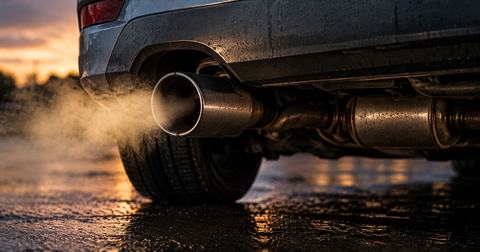
CO poisoning from a car has three causes: a faulty exhaust, a car running in an enclosed space, and a fuel-burning heater in the cabin. A small exhaust leak is enough to let CO build up in the car, and rust, damage or an unsealed repair can open one.
An open tailgate or trunk can pull exhaust in, so if you must drive with it open, open the windows or vents to keep air moving. Have a strange exhaust sound or smell checked.
It's worst when a running car is parked and the exhaust has nowhere to go. That means snow around the tailpipe, a closed garage or a hidden leak.
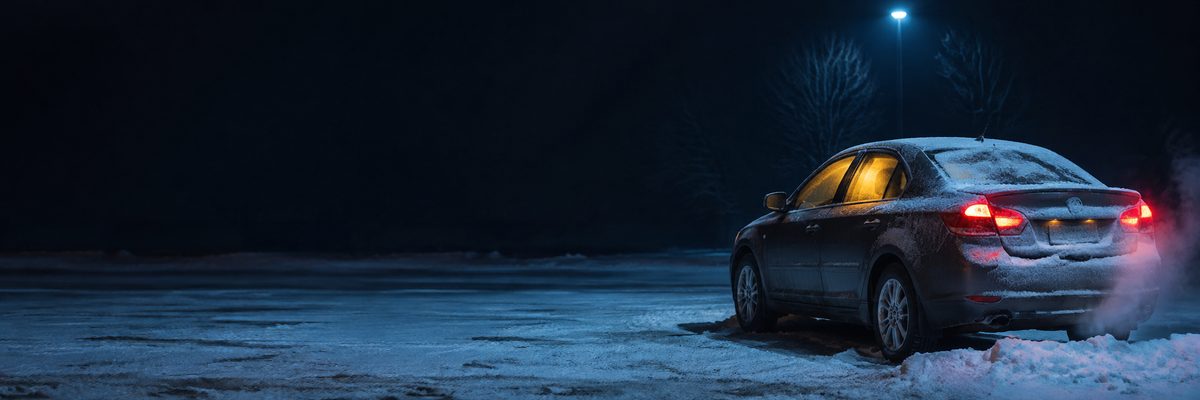
Snow around the tailpipe
Snow packed around the tailpipe pushes exhaust under the car and into the cabin. In a test on one older sedan buried in snow, lethal levels built up within minutes, even with a window open 6 inches.
Sweeping the snow off the tailpipe wasn't enough either, and only a path dug to the ground read zero. Three women died asleep in a car, and police said snow may have blocked the tailpipe.
Garages, even with the door open
Never run a car in a garage, attached or detached, even with the garage door open. Garage deaths have happened even with a door or window open.
If a car has to start in a garage, drive out right after starting, even with the door open. That's a way out, not a way to idle.
Parking structures and hidden leaks
A hidden exhaust leak is the other danger, and it needs no snow or garage. A woman died in her running car in a parking structure, with a cracked exhaust manifold.
Passers-by had thought she was asleep. A car that looks like it's napping can already be in trouble, so don't assume a person sitting in a running car is resting.

Snow around the tailpipe
Why do I smell exhaust in my car?
Exhaust smells in a car because fumes are getting into the cabin. CO itself has no smell, but it travels in the exhaust, so a smell of exhaust fumes means CO may be coming in with them.
Open the windows, don't sit with the engine idling and have the car checked and repaired right away. If anyone in the car feels drowsy, dizzy or confused, get everyone into fresh air and call 911 or Poison Help (1-800-222-1222).
If you have to drive, keep the windows completely down until it's repaired. Some models have had exhaust odor in the cabin, so ask a dealer whether a bulletin covers your car. A rotten egg, raw gas or burning smell points to a different problem.

A rusted exhaust pipe
What do people get wrong about carbon monoxide in a car?
These myths assume something stops the gas, such as the A/C, an open window, a catalytic converter or parking outdoors. None of them does when the exhaust is blocked or leaking, so the safe step is switching the engine off.
Does the A/C or a cracked window make it safe?
No, because in a gas car the A/C runs only with the engine, and burning fuel is what makes carbon monoxide. An air conditioner that runs only on electricity, as in a house, burns nothing and makes none.
A cracked window doesn't help when the exhaust is blocked. In the snow test, lethal levels still built up within minutes with a window open 6 inches.
Recirculation or fresh air?
Climate settings differ from car to car. There's no single setting to trust, so neither recirculation nor fresh air makes a blocked exhaust safe.
The safe step is switching the engine off. If it has to run for a short time, clear the exhaust first and follow your own manual's climate setting.
Doesn't the catalytic converter remove CO?
It cuts CO but doesn't remove it, so cars with converters still poison people in garages and in snow. A converter doesn't change the rule that a running engine belongs outdoors.
A converter is no reason to idle in a closed space. A failing one also gives its own warning signs, which a shop can check.
Is a car safe if it's parked outdoors?
Not if the exhaust is blocked or leaking. Snow, a wall or a leak can keep gas near the cabin, and a leaking exhaust is dangerous even outdoors.
What keeps you safe outdoors is a clear exhaust. So clear any snow from the tailpipe, and run the engine only for short periods.
Are electric cars and hybrids different?
A car that runs only on electricity makes no exhaust, so it makes no carbon monoxide at the tailpipe. A plug-in hybrid counts only while it runs on electricity alone.
A hybrid is different, because some hybrids start the engine on their own while the car is on. A parked hybrid left on can still make exhaust, so switch the whole car off.
Push-button start makes it easy to walk away with the engine still running, and no federal automatic shutoff rule is in force yet. People have died when a keyless car was left running by mistake. Auto-shutoff timers are built for a driver who walks away, so one may never switch off a car with someone asleep inside.
How do you stay safe if you must rest in a car?
Never sleep in a car with the engine running. Only a car that is fully off is sure to make no carbon monoxide. Some cases need more than that:
- Stuck in snow. Clear the snow from around and under the exhaust pipe, down to the ground, and recheck it each time. Run the engine only for short periods and open a window a little on the side away from the wind.
- In a garage. Don't run the engine at all, even with the door open.
- Exhaust check. Have a mechanic check the exhaust system every year, because a small leak is enough to let CO build up in the car.
- CO alarm. A carbon monoxide alarm can warn you, but it doesn't make an idling engine safe.
From the documents
What do health agencies and carmakers say about carbon monoxide in a car?
The basics are the same everywhere: the gas can't be seen, a sleeper gets no warning, and a running engine belongs outdoors. That holds for every car, so your own manual has the last word on running the engine while parked.
Fact sheet Carbon monoxide poisoning basics
…can die from CO poisoning before they have symptoms.
Health guide MedlinePlus, carbon monoxide poisoning
If the person breathed in carbon monoxide, immediately move them to fresh air.
Health guide Poison Help
Call the Poison Help Line at: 1-800-222-1222.
Federal report Morbidity and Mortality Weekly Report, January 12, 1996
…through leaks or cracks in the floorboard if the exhaust pipe is obstructed.
Federal report Morbidity and Mortality Weekly Report, November 29, 1996
…even though the garage doors or windows have been open.
Journal study Griffin et al., a snow-buried car
Lethal levels of carbon monoxide occurred within minutes in this snow-obstructed vehicle.
Journal study Mott et al., JAMA, converters and CO deaths
…unintentional motor vehicle-related CO death rates declined from 4.0 to 0.9 deaths per 1 million person-years.
Federal safety guide Winter driving tips
Clear any snow from your exhaust pipe and run your car only sporadically.
Federal data Emissions from electric vehicles
…zero tailpipe emissions when running only on electricity.
Owner's manual Taking a nap in the vehicle
Always turn the engine off.
Owner's manual Engine exhaust
Never park the vehicle with the engine running in an enclosed area.
Owner's manual Carbon monoxide gas
…carbon monoxide gas will not get into the interior.
Owner's manual Hybrid system overview
In the hybrid system, the engine automatically runs and stops.
Bulletin PS653 Rev 2
…prevent carbon monoxide (CO) poisoning.
Customer satisfaction program 19N05
…reduces the potential for exhaust to enter the vehicle.
Conclusion
What to do next about carbon monoxide in a car
If anyone in a running car feels drowsy, dizzy or confused, get everyone into fresh air and call 911 or Poison Help. If you smell exhaust in the cabin, get the exhaust checked right away, and if you rest in a car, switch it fully off.
Oil & Miles checks each step here against federal health pages and carmakers' manuals.
Common questions
Asked most often
Is it carbon monoxide or carbon dioxide?
The gas that poisons a sleeper in a running car is carbon monoxide, or CO, which burning fuel makes. Carbon dioxide is a different gas, and it isn't the danger here.
How long can you sit in a running car?
There's no safe number of minutes for resting in a parked, running car. Switch the engine off before you rest.
Is it safe to sleep in a car with the A/C off?
If the engine is off too, the car burns no fuel and makes no carbon monoxide. A running engine with the A/C off is just as dangerous.
What if you left the car running in a garage?
Get everyone out into fresh air first, switching the engine off and opening the door only if you can do it at once. Call 911 or Poison Help at 1-800-222-1222 for anyone who breathed it in.
What people ask next
Sources
- CDC, carbon monoxide poisoning basics, for what CO is, the symptoms, the sleeping line and the vehicle advice. CDC, read November 6, 2026
- MedlinePlus, for the home-care steps, the symptom list and Poison Help. NIH, read November 6, 2026
- HRSA Poison Help, for the national number. HRSA, read November 6, 2026
- CDC, MMWR of January 12, 1996, for snow-blocked exhaust, the flu-like signs and how CO seeps into the cabin. CDC, read November 6, 2026
- CDC, MMWR of November 29, 1996, for the three ways a vehicle poisons, garages with the door open and CO alarms. CDC, read November 6, 2026
- Griffin et al., BMC Emergency Medicine, 2004, for the snow-buried car test. BMC, read November 6, 2026
- Mott et al., JAMA, 2002, for catalytic converters and vehicle CO deaths. JAMA, read November 6, 2026
- NHTSA, winter driving tips, for a car stuck in snow. NHTSA, read November 6, 2026
- DOE, emissions from electric vehicles, for tailpipe emissions on electricity alone. DOE, read November 6, 2026
- NHTSA, keyless ignition systems page and the Unified Agenda entry RIN 2127-AK88, for the keyless-ignition concern and a rule that is still pending. NHTSA, read November 5, 2026
- Owner's manuals: 2012 Toyota Camry, 2021 Toyota Avalon, 2019 Chevrolet Silverado 1500, 2018 Honda Accord and a 2025 Kia hybrid, for the nap, exhaust, garage, snow and hybrid lines. Toyota, Chevrolet, Honda and Kia, read November 6, 2026
- Kia PS653 and Ford 19N05, for the auto-shutoff conditions and the exhaust-odor program. Kia and Ford via NHTSA, read November 6, 2026
- News reports: NBC Bay Area, December 16, 2008, FOX 2 Detroit, March 10, 2026, and Business Insider, May 14, 2018, citing the New York Times, for the cases and the keyless deaths. Read November 5, 2026
AI illustration by Oil & Miles
This article is general information, not advice about your specific vehicle. See the disclaimer.