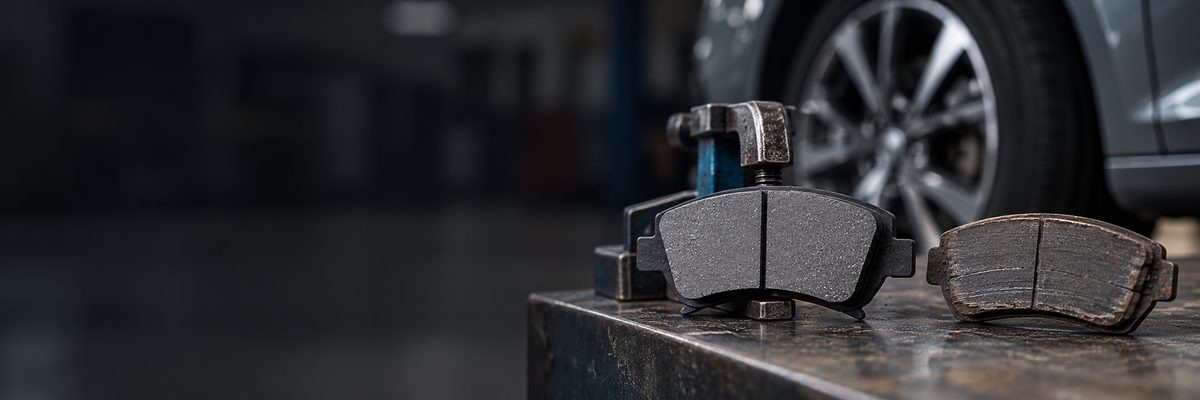

Key takeaways
- Safety: A high-pitched squeal or a pad-wear message means the pads need replacing, so have them replaced. If you hear grinding, have the brakes checked now.
- GM puts pad life at 40,000–60,000 miles in average use and 20,000–25,000 in very severe use, but the thickness left decides when yours are done.
- Have the pads checked at every tire rotation or on your carmaker's schedule, and ask for the thickness in millimeters.
- The carmaker's service limit decides when to replace, measured on the friction material only, and it can be thinner than the 3–4 mm many shops use.
- One pad can be worn out while the rest look fine, so have both the inner and the outer pad measured.
Brake pads last as long as the driving, the pads and the car allow. The thickness left decides when yours are done, not the mileage.
How often to change brake pads comes down to that thickness, so ask for it in millimeters at every check. When to replace brake pads is set by your carmaker's limit, not by a date.
How long do brake pads last?
GM designs its brake pads to last 40,000–60,000 miles in average driving and 20,000–25,000 in heavy city use. City stops, hills and towing wear pads faster, and so do the pads and the car you have.
The thickness left decides when yours are done, whatever the mileage. Look at the pads at every tire rotation and you'll see the number drop long before the brakes make a noise.
How thin is too thin for brake pads?
Replace pads before they reach your carmaker's limit, which can be as little as 2–3 mm of pad material. Measure the friction material only, not the metal back plate.
Many shops replace at 3–4 mm to stay safe, and that's a margin, not a rule. Ask the shop to show you the number, and replace sooner if the pad will reach the limit before your next check.
Write down the thickness and the mileage at each check, so you can see how fast your pads wear. If it drops fast, ask the shop why.

Measuring the pad
What are the signs your brake pads are worn?
A high-pitched squeal while driving or a pad-wear message on the dash means the pads are worn and need replacing, so have them replaced. The built-in wear indicators make that sound when the linings are worn and new ones are needed.
Grinding can mean the pads are past that point and the brakes may not stop the car well, so have the brakes checked now. If you can't tell which noise you have, squeaky brakes and grinding noise when braking tell them apart.
If the red brake light stays on with the parking brake fully released, stop somewhere safe and have the car towed. The brake warning light has its own causes, and a shake or pulse when braking points to warped brake rotors instead.
How often should brake pads be checked?
Have them checked at every tire rotation, or on your carmaker's schedule. Some cars show the pad life as a percentage for each axle, and some tell you when an inspection is due.
A check isn't a replacement, so replace by the thickness left and not by the date. Pads are replaced as complete axle sets.
Do front brake pads wear faster than rear?
Check all four wheels, because either axle can wear out first. The front brakes do more of the stopping, which is why people expect the fronts to go first.
Rears can go first on some cars, so a worn front axle tells you nothing about the rear. A rear pad can go thin while the fronts still look fine.
Why did my brake pads wear out so fast?
One worn pad, a known carmaker fault or hard use can all wear a set out early. Check which of the three fits before you blame the pads.
One pad worn and the rest fine
The inner pad sits behind the rotor, out of sight through the spokes, and it can be worn out while the outer looks fine. On some GM trucks and SUVs that has happened at around 10,000 miles.
If the inner and outer pads differ a lot, a caliper or slide pin may be sticking. Have it checked before new pads go on, so the same fault doesn't wear the new set out too.
Measure both pads, not just the one you can see. Ask the shop to write both numbers down so you can compare them at the next check.
Carmaker bulletins
Some pads wear out much faster than they should, and a carmaker may have a bulletin for it. Ask a dealer whether one covers your car.
A bulletin isn't a recall, and it isn't meant for common or average wear. The dealer decides whether yours qualifies, so say how fast the pads wore out.
Driving and parts
Heavy city driving, hills and towing wear pads faster. When one pad wears faster than its partner, ask the shop to check that the caliper and slide pins move freely.
A pad made of a different material than its partner can wear at a different rate, so mention it if one side goes first. The shop needs to know which side wore faster.

The inner pad you can't see
What to say to the shop
When pads wear out sooner than you expect, ask:
- What is the pad thickness, on both pads?
- Do the caliper and the slide pins move freely?
“My pads wore out sooner than I expected. Can you write down both pad thicknesses and check that the caliper and slide pins move freely?”
A good answer: both thickness numbers written down, and the caliper and slide pins checked.
How long do brake pads last on a hybrid or EV?
Regenerative braking does some of the slowing, so the pads may see less use. A sticking caliper or slide pin can still wear a pad out early.
On a Model 3, the calipers need cleaning and lubricating every year or 12,500 miles where roads are salted. Have the pads checked on schedule like any other car.
Do the rotors need replacing with the pads?
Not automatically. A rotor can be reused if it's above the minimum stamped on it, or above the carmaker's figure if none is stamped.
Ask the shop for the rotor's measured thickness, its stamped minimum and whether it's scored or out of true. A scored or out-of-true rotor may need resurfacing or replacing, and one that makes the pedal shake is a warped rotor.
From the documents
What do carmakers and federal rules say about how long brake pads last?
The federal rules give no mileage, while the carmakers give inspection timing, a wear limit and, from GM, a pad-life range. Every quote in the cards is from the document itself.
Federal rule 49 CFR 571.135, FMVSS 135, S5.1.2
…A means of visually checking the degree of brake lining wear.
Federal rule 49 CFR 570.5(g), vehicle inspection guideline
…shall not be less than one thirty-second of an inch over the rivet heads, or the brake shoe on bonded linings or pads.
Service manual Model 3 brake specifications
…excluding back plate.
Service guide Model 3 vehicle service intervals
Clean and lubricate brake calipers every year or 12,500 miles (20,000 km) if in an area where roads are salted during winter.
Service page Brakes, certified service
…designed to provide 20,000 to 25,000 miles of pad life in very severe use … and will give 40,000 to 60,000 miles of pad life in average use.
Bulletin GM 19-NA-116
…should only be replaced if the friction surface is worn to within 2.0 mm (0.079 in) of the mounting plates.
Bulletin GM 20-NA-101
…premature and/or uneven brake pad wear … may be caused by friction material having different wear characteristics.
Bulletin Mazda 04-003-25a
…wear down by about 0.1 in (3 mm) every 6200 miles (10,000 km), and may require replacement at less than 12,400 miles.
Owner's manual Brake pad inspection and life display
When tires are rotated, inspect brake linings for wear.
Owner's manual Brake pad inspection
…inspect brake pads for wear.
Owner's manual Maintenance Minder, code B
Inspect front and rear brakes.
Conclusion
What to do next about your brake pads
If you can't remember the last check, have the pads measured and compare the thickness with your carmaker's limit. If you hear a squeal or see a pad-wear message, have the pads replaced, and have the brakes checked now if you hear grinding.
Oil & Miles checks each step here against federal rules and carmakers' documents.
Common questions
Asked most often
Is 3 mm of brake pad OK?
Yes for now, but it's close to the limit, so plan new pads at the next service. Have it measured, and replace sooner if it will reach your carmaker's limit before your next check.
Can brake pads wear out in 2 years or last 3 years or more?
Yes, both, because life depends on the driving and not on the calendar. Check the thickness, not the date.
Is there a legal minimum thickness for brake pads?
There's no single national rule for cars. Your state's inspection rules decide, so check them.
How long does a brake job take?
It depends on the car and the shop, which set the labor hours for the job.
Do I need a new wear sensor with new pads?
Reset the pad-life display after new pads and wear sensors are installed. Ask the shop whether your car has a sensor and whether it needs replacing too.
What people ask next

Sources
- 49 CFR 571.135, FMVSS 135, for the wear warning or visual check. NHTSA, read November 6, 2026
- 49 CFR part 570, sections 570.3 and 570.5, for the inspection guideline on pad thickness and rotors. NHTSA, read November 6, 2026
- 49 CFR 393.47, for the minimum on trucks and buses. FMCSA, read November 6, 2026
- Tesla, Model 3 service manual, for the pad and rotor specifications. Tesla, read November 6, 2026
- Tesla, Model 3 vehicle service intervals, for the caliper care line and the consumable-parts note. Tesla, read November 6, 2026
- Chevrolet, certified service, brakes, for GM's pad-life figures. GM via Chevrolet, read November 6, 2026
- GM bulletins 19-NA-116 and 20-NA-101, for the 2.0 mm limit, inner-pad wear and uneven wear. GM via NHTSA, read November 6, 2026
- Mazda bulletin 04-003-25a, for the MX-30 front inner pad wear rate. Mazda via NHTSA, read November 6, 2026
- Owner's manuals: 2025 Chevrolet Equinox, 2020 Chevrolet Silverado 1500 and 2018 Honda Accord, for the inspection timing and the wear indicators. Chevrolet and Honda, read November 6, 2026
AI illustration by Oil & Miles
This article is general information, not advice about your specific vehicle. See the disclaimer.