
Key takeaways
- Safety: If the temperature gauge reaches the red or a coolant warning comes on, pull over where it's safe, let the engine cool and never open the coolant cap while it's hot.
- Normal is the needle inside the zone, not one exact number.
- The needle moves with the outside air and how you drive, so a rise that stays inside the zone is normal.
- A needle that always points higher than normal, or stays low after a long drive, is worth having checked.
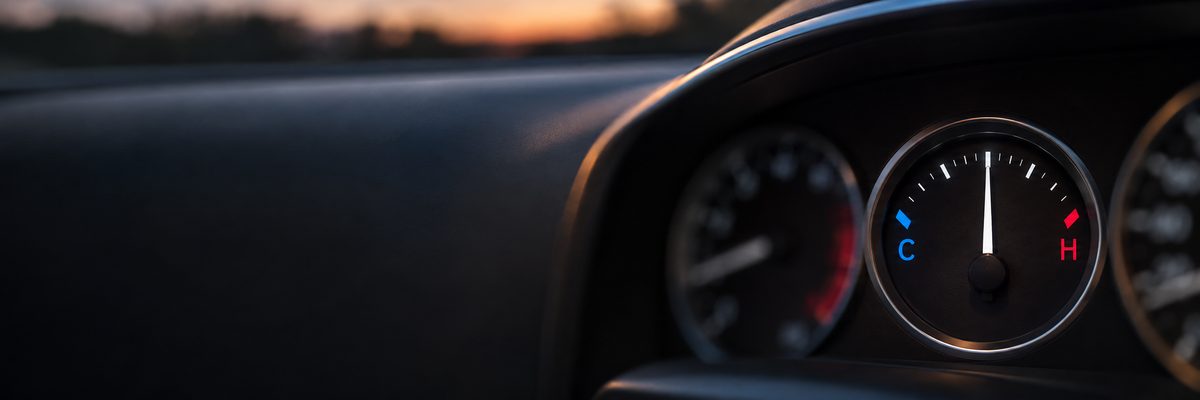
Your gauge shows a zone, not a temperature. While the needle sits inside that zone, the engine is running normally, and the exact degrees don't matter.
A thermostat's rating is the temperature where it starts to open, and 180 or 195°F (about 82 or 90°C) are common ratings on parts. The rating is a starting point and not the reading you see while driving.
What is a normal coolant temperature?
Normal is wherever the needle settles inside the zone once the engine is warm. The gauge shows a zone, not a number, so read the needle and not a figure from the internet.
If your car does print a number, it's a limit and not a target. Mazda's MX-5, for example, stays at 210°F (100°C) or less in normal driving.
What should the temperature gauge show?
Once the engine is warm, the needle should sit inside the normal zone, and that zone is a band, not one degree. The needle moves a little with the outside air and how you drive, and that's normal.
| Where the needle sits | What to do |
|---|---|
| Inside the zone | Normal, leave it alone. |
| Higher than usual, again and again | Have the car checked. |
| Toward H or into the red | Stop somewhere safe, let it cool, and don't open the cap while it's hot. |
| Low after a long drive | Have the thermostat checked. |
Where the zone sits on your dial depends on the car, so look at your gauge when the engine is warm and remember where the needle rests. A needle that rests somewhere new is worth a check.

The needle in the middle of the zone
What temperature is too hot?
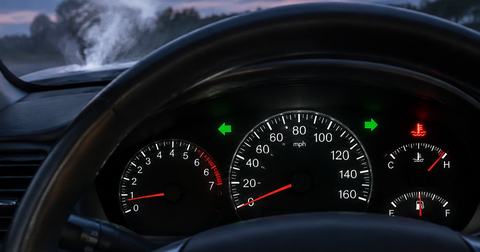
Too hot is the needle past the zone toward H, or in the red. Stop somewhere safe and let the engine cool, then follow your manual's overheating steps or our overheating guide.
Never open the cap on a hot engine, because the system is under pressure and the coolant can scald you. Wait at least 10 minutes, then cover the cap with a thick cloth and open it slowly.
Some cars have a red coolant warning light, and others show a message such as Engine Coolant Temp High. Both mean the same as a needle in the red, so stop.
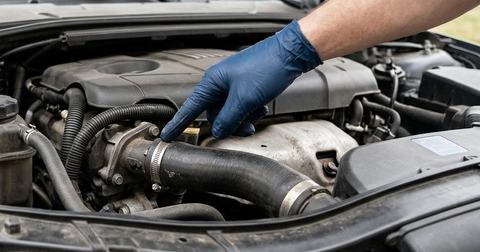
A high reading can come from a low coolant level or a leak, a failing water pump, a thermostat stuck closed or a cooling fan that doesn't run. Check the level only on a cold engine, and use the coolant your car needs when you add coolant to the proper level.
Is 225 or 230°F coolant temperature too high?
Not by itself. The gauge decides, not a number: a needle inside the normal zone is fine, and a needle heading toward H or red means stop. Mazda's MX-5 manual puts normal driving at 210°F or less, while Ram's diesel trucks allow up to 240°F (116°C), so 225°F can be normal on one engine and above normal on another.
A reading above 212°F (100°C) isn't boiling by itself, because the radiator cap holds the system under pressure and that raises the boiling point. With a 15 psi cap, a 50/50 mix doesn't boil until about 268°F (131°C), which is why the cap must stay shut on a hot engine.
Is it normal for the temperature to change?
The needle can read a little higher in hot weather, up long hills or when towing. A needle that keeps reading higher than usual needs a check.
When towing, if the needle nears the red, turn off the A/C and slow down. If it keeps climbing, stop somewhere safe and let the engine cool.
What if the temperature stays too low?
A needle that stays low after a long drive, or a heater that blows warm instead of hot, points to an engine that isn't reaching its normal temperature. A healthy engine warms up and the needle settles inside the zone, so a needle stuck near C is worth a check.
A thermostat stuck open is one cause, and it can set code P0128. A low coolant level or a faulty coolant sensor can do the same. Have it looked at rather than waiting for the heater to get better on its own.
From the carmakers
What do owner's manuals say about the temperature gauge?
What each carmaker tells drivers to watch for, in its own words. Mazda and Ram print a temperature, and the others describe where the needle should sit and when to stop.
Owner's manual Engine coolant temperature gauge
If the engine coolant temperature exceeds the normal range, stop your vehicle as soon as safely possible, switch off the engine and let the engine cool.
Owner's manual Temperature gauge
Driving with the temperature gauge pointer in the upper zone can cause serious engine damage. Pull safely to the side of the road and allow engine temperature to return to normal.
Owner's manual Engine coolant temperature gauge
The engine coolant temperature is within the normal range when the gauge needle points within the zone shown in the illustration. The engine coolant temperature varies with the outside air temperature and driving conditions.
Owner's manual What to do in emergencies, overheating
If the temperature gauge reads "H," pull over and stop the vehicle. Idle the vehicle with the air conditioner turned off until the pointer drops back into the normal range. If the pointer remains on the "H," turn the engine off immediately and call for service.
Owner's manual Engine coolant temperature gauge
The engine may be overheating if the engine coolant temperature gauge is in the red zone (H). In this case, immediately stop the vehicle in a safe place, and check the engine after it has cooled completely.
Owner's manual Engine coolant temperature gauge
If the gauge pointer moves beyond the normal range area toward the "H" position, it indicates overheating that may damage the engine. Do not continue driving with an overheated engine.
Owner's manual Engine coolant temperature gauge
During normal driving, the engine coolant temperature stabilizes at 100 °C (210 °F) or less, and the gauge indicates a range lower than 100 °C (210 °F).
Owner's manual Operating precautions, avoid overheating the engine
The temperature of the engine coolant … must not exceed the normal range of the temperature gauge 240°F (116°C) with a 21 psi (145 kPa) coolant pressure cap.
Conclusion
What to do next about coolant temperature
If the needle sits inside the normal zone, leave it alone, and if it leaves the zone or reaches red, stop somewhere safe and let the engine cool. If it stays low after a long drive, have the thermostat checked, and if it keeps reading higher than usual, have the car checked.
Oil & Miles checks each gauge rule here against the carmakers' owner's manuals.
Common questions
Asked most often
What is a concerning coolant temperature?
A needle in the red means stop somewhere safe and let the engine cool. A needle that keeps reading higher than usual means have it checked soon.
Is a 160 degree thermostat bad?
Not by itself, but fit the rating your engine calls for. The number is when the thermostat starts to open, not how hot the engine runs.
What does the coolant temperature warning light mean?
It means the engine may be overheating, so stop somewhere safe and let the engine cool. Some cars show a message such as Engine Coolant Temp High instead.
What people ask next
Sources
- 2018 Ford F-150 Owner's Manual (US), PDF page 110, for the normal range, the stop-and-cool instruction and the cap warning. Ford, read November 7, 2026
- 2018 Honda Accord Owner's Manual (US), PDF pages 139 and 464, for the upper zone, the pull-over instruction and the towing rule. Honda, read November 7, 2026
- 2018 Nissan Altima Owner's Manual (US), PDF pages 97 and 203, for the zone, the outside-air and driving-conditions note and the air conditioner step. Nissan, read November 7, 2026
- 2018 Toyota Camry Owner's Manual (US), PDF pages 86, 495, 509 and 534, for the red zone, the needle that points higher than normal and the Engine Coolant Temp High message. Toyota, read November 7, 2026
- 2022 Hyundai Elantra Owner's Manual (US), PDF page 92, for the pointer moving toward H. Hyundai, read November 7, 2026
- 2015 Chrysler 200 Owner's Manual (US), printed pages 338 and 537 to 538, for the normal range, the higher reading in hot weather, on grades and when towing, and the air conditioner and idle steps. Chrysler, read November 7, 2026
- 2023 Mazda MX-5 Owner's Manual (US), Meters and Gauges, engine coolant temperature gauge, for the normal driving ceiling and the red warning light step. Mazda, read November 7, 2026
- 2018 Ram 2500 diesel supplement (US), printed page 129, for the top of the normal range and the low-temperature caution. Ram, read November 7, 2026
- Three thermostat pages (Motorad 300-195, Stant 45869 on RockAuto and Advance Auto Parts), for what a thermostat rating means and the 180 and 195°F ratings. Read November 7, 2026
- Two web guides on radiator caps (Summit Racing and Auto Upkeep), for why the cap raises the boiling point. Read November 7, 2026
Every gauge rule comes from the owner's manuals named above, all US editions.
AI illustration by Oil & Miles
This article is general information, not advice about your specific vehicle. See the disclaimer.