
Short answer
A burning smell costs $0 to $1,800 to fix.
When a car smells like burning, it's usually a belt, a brake, or something harmless burning off, which is a few hundred dollars at worst. Two of them are different: a plastic or electrical smell, and a heavy oil smell. Those are the two things that most often start car fires, and they're the two where you stop.
OilAndMiles.com - Every page you'll find on a car that smells like burning asks you to identify a smell from a list, then ends with "see a mechanic." That advice isn't wrong, but it answers neither of the two questions you actually have standing next to your car: is this expensive, and can I drive it home.
Both are answerable. The cost depends on which of about ten things is burning, and those prices are known. The urgency isn't a matter of opinion either: US fire services attend a large number of vehicle fires every year, and the data on what ignites first is public.
So this article does it the other way around. First the two smells that mean stop, and why those two. Then the ones that cost nothing, then everything in between, priced.
Which burning smells mean stop the car now?
Two of them mean stop the car, and they're on this list because of what investigators find actually ignites, not because they smell the worst:
- A sharp, chemical, melting-plastic smell is wiring insulation getting hot. It doesn't smell like rubber and it doesn't smell like an engine. It smells like a scorched appliance. Wiring insulation is the number one thing that catches fire in a car, and a hot wire that hasn't shorted yet is a wire that hasn't shorted yet. Pull over, switch the engine off, and don't restart it to "see if it does it again."
- A heavy, thick oil smell with visible smoke from under the hood is fluid landing somewhere hot enough to cook it, and that's the second most common ignition. A faint oil smell with no smoke is a different and much calmer situation, covered further down. Smoke changes it, though smoke from the tailpipe rather than from under the hood is a separate question with a separate answer.
US fire departments respond to an estimated 215,096 vehicle fires a year, an annual average across 2018 to 2022. Those fires cause about 643 deaths and 1,532 injuries a year.
Mechanical failure or malfunction contributes to 45% of highway vehicle fires. Electrical failure or malfunction contributes to 21%. And when investigators record what caught light first, two answers dominate: insulation around electrical wiring, 28%, and flammable liquids in the engine area, 21%.
Read that last sentence again, because it's the whole article. The two things that most often ignite in a car are wiring insulation and fluid in the engine bay. Those two materials have distinctive smells, and they're the two on this list you must not drive on.
Why is my car smoking under the hood?
Because something is landing on something hot enough to cook it, and under the hood is the half of the car where that matters. Smoke there is the visible version of the second smell on this list, and it's the point at which a smell stops being a diagnosis you can drive on.
Pull over, switch off, and have it recovered. Smoke coming from the tailpipe instead is a calmer and entirely separate question, and it has its own answer.
We read those percentages off the fire reporting tables themselves rather than from anybody's summary of them. What we couldn't find anywhere is a figure for how often a smell comes before a fire, so nothing on this page claims one.
What the data says
Both figures above come from national fire incident reporting, not from a shop's opinion. The point worth carrying away isn't that your car is likely to catch fire. On the number of vehicles in use, it's not.
The point is that if one does catch fire, the odds say it started at a wire or at spilled fluid in the engine bay. That's why those two smells get treated differently from a hot brake or a slipping belt, which almost never appear in that data.
Figures: NFPA / US Fire Administration vehicle fire statistics, annual averages for 2018-2022.
Which burning smells cost nothing to fix?
Four burning smells cost nothing to resolve, and two of them are supposed to happen. Rule these out before spending anything:
- New brake pads bedding in. Fresh pads carry a layer of resin binder that has to heat up and transfer onto the rotor before the brakes work properly. It smells acrid and slightly chemical for the first few drives. Published guidance puts the bedding-in period at roughly the first 20 to 30 moderate stops, or about 200 miles; the strongest smell is in the first ten or twenty stops. If it is still there past 200 miles, or the pedal feels worse rather than better, go back.
- A plastic bag, or leaves, on the exhaust. Undignified and extremely common: something picked up off the road melts onto a hot pipe and smells alarming. Owners report that light plastic burns off in a day or two, but a heavy tarp or sheet that has welded itself to a pipe can smell for weeks before it finally goes. Look underneath before you book anything.
- Oil spilled during a service. When a technician fills an engine, a little oil goes down the outside of the block and onto the exhaust. It burns off over a few heat cycles. Spilled oil is the single most common reason a car smells like burning immediately after an oil change, and it needs nothing. What isn't normal: a smell that is still there a week later, which means something is leaking rather than something was spilled.
- Exhaust paint, on a newish car. Rarely mentioned anywhere, and it accounts for a lot of worried owners of nearly new cars. Exhaust components are painted or coated, and that coating cures off the first few times the system gets properly hot, which is why the smell often appears after the first spirited drive rather than on the commute. The smell doesn't come back once the coating has burned away.
Four smells, and which of them means stop the car:
| What it smells like | What to do | What it usually is |
|---|---|---|
| Sharp, chemical, melting plastic | Stop now | Wiring insulation. The single most common thing to ignite in a car |
| Heavy oil, with smoke under the hood | Stop now | Fluid on hot metal. The second most common. The smoke is what changes it |
| Hot rubber, strongest at idle | Book it | A slipping serpentine belt. Cheap now, expensive when it snaps |
| Acrid and hot, after braking | Check one wheel | Brakes or clutch. Fine if it fades after a hill, not fine if one wheel is hot |
Wiring insulation and engine-bay fluids are what fire investigators record igniting first. Hot brakes and slipping belts effectively never appear.
How much does a burning smell cost to fix?
$0 to $1,800, across ten separate causes, so there's no total: one of them is yours. The first three cost nothing at all.
The order is the useful part. The first three need nothing bought and nothing booked, so they're the ones to rule out before a shop looks at it. Past those the parts stay cheap and the labor doesn't: the serpentine belt itself starts at $21, and the job is $90 to $250.
What a burning smell costs to fix, every cause ranked
Ten separate causes, so there's no total, and the first three cost nothing at all.
| New pads bedding inNormal for the first 20 to 30 stops, or about 200 miles. Nothing to buy | nothingNothing to buy |
|---|---|
| Oil spilled at the last serviceBurns off over a few heat cycles and is gone within a week | nothingNothing to buy |
| Something melted on the exhaustA bag or leaves off the road. Look underneath before booking anything | nothingNothing to buy |
| Loose heat shieldUsually rattles as well as smells. No shield is catalogued for this car, only universal shielding, so this figure is shop time rather than a part | $50 – $150Labor only, estimated |
| Serpentine beltAt the counter the belt is $21 to $47, the tensioner $68 to $166 and the idler pulley $133, so $222 to $346 for all three. A Gates kit is $104, less than a Gates tensioner on its own | $90 – $250Parts and labor, estimated |
| Worn brake padsMore if the rotors went with them. Our own brake page prices that job separately | $150 – $300Parts and labor, estimated |
| Valve cover gasketThe oil smell with nothing on the driveway. The gasket alone is $7.98 to $71 across the three cars our own census prices | $300 – $500Parts and labor, estimated |
| Oil pan gasketDepends entirely on whether the pan can be reached. The gasket alone is $9.99, Victor Reinz, the only one listed for this car | $400 – $1,000Parts and labor, estimated |
| Stuck caliperPer caliper, and often $1,500 once the whole corner is done | $325 – $1,200Parts and labor, per caliper |
| ClutchManual cars only. Higher where the transmission is awkward to drop | $800 – $1,800Parts and labor, estimated |
The figure on each row is what the job bills. Part prices underneath are every brand AutoZone lists as fitting a 2017 Honda Accord 2.4L, read September 1, 2026. Job figures from published repair-cost guidance and our own pages, as named in Sources, read August 27, 2026. The cheapest three cost nothing at all.
Why does my car smell like burning rubber?
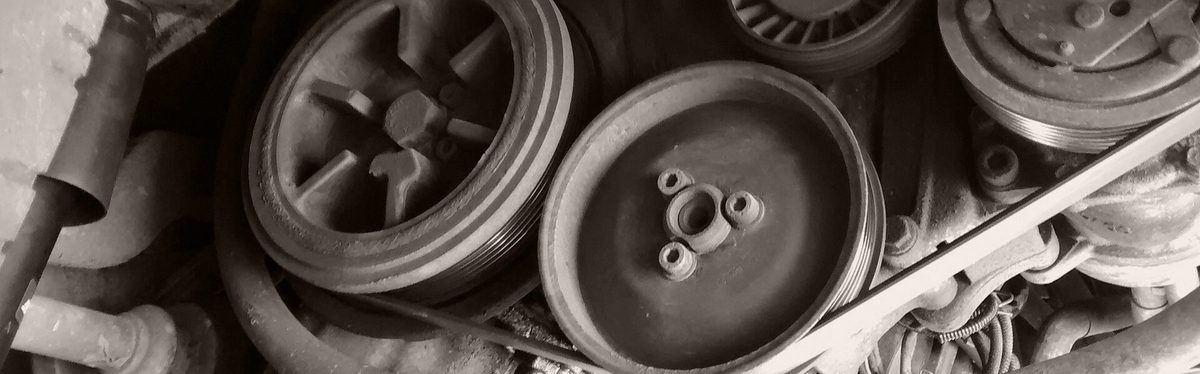
Because the serpentine belt is slipping, most of the time. A hot rubber smell, strongest at idle or just after switching off, is what that looks like from the driver's seat. The belt drives the alternator, water pump and air conditioning off the crankshaft, and when it's worn, glazed, or its tensioner has weakened, it slips against the pulleys and heats up.
It's one of the cheaper repairs on a car: $90 to $250, and most of that is labor rather than the belt. If the tensioner is going too, and on a belt old enough to slip it often is, reckon on $150 to $400 for both.
Two things make this worth doing rather than living with. A slipping belt is on its way to a snapped one. A snapped belt means no alternator and no water pump, so you get a dead battery and an overheating engine at the same time.
If the car is already showing charging symptoms, the free alternator and battery test is worth doing before you replace anything. And the noise it makes on a cold start, that brief shriek, is the same fault, so if you have both the smell and the squeal you already have your answer.
Is the acrid smell my brakes or my clutch?
A sharp, hot, metallic-chemical smell after driving is friction material getting far hotter than it should. Three causes, in rising order of cost.
Brakes worked hard. A long descent, or heavy traffic on a hill, will genuinely overheat pads and leave a smell in the parking space. If the smell appeared after exactly that kind of driving and fades within the hour, nothing is wrong, so let them cool.
A dragging brake. If the smell shows up on ordinary driving, and one wheel is noticeably hotter than the others when you park. Hold a hand near it, and don't touch the rotor.
A caliper is sticking, a slide pin has seized, or a parking brake isn't fully releasing, and that corner is braking constantly. Expect $325 to $1,200 per caliper, and be ready for it to grow: a caliper that has been dragging usually destroys its pad and often the rotor with it, so a full corner can reach $1,500.
The clutch, on a manual. A distinct sharp smell after hill starts, heavy traffic, or towing is clutch friction material overheating.
Occasional and mild is the clutch doing its job badly for a moment. Frequent, with the engine revving without the car accelerating, means the clutch is slipping and worn: $800 to $1,800, and higher on cars where the transmission is awkward to remove.
What causes an oil smell with no smoke?
This is the calm version of the oil smell, and the most common single cause of "my car smells like burning but I can't see anything."
Engine oil escaping at the top of the engine runs down the outside and reaches the exhaust manifold, which is hot enough to cook it off before it ever reaches the ground. That produces a smell after driving with nothing on the driveway, a combination that points hard at a valve cover gasket, at $300 to $500.
Two details owners report explain a lot of otherwise confusing cases. The oil usually lands not on the manifold itself but on the heat shield above it, where it sits and smoulders rather than burning off cleanly. That's why the smell is often strongest at a red light, once the car has stopped and the heat is no longer blown away.
On many cars the heat shield sits close to the air intake for the cabin, so the smell arrives through the vents. If yours smells strongly inside but you can barely find it standing outside the car, that route is why. A cabin air filter that has absorbed it will keep the smell going after the leak is fixed.
Three things it turns out to be instead, if the valve cover gasket isn't the answer:
- If there is a puddle under the middle of the car, look lower down instead, because an oil pan gasket runs $400 to $1,000 depending on whether the pan can be reached. And if the smell is sweet rather than acrid, owners describe it as wet burnt toast, it's not oil at all but coolant, which is a different family of repair entirely.
- One more, cheap and often missed: a loose or corroded heat shield. Those thin metal panels keep exhaust heat off everything nearby, and when one comes adrift the heat reaches things never meant to get hot. $50 to $150, and it usually rattles as well.
- One smell on this list isn't burning at all. A sharp rotten-egg, sulfur note comes from the catalytic converter rather than from anything alight, and it normally arrives with a P0420 code stored alongside it.
What owners report
Owners tracking a valve cover gasket down on marque forums keep arriving at one detail that the pages ranking for this question never mention: the smell carries on for weeks after the gasket is replaced. The heat shield above it is soaked, and a soaked shield can't be cleaned. Several describe going back to the shop convinced the repair had failed when nothing was wrong with it.
From owner threads on BimmerFest, Toyota Nation, BobIsTheOilGuy and TractorByNet, read August 2026. Their descriptions, not their diagnoses.
How do you work out why your car smells like burning?
You can narrow this down considerably before anyone puts the car on a lift, and it takes about five minutes.
The 5 steps below take about five minutes and need no lift:
- Note exactly when it happens. Only after braking hard or descending a hill points at brakes. Only on hill starts or in heavy traffic, on a manual, points at the clutch. At idle with the engine warm points at the engine bay. Only with the heater running points at the blower or the heater core rather than anything mechanical.
- Feel for one hot wheel. Park after a normal drive and hold the back of your hand near each wheel in turn, near it and not on it. All four warm is normal. One noticeably hotter than the other three is a dragging brake, and you've just diagnosed it yourself. Owners who chase this repeatedly use a no-touch infrared thermometer instead, which costs very little and turns "seems hotter" into a number you can compare across all four corners.
- Open the hood and look, with the engine off. You're looking for wet, dark, dust-caked patches on the outside of the engine, a shiny or frayed belt, and anything melted. Don't touch the exhaust.
- Check the temperature gauge on the next drive. A gauge sitting where it always sits rules out overheating, and nothing else. It doesn't clear a dragging brake or a leaking gasket, both of which happen at a perfectly normal coolant temperature.
- Put cardboard under the car overnight. If a fluid is involved, this tells you which one, and our guide to what each fluid leak costs to fix takes it from there. No drip at all, plus an oil smell, is itself a strong clue: it's burning off before it lands.
Tell the shop when it happens rather than what you think it is. That one sentence sends a technician to the right end of the car.
What should you do about the burning smell?
Start with the two stop-now smells. Melting plastic, or a heavy oil smell with visible smoke: pull over somewhere safe, switch off, and get it recovered rather than driven. Everything else on this page can be driven to a shop.
Then rule out the free ones. Recent brake work, a recent oil change, or something stuck to the exhaust accounts for a large share of these smells and costs nothing to confirm.
After that, use the pattern. Rubber at idle is the belt, and it's the cheapest real repair here. Acrid after hard braking that fades is fine; acrid on ordinary driving with one hot wheel is a caliper.
Then the fluids. Oil smell with no puddle is a valve cover gasket, and sweet rather than acrid is coolant, not oil.
What we can't do from a page is tell you which of these it is. We can only tell you which two mean stop and which four cost nothing, and that's most of the value: it decides whether you drive to the shop or call one.
When you call a shop, tell them when it happens rather than what you think it is. "Only after I come down the hill into town" and "only when I've been sitting in traffic" send a technician to completely different parts of the car, and it's the single most useful thing you can hand them.
From the documents
A decade apart, the same two materials
The figures at the top of this page come from 2018 to 2022. This report covers 2008 to 2010. Read them together, because nobody was checking anybody:
US Fire Administration, Topical Fire Report Series, Volume 13 Issue 11, January 2013, Highway Vehicle Fires (2008-2010)
Insulation around electrical wiring (28 percent) and flammable liquids in the engine area (18 percent) were the most common items first ignited in highway vehicle fires.
US Fire Administration Topical Fire Report Series, Volume 13 Issue 11, January 2013, leading factor contributing to ignition
The leading factor contributing to the ignition of highway vehicle fires was mechanical failure (44 percent).
Two independent reporting periods, roughly ten years apart, and the answer barely moves. That's worth more than either figure on its own, because it means the two smells at the top of this page aren't a snapshot of one bad decade. They're what a car fire starts from.
Conclusion
Two of these mean stop, and four cost nothing
Melting plastic and heavy oil smoke are the two to stop for, and the fire data is why. Wiring insulation and fluid in the engine bay are what most often catches light first, in two reporting periods a decade apart. Everything else here can be driven to a shop, and recent brake work, a recent oil change or something stuck to the exhaust costs nothing to rule out.
When you call, say when it happens rather than what you think it is, because that sends a technician to a different part of the car. Oil & Miles reads the fire record and prices the repair behind each smell, across symptoms.
Common questions
Asked most often
Is a burning smell after driving dangerous?
Usually not, but two versions are. A melting-plastic or electrical smell and a heavy oil smell with smoke correspond to the two materials that most often ignite first in vehicle fires: wiring insulation and engine-bay fluids, so those two mean stop. Hot brakes and slipping belts effectively never appear in that data.
My car smells like burning oil but there's no leak on the ground.
That combination usually means a valve cover gasket. Oil escaping at the top of the engine runs down onto the hot exhaust manifold and burns off before it can reach the driveway. Budget $300 to $500.
New brakes smell like burning. Should I be worried?
No, for the first couple of hundred miles. Bedding-in burns resin off the pad surface, and the smell is strongest in the first ten to twenty stops. If it is still there after about 200 miles, or braking has got worse rather than better, have it looked at.
Why does my car smell like burning after an oil change?
Almost always oil spilled down the outside of the engine during the fill, burning off the exhaust over a few heat cycles. It should fade within a week. If it doesn't, something is leaking rather than something was spilled.
I just had the valve cover gasket replaced and it still smells. Did they fix it?
Probably. Oil that soaked into the heat shield during the leak doesn't get cleaned off, and much of it is unreachable, so it burns away for a while after the repair: give it a couple of weeks. If it is still there after that, or you find fresh wet oil at the cover seam, go back.
Why is the smell stronger inside the car than outside?
Because oil smouldering on a heat shield often sits near the intake that feeds the cabin vents. The smell gets drawn in and the cabin air filter absorbs it, which is also why replacing that filter after the repair is worth the small cost.
Burning smell but the temperature gauge is normal. What does that mean?
It rules out overheating, which is useful, and points at everything else on this page. Brakes, belts, clutches and external oil leaks all produce heat well away from the coolant the gauge measures, so a normal gauge is no reassurance on its own.
Why does my car stink?
If it stinks of burning, work down this page. If it stinks and nothing is hot, the usual answers are the cabin filter, damp carpet from a leak, or something in the air conditioning system, and none of those is on this page. A smell that arrives with heat is the one that matters.
What people ask next
- Bad Wheel Bearing Symptoms and How Long You Can Drive 11 min
- P0174 Code: The Bank 2 Code That Isn't About Bank 2 14 min
- P0172 Code: The Searches Say Chevy, the Record Says CR-V 14 min
- P0700 Code: The One That Points at Another Code 15 min
- P0301 Code: A Plug, a Coil, or Coolant on a Ford 18 min
- P0441 Code: Why the Toyota Answer Is Usually Wrong 12 min
Sources
- NFPA and US Fire Administration vehicle fire reporting, for the annual average across 2018-2022, the mechanical and electrical shares, what is first ignited, and the death and injury counts. Cross-checked between two sources reporting the same dataset. NFPA, US Fire Administration
- Brake manufacturers and brake specialists for the bedding-in ranges. Published manufacturer guidance
- Cost publishers and shops that price each job separately, for the serpentine belt, caliper, clutch and heat shield figures. The valve cover and oil pan figures come from our own articles on those repairs. Published repair-cost guidance, Oil & Miles
- AutoZone, counter prices for a 2017 Honda Accord 2.4L read September 1, 2026, for the belt, tensioner, idler pulley, valve cover gasket and oil pan gasket. Every brand the catalog lists as fitting that car, cross-checked at Walmart. AutoZone, read September 2026
- Owners describing their own cases on marque forums: BimmerFest, Toyota Nation, BobIsTheOilGuy and TractorByNet, for the distinctions they draw between one smell and another and for the infrared thermometer as the practical way to compare wheel temperatures. Marque forums, read August 2026
- US Fire Administration, Topical Fire Report Series, Volume 13 Issue 11, January 2013, Highway Vehicle Fires (2008-2010). Quoted for the items first ignited and the leading contributing factor, as the older edition of the same reporting the figures above come from. Read as the published PDF, September 16, 2026
How this was compiled
The fire figures are quoted as annual averages rather than for any single year, because that's the form both reports publish them in. Owner accounts are used for what a fault smells and behaves like, never for what it costs or what caused it.
What we didn't do
- We couldn't read the underlying federal PDF directly, because it didn't render as text. The fire figures here rest on two secondary reports of the same NFPA dataset rather than on the source document.
- We didn't compute any repair cost from book labor times, which aren't public.
- We give no figure for how likely any individual burning smell is to precede a fire, because no such figure exists. The data says what ignites, not how often a smell becomes a fire.
Prices are ranges compiled in August and September 2026 for the US market and vary by region, vehicle and shop rate. Prices from $10 up are rounded to the nearest dollar, so $14.13 reads as $14 and $14.52 as $15. Below $10 they're exact. This article is general information, not advice about your specific vehicle. See the disclaimer.