
Key takeaways
- Safety: If the red oil pressure light comes on while you drive, stop somewhere safe right away and switch the engine off.
- Blue smoke from the tailpipe goes with an engine using oil.
- Check the dipstick first, because an engine uses some oil between changes.
- A puff at a cold start can come from valve seals, a PCV part or a turbo on some engines.
- A shop finds the cause with a few checks, the cheap ones first.
Blue smoke from the tailpipe goes with an engine burning oil, and the dipstick tells you how urgent it is. The time it shows, at startup, under load or at idle, points to the cause.
Can I drive with blue smoke from the exhaust?
Only after you check the dipstick, because a low oil level is the first thing to rule out. An engine uses some oil between changes, and use goes up when the engine is new, with the wrong oil or viscosity, and at high engine speed.
Watch the red oil pressure light on the way. If the red oil pressure light comes on while you drive, stop somewhere safe right away and switch the engine off. If the level is low, add oil to the proper level and restart, and if the light stays on, switch the engine off and don't drive on until it's repaired.
If the check engine light flashes, ease off the throttle and pull over where it's safe. If it flashes again after the engine has rested, drive slowly and gently to the nearest shop.
What does blue smoke from the exhaust mean?
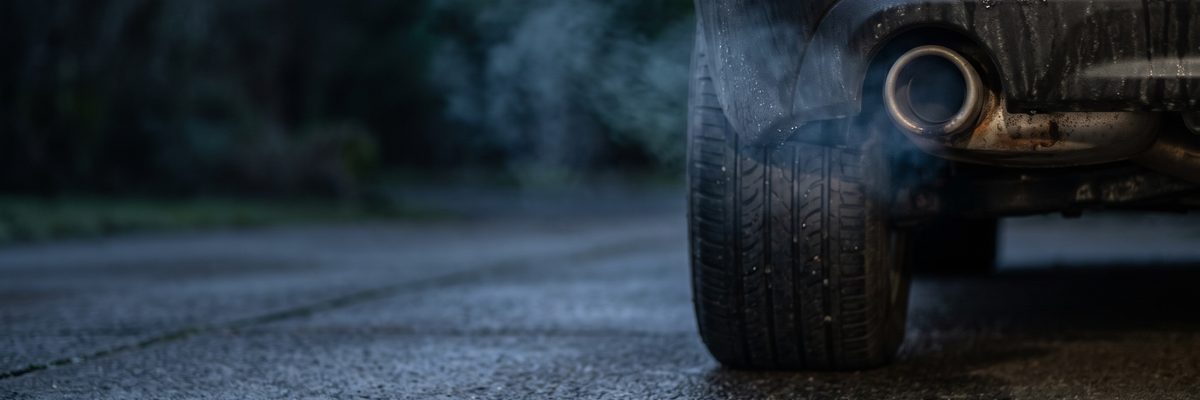
Blue smoke from the tailpipe goes with an engine using too much oil, and it can come with a burning-oil smell. White smoke and black smoke are separate problems.
| When it shows | Likely cause |
|---|---|
| A puff at a cold start | Valve stem seals or guides, or a PCV part on some newer engines |
| Under load or accelerating | Piston rings or cylinder wear |
| At idle or light throttle | A clogged or stuck PCV system |
| After coasting downhill | Valve stem seals or guides |
| First minutes after a cold start, on some Ford turbo engines | Oil getting into the turbo |
White smoke points to coolant. Black smoke points to too much fuel, so neither one is an oil problem and the dipstick won't explain it.
What should I check first?
Start with the dipstick. A low level means the engine is using or leaking oil, and a level above the full mark can cause blue smoke after an oil change or a top-off, so add oil slowly and don't overfill. Note how much oil you add between changes, because that tells a shop how bad it is. Then look at the coolant level.
Look for oil outside the engine too. Oil leaking onto hot exhaust parts, from a valve cover gasket or a filter housing, gives a burnt-oil smell or smoke from the engine bay, not blue smoke from the tailpipe.
If you see smoke or smell burning from under the hood, pull over and switch the engine off as soon as it's safe, and keep the hood shut until the smoke stops. If you see flames, get everyone out of the car, move at least 100 feet away from it and well away from traffic, and call 911.
Why only at startup?
Worn valve stem seals or valve guides can let oil seep down into the cylinders while the engine sits, and the puff clears within seconds of starting. On some newer engines a faulty PCV part in the valve cover or the camshaft cover is the cause, not worn parts. On listed Ford and GM models, that PCV repair is a shop job.
Valve stem seals have a warranty program too. Mazda extended its powertrain warranty for excessive oil use on certain models and VINs, so ask a dealer if yours is on the list.

A puff that clears within seconds
Why does it smoke when I accelerate or idle?
Worn piston rings or cylinder wear can let oil past into the combustion chamber, so smoke that shows under load or while you accelerate can point that way. A shop checks for it with a compression test and a leak-down test, which measure how well the cylinders seal, so it stays a guess until a shop runs them.
At idle or light throttle, a clogged or stuck PCV system can pull oil vapor into the intake, and it's the cheapest cause to rule out. A puff after coasting downhill points back to the valve seals or guides.
Could it be my turbo?
On a turbo car, worn turbo oil seals can send oil into the exhaust or the intake. A shop checks the turbo, the intake piping and the intercooler hoses for oil.
On some Ford turbo engines, smoke for the first minutes after a cold overnight start comes from oil getting into the turbo. It shows as white or blue on the 2018–2020 F-150 2.7L. The fix there was a revised oil supply tube to the left turbo, so the check comes before any replacement.
Does blue smoke mean a blown head gasket?
White smoke points to coolant and a blown head gasket, and blue smoke points to oil. Check the coolant level to tell the two apart.
If the temperature gauge reaches the red or a coolant warning comes on, pull over where it's safe, let the engine cool and never open the coolant cap while it's hot. Smoke with a normal gauge points back to oil.
How do I find the cause and fix it?
A shop works through the cheap checks first, in this order:
- Check the oil level. A level above the full mark is the one quick fix: have it brought down to the proper mark.
- Look for outside leaks. Oil on hot exhaust parts smokes from the engine bay, not the tailpipe.
- Check the PCV system. A clogged or stuck one pulls oil vapor into the intake, and it's the cheapest cause to rule out.
- Pull the spark plugs. A shop looks for oil fouling on them.
- Test compression and leak-down. They measure how well the cylinders seal, before anyone blames the rings.
- Inspect the turbo, on a turbo car. The turbo, the intake piping and the intercooler hoses get checked for oil.
Valve seals, rings and a turbo are shop work, and so is a PCV part inside a valve cover or camshaft cover. Until it's fixed, the smoke can also fail an emissions test: in California, any visible smoke from the tailpipe at idle, or from the crankcase (PCV) system, fails the Smog Check, and hybrids aren't smoke-tested.

The plugs are one of the cheap checks
From the carmakers
What do the carmakers say about blue smoke and oil use?
A bulletin isn't a recall, and it applies only to the cars it lists. Your dealer can tell you whether a program applies to your VIN.
Service bulletin TSB 26-2349
This may be due to the sealing process of the PCV baffle which is part of the valve cover assembly.
Service bulletin PIP5947C
Excessive oil consumption, blue smoke from exhaust, idle surge below 2000 miles.
Service bulletin TSB 20-2207
This may be due to oil entering the left side turbocharger turbine housing.
Service program SSPD5
Valve Stem Seals Class Action Settlement Program for Excessive Oil Consumption and Powertrain Warranty Extension.
Owner's manual Engine oil
A certain amount of engine oil will be consumed while driving.
Inspection manual Smog Check Manual
There is any visible smoke observed during the Idle Test.
Conclusion
What to do next about blue smoke from the exhaust
If the smoke only shows on a cold start, ask your dealer about bulletins for your engine. If the oil level keeps dropping, note how much you add, so the shop can judge how bad it is.
Oil & Miles checks each step here against the carmakers' own bulletins and manuals and the California Smog Check Manual.
Common questions
Asked most often
Is blue smoke from the exhaust bad?
It goes with an engine using oil, so check the dipstick first and watch the red oil pressure light.
Why is there blue smoke only at startup?
Worn valve stem seals or guides can let oil seep into the cylinders while the engine sits. On some newer engines a faulty PCV part in the valve cover or camshaft cover is the cause.
Can a blown head gasket make blue smoke?
White smoke points to coolant and a blown head gasket, and blue smoke to oil. Check the coolant level and the gauge to tell them apart.
Can blue smoke come from the turbo?
Yes, on a turbo car worn turbo oil seals can send oil into the exhaust or the intake. A shop checks the turbo, the intake piping and the intercooler hoses for oil.
Will blue smoke fail an emissions test?
In California, any visible smoke from the tailpipe at idle fails the Smog Check. Hybrids aren't smoke-tested there.
What people ask next
Sources
- Ford Technical Service Bulletin 26-2349, for the PCV baffle and the blue smoke from the tailpipe. Ford, read November 10, 2026
- GM Service Bulletin PIP5947C, for the camshaft cover and the blue smoke on the 1.2L engine. GM, read November 10, 2026
- Ford Technical Service Bulletin 20-2207 and Special Service Message 55217, for the turbo oil and the cold-start smoke. Ford, read November 10, 2026
- Mazda Special Service Program SSPD5, for the valve stem seals and the warranty extension. Mazda, read November 10, 2026
- 2018 Toyota Camry and 2022 Hyundai Elantra Owner's Manuals (US), PDF pages 435 and 513, for the oil an engine uses between changes. Toyota, Hyundai, read November 10, 2026
- California Bureau of Automotive Repair, Smog Check Manual, April 2025, pages 17 and 33, for the visible smoke rule. BAR, read November 10, 2026
The bulletins come from NHTSA's service bulletin files, and the manuals and the California manual are US editions.
AI illustration by Oil & Miles
This article is general information, not advice about your specific vehicle. See the disclaimer.