

Key takeaways
- Safety: Keep sparks, flames and cigarettes away from the battery, because the gas it gives off can explode.
- Take the negative (-) cable off first and put it back on last.
- Disconnecting can clear stored settings such as the radio, clock and window or sunroof memory, and what resets depends on the car.
- Hybrids and AGM batteries have their own rules, so check the manual before you touch the 12-volt battery.
Disconnecting the battery takes two cables and a wrench, but the battery gives off explosive gas and the car stores settings that the power cut can clear. Knowing the order and what resets keeps a simple job from turning into a repair.
Is it safe to disconnect a car battery?
Keep sparks, flames and cigarettes away from the battery, because the gas it gives off can explode. The battery gives off explosive hydrogen gas during normal operation, so these are the points to follow:
- Tools and terminals. Don't cause sparks by touching the battery terminals with tools, as on the 2019 Toyota Avalon and 4Runner.
- Eye protection. Wear eye protection when you work on or near the battery.
- The cooling fan and moving parts. Keep your hands, clothing and tools away from the cooling fan and other moving parts: the electric fan can start even when the engine is off.
- Battery acid. If battery acid gets on your skin or in your eyes, flush it with water right away for at least 15 minutes and get medical help.
Your owner's manual has the warnings for your car, including the airbag wait covered below. Read it before you loosen a cable.
How do you disconnect a car battery?
The negative cable goes first so a slipping tool can't make a spark between the live positive terminal and the car body. The steps follow that order:
- Switch the car off. Turn the engine switch off before you disconnect the battery, as on the 2018 Toyota Camry with a smart key.
- Take the negative (-) cable off first. Put it back on last.
- Take the positive (+) cable off. Keep both cables clear of the battery posts.
- Lift the battery out with a carrier or by opposite corners. Excess pressure on a plastic case can make acid leak, as on the 2022 Hyundai Elantra.
To reconnect, put the negative (-) cable on last. On the 2017 Chrysler Pacifica, make sure the ignition switch is off and the driver's door is closed when you reconnect the terminals.
Charging rules differ by car, so check your manual before you connect a charger. The 2016 Honda Pilot wants both cables disconnected first, which prevents damage to the electrical system.

Lifting off the negative cable
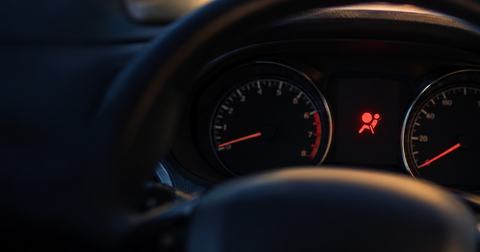
What about the airbags?
The airbag module keeps a backup power supply, so an airbag can still go off for a short time after the battery is disconnected. Keep away from the airbags and their wiring, and follow the wait your owner's manual names.
Leave yellow connectors alone, because on GM cars they can be part of the airbag system. An airbag can still inflate for up to 10 seconds after the car is off and the battery is disconnected on Chevrolet, Buick and GMC models, and the 2017 Chrysler Pacifica wait is at least a minute with the ignition off and the driver's door closed.
After an inflated airbag or front damage, don't disconnect the 12-volt battery cables before you contact the dealer, as on the 2010 Toyota Prius. Don't modify or disconnect the airbag wiring either.
What does disconnecting a car battery reset?
A disconnect cuts the power that holds stored settings, so what resets depends on the car. These examples show the range:
- Engine computer data. The information stored in the ECU can be cleared and some systems may need initialization, as on the 2018 Toyota Camry.
- The radio and clock. The audio system may disable itself and ask for a code, and the clock may reset, as on the 2008 Honda Accord.
- Seat and position memory. Position and seat memory can be erased or need saving again, as on the 2019 Hyundai Santa Fe.
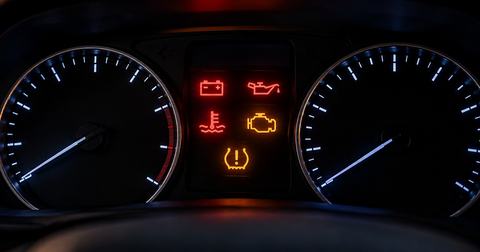
Whether a disconnect clears a warning light depends on the light. A light that comes back after a disconnect, such as an ABS light or the check engine light, is worth a closer look at what it means.
What do I redo after I reconnect it?
Some systems relearn or need a reset once the power is back, and your manual names which ones your car has:
- Power windows. Power windows may need programming or a bounce-back memory reset for each window, as on the 2010 Cadillac SRX.
- Sunroof. The sunroof may need initializing, as on the 2012 Chevrolet Cruze.
- Liftgate. A liftgate may need a reset or a wait: the 2011 Ford Edge resets after the battery is disconnected for 20 seconds and reconnected.
- Automatic transmission. The transmission may relearn its shift strategy, so shifts may feel firm or soft, which is considered normal on the 2010 Ford Fusion.
- Starting. The car may not start on the first try after the battery is recharged and may start normally on the second, as on the 2018 Toyota Camry with a smart key.
- A charging light that stays on. If the charging warning light stays on after the battery is back, stop the car in a safe place and contact your dealer, as on the 2019 Toyota 4Runner.
There's no one reset for every car. Check your manual for the systems yours has, and don't expect the same list on a different make.
Is a hybrid or an AGM battery different?
On some cars the 12-volt battery sits in the trunk or is a different type, so the manual decides how to work on it:
- A hybrid's 12-volt battery. Hybrids have their own steps, so check the manual before you touch the 12-volt battery. The hybrid system may not start if the 12-volt battery is disconnected: try to start it again, and if the READY indicator doesn't come on, contact your Toyota dealer, as on the 2010 Toyota Prius.
- An AGM battery. Charge an AGM battery only on a charger with an AGM setting. A general charger can damage an AGM battery or make it explode, as on the 2022 Hyundai Elantra.
- A battery sensor. Added electrical devices shouldn't be grounded at the negative battery post, because that can cause inaccurate battery readings, as on the 2013 Ford Escape.
These rules differ by car, and a charger or a hybrid's 12-volt battery handled the wrong way can damage the car. Check the manual before you touch the 12-volt battery on a hybrid or an AGM battery.
What should I check when I fit a new battery?
A new battery has to match the old one's size and ratings on the Honda, Toyota and GM cars named here, and its clamps and terminals need to be clean and tight:
- Match the battery. The case size has to match, because a different size can't be properly secured, as on the 2018 Toyota Camry. The replacement must have the same specifications.
- Clean the terminals. Clean the terminals with a damp towel, dry the battery with a cloth or towel and coat the terminals with grease to help prevent future corrosion, as on the 2016 Honda Pilot.
- Check the clamps. Cable clamps should be tight on the terminal posts and free of corrosion, so clean and tighten the terminals as required on the 2015 Chrysler 200.
- Expect the resets. A new battery brings the same resets as a disconnect. The 2011 Ford Edge needs its dimmer control re-calibrated and its transmission relearns the shift strategy.
Put the negative (-) cable back on last, as with any reconnect. If a new battery keeps dying, look at why a battery keeps dying, and how long a battery lasts helps you time the next swap.
From the carmakers
What do the carmakers say about disconnecting a car battery?
None of these cards is a recall, and each one covers only the car it names. Your manual has the steps for your car.
Owner's manual Chevrolet Equinox 2022
For up to 10 seconds after the vehicle is turned off and the battery is disconnected, an airbag can still inflate during improper service.
Owner's manual Chrysler Pacifica 2017
Before removal of the positive and negative terminals to the battery, wait at least a minute with ignition switch in the OFF position …
Owner's manual Toyota Camry 2018
When the battery terminals are removed, the information stored in the ECU is cleared.
Owner's manual Honda Pilot 2016
Clean the terminals with a damp towel. Cloth/towel dry the battery. Coat the terminals with grease to help prevent future corrosion.
Owner's manual Hyundai Elantra 2022
The negative battery cable must be removed first and installed last when the battery is disconnected.
Owner's manual Ford Fusion 2010
When the battery is disconnected or a new battery is installed, the automatic transmission must relearn its shift strategy.
Conclusion
What to do next about disconnecting a car battery
If you disconnect the battery, take the negative cable off first, keep sparks away and read your manual for the airbag wait. If you fit a new one, match the old battery, clean the terminals and expect some systems to reset.
Oil & Miles checks each statement here against the carmakers' owner's manuals.
Common questions
Asked most often
Which battery terminal do you disconnect first?
The negative (-) one, and put it back on last. Check your manual for your car.
Do you have to disconnect the battery to charge it?
It depends on the car, so check your manual. Some cars want both cables disconnected first, to prevent damage to the electrical system, as on the 2016 Honda Pilot.
Does disconnecting a car battery erase everything?
Not on every car. It can clear ECU data, as on the 2018 Toyota Camry, and what resets depends on the car.
How long should I wait before taking the cable off?
There's no one time for every car, so use the wait in your owner's manual. On the 2017 Chrysler Pacifica, the terminals come off after at least a minute.
What people ask next
Sources
- Chevrolet Equinox 2022 owner's manual, airbag, liftgate, AGM battery and replacement, for the 10-second airbag wait, the liftgate, the AGM battery and the fan. Chevrolet, read November 12, 2026
- Chevrolet Cruze 2012, Buick Enclave 2011 and Chevrolet Malibu 2010 owner's manuals, for the airbag wait, the sunroof and the replacement battery label. Chevrolet and Buick, read November 12, 2026
- Chrysler Pacifica 2017 and Chrysler 200 2015 owner's manuals, for the one-minute wait, the battery sensor and the clamps. Chrysler, read November 12, 2026
- Toyota Camry 2018 owner's manual, for the ECU data, the smart key, the restart and the case size. Toyota, read November 12, 2026
- Toyota Prius 2010 owner's manual, for the airbag after a crash and the hybrid system. Toyota, read November 12, 2026
- Honda Pilot 2016 and Accord 2008 owner's manuals, for the cable order, the charger, the audio code, the cleaning and the replacement. Honda, read November 12, 2026
- Hyundai Elantra 2022, Tucson 2019, Santa Fe 2019 and Sonata Hybrid 2012 owner's manuals, for the cable order, lifting, AGM charging, memory, the sunroof and the dealer. Hyundai, read November 12, 2026
- Nissan Altima 2012 and 2017 owner's manuals, for the airbag wiring, eye protection and the fan. Nissan, read November 12, 2026
- Ford Fusion 2010, Escape 2010, Edge 2011, Focus 2012 and F-150 2011 owner's manuals, for the transmission relearn, the dimmer, the liftgate, the windows and the F-150. Ford, read November 12, 2026
- Ford Escape 2013 and 2020 owner's manuals, for the hybrid luggage compartment and the ground point. Ford, read November 12, 2026
- Cadillac SRX 2010 and Kia Sorento 2014 owner's manuals, for the power windows and the seat memory. Cadillac and Kia, read November 12, 2026
- Toyota Avalon 2019 and 4Runner 2019 owner's manuals, for sparks at the terminals. Toyota, read November 12, 2026
- Ford F-150 2018, Toyota RAV4 2019 and Nissan Rogue 2018 owner's manuals, and the NIOSH Pocket Guide on sulfuric acid, for flushing battery acid for at least 15 minutes. Ford, Toyota, Nissan and NIOSH, read November 12, 2026
- Toyota 4Runner 2019 owner's manual, for the charging light that stays on. Toyota, read November 12, 2026
AI illustration by Oil & Miles
This article is general information, not advice about your specific vehicle. See the disclaimer.