
Key takeaways
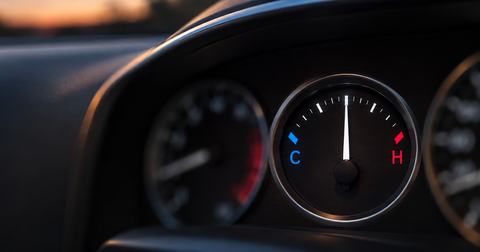
- Safety: If the temperature gauge reaches the red or a coolant warning comes on, pull over where it's safe, let the engine cool and never open the coolant cap while it's hot.
- Coolant carries heat away from the engine and keeps the liquid from boiling.
- The mix also keeps the cooling system from freezing and protects it from rust and corrosion.
- Plain water boils sooner than the coolant mix and does nothing against rust, so use the mix your manual names.
- Antifreeze is poisonous even in small amounts, so keep it closed and out of reach of children and pets, and clean up spills right away.
Coolant is the liquid that circulates through the engine and the radiator. It does several jobs at once, and each one is why water alone isn't enough.
Is it safe to drive when coolant is the problem?
If the temperature gauge reaches the red or a coolant warning comes on, pull over where it's safe, let the engine cool and never open the coolant cap while it's hot. The cooling system runs under pressure, and coolant is also poisonous, so these points matter:
- Opening the coolant cap. Never open the coolant cap while the engine is hot, because hot coolant and steam can spray out and burn you.
- Antifreeze around children and pets. Antifreeze is poisonous even in small amounts, so keep it closed and out of reach of children and pets, and clean up spills right away. If a child or pet swallows coolant, get emergency help right away.
Your owner's manual has the overheating steps for your car, and they differ from one model to the next. Follow those steps, and open the cap only after the engine has cooled. If you see steam, switch the engine off.
What does coolant do in the engine?
Coolant circulates through the engine and carries heat away from it. The mix also changes how the liquid behaves in the cold and the heat, and that's why carmakers specify it:
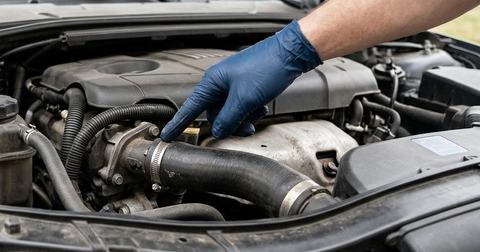
- It carries heat out of the engine. The coolant absorbs the engine's heat as it circulates and carries it through the hoses to the radiator. Air flowing in through the grille cools it there, and it's pumped back into the engine to do the job again.
- It keeps the liquid from boiling. A 50/50 mix protects against boiling up to 265°F (129°C), as on the 2012 Chevrolet Cruze.
- It keeps the system from freezing. The same 50/50 mix protects against freezing down to -34°F (-37°C), as on the 2012 Chevrolet Cruze.
- It protects against rust and corrosion. The additives stop rust inside the cooling system.
- It lubricates the water pump. Coolant also lubricates the water pump, as on the 2022 Hyundai Elantra.
Coolant is neither plain water nor straight antifreeze. The correct mixture of water and antifreeze gives proper lubrication, corrosion protection and cooling, as on the 2019 Toyota 4Runner.

Reservoir, hoses and radiator
Why can't I just use water?
Plain water gives no protection against rust or freezing, and it boils sooner than the mix. The mix is what the manual specifies, so the manual is the place to check.
In my shop and on the road, I've heard customers say plain water and coolant are the same, and I've heard a mechanic say it too. I've seen cars overheat and radiators corrode through, and I've seen leaks start after a car went from plain water to coolant without the radiator being cleaned first.
Carmakers differ on emergencies. Some allow plain water only in an emergency, to reach a service location, and then need the system drained and refilled with a 50/50 mix as soon as possible, as on the 2011 Ford Edge. That isn't a general rule, because other cars say no plain water at all.
Plain water can boil before the proper mix, and the engine could get too hot without the overheat warning, catch fire and burn you or others, as on the 2012 Chevrolet Cruze. Water alone can also cause engine damage from corrosion, overheating or freezing.
Water alone and alcohol-based coolant are both ruled out, as on the 2015 Chrysler 200. Premixed coolant is already 50/50, so don't add straight antifreeze or plain water to it. For the ratio, see antifreeze versus coolant.
What happens when there isn't enough coolant?
With too little coolant, less heat leaves the engine. Driving with no coolant can cause water pump failure and engine seizure, and suddenly adding coolant can crack the engine, as on the 2024 Kia Sportage. Check the level and add coolant only after the engine cools down.
A wrong coolant causes trouble too. An improper coolant mixture can overheat and badly damage the engine, and on some cars the repair isn't covered by the warranty, as on the 2012 Chevrolet Cruze. For where it goes, see why coolant runs low and a coolant leak.
Signs differ by car: a low coolant indicator or a Coolant Low message can come on when the level is low, as on the 2014 Jeep Cherokee. A level outside the lines may mean a leak, so don't run the engine if there's one.
How do I check the coolant level?
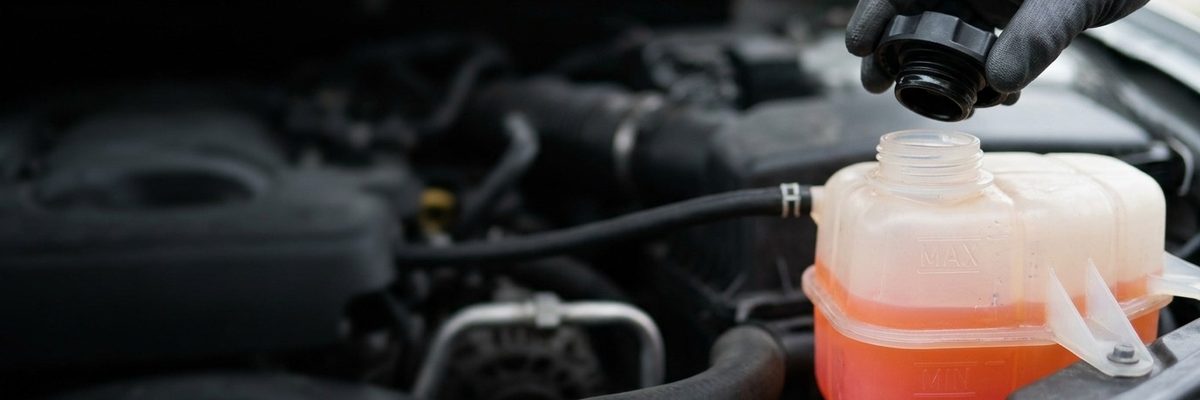
Check it with the engine cold, against the marks on the reservoir. The level should sit between the MAX and MIN lines, and you add the specified coolant up to MAX when it's below MIN, as on the 2018 Honda Accord. How often to look differs by car: once a month, every time you refuel or at least once a year at the start of winter.
If you top up after an overheat, add the coolant slowly in small amounts, because suddenly adding it may crack the engine, as on the 2022 Hyundai Elantra. Never turn the cap while the system is hot, and if no coolant is visible in the surge tank, contact your dealer.
How long does coolant last?
Coolant wears out, and the change interval differs by car:
| Car | Interval |
|---|---|
| Chrysler 200 2015 manual | Ten years or 150,000 miles for OAT coolant. |
| Toyota Prius 2010 manual | First change at 100,000 miles or 120 months, then every 50,000 miles or 60 months. |
| Nissan Altima 2012-2015 and 2017-2018 manuals | At 105,000 miles or 7 years. |
| Ford Edge 2011 and 2013 manuals | Initial change at 6 years or 100,000 miles, then every 3 years or 50,000 miles. |
| Subaru, all models 2019 maintenance book | First change at 11 years or 137,500 miles, then every six years or 75,000 miles. |
Your own manual gives the interval for your car, and on some cars the first change comes later than the ones after it. For when to change it, see the coolant flush.
Can I mix different coolants?
Mixing coolant types can harm the cooling system, shorten the life of the coolant and cause corrosion, and it may void the warranty. Top off only with the type your manual names.
Some coolants must never meet another type. Long-life OAT coolant must not be mixed with HOAT or a "globally compatible" coolant, as on the 2016 Dodge Grand Caravan.
In an emergency, some cars allow another coolant for a short time. The system then has to be drained, flushed and refilled with the right coolant as soon as possible, and your manual says which coolant is allowed.
Coolant comes as a concentrate, which has to be diluted with distilled water, or premixed, which goes in as it is. Check which one you bought before you pour. For the right coolant, see which coolant your car needs.
Is coolant poisonous to kids and pets?
Antifreeze is poisonous even in small amounts, so keep it closed and out of reach of children and pets, and clean up spills right away. Its toxicity develops slowly as the body breaks the ethylene glycol down into by-products that affect blood chemistry, the nervous system and the kidneys.
Don't use antifreeze when children or pets are around, because spills can attract animals. Don't store it in open containers or leave it in puddles on the ground, and clean spills up immediately, as on the 2015 Chrysler 200. Propylene glycol coolants are less toxic than ethylene glycol ones, but treat any swallowed coolant as an emergency.
If a child or pet swallows coolant, get emergency help right away. In the US, call Poison Control at 1-800-222-1222. For a pet, the ASPCA Animal Poison Control number is (888) 426-4435, and a consultation fee may apply.
From the carmakers
What do the carmakers say about coolant?
Each card covers only the car it names. Your owner's manual has the mix and the interval for your own car, and that's the one to follow.
Owner's manual Chevrolet Cruze 2012
Adding only plain water or some other liquid to the cooling system can be dangerous.
Owner's manual Ford Edge 2011
Water alone (without engine coolant) can cause engine damage from corrosion, overheating or freezing.
Owner's manual Toyota 4Runner 2019
Coolant is neither plain water nor straight antifreeze. The correct mixture … must be used to provide proper lubrication, corrosion protection and cooling.
Owner's manual Honda Accord 2018
…premixed with 50% antifreeze and 50% water. Do not add any straight antifreeze or water.
Owner's manual Chrysler 200 2015
Do not use water alone or alcohol-based engine coolant (antifreeze) products.
Owner's manual Hyundai Tucson 2025
Do not use a solution that contains more than 60% antifreeze or less than 35% antifreeze.
Conclusion
What to do next about coolant
If the temperature gauge reaches the red or a coolant warning comes on, pull over where it's safe, let the engine cool and never open the coolant cap while it's hot. Antifreeze is poisonous even in small amounts, so keep it closed and out of reach of children and pets, and clean up spills right away.
Oil & Miles checks each statement here against the carmakers' owner's manuals.
Common questions
Asked most often
Can I put water in the radiator instead of coolant?
Plain water boils sooner than the coolant mix and does nothing against rust, so it isn't a substitute. On the 2011 Ford Edge, water alone can cause engine damage from corrosion, overheating or freezing.
What does coolant do for the water pump?
Coolant also lubricates the water pump, as on the 2022 Hyundai Elantra.
What happens if I run out of coolant?
Driving with no coolant can cause water pump failure and engine seizure, as on the 2024 Kia Sportage. Less coolant also means less heat leaves the engine.
Is it safe to touch or spill coolant?
Antifreeze is poisonous even in small amounts, so keep it closed and out of reach of children and pets, and clean up spills right away.
What people ask next
Sources
- Chevrolet Cruze 2012 and Equinox 2022, Buick Enclave 2011, Cadillac SRX 2010 and GMC Acadia 2010 owner's manuals, engine coolant, for the cap, a possible leak, the 50/50 freeze and boil protection, plain water and the wrong coolant. Chevrolet, Buick, Cadillac and GMC, read November 12, 2026
- Ford Escape 2010 and Ford Edge 2011 owner's manuals, for the 50/50 protection, water alone, water in an emergency, the level, mixing and the service interval. Ford, read November 12, 2026
- Toyota 4Runner 2019, Camry 2018 and Prius 2010 owner's manuals, for the correct mixture, the interval and water in an emergency. Toyota, read November 12, 2026
- Honda Accord 2018 and 2008 owner's manuals, for the premixed coolant, the level, mixing and emergency use. Honda, read November 12, 2026
- Chrysler 200 2015, Grand Caravan 2016, Pacifica 2017, Jeep Cherokee 2014, Dodge Journey 2010 and Ram 1500 2014 owner's manuals, for water alone, storage, the interval, the level, low-coolant signs and mixing. Chrysler, read November 12, 2026
- Hyundai Tucson 2025 owner's manual (web) and Elantra 2022 owner's manual, for the mix limits, the distilled water, the water pump and the slow top-up. Hyundai, read November 12, 2026
- Kia Sportage 2024 and Sorento 2014 owner's manuals, for driving with no coolant and the water pump. Kia, read November 12, 2026
- Nissan Altima 2012 and 2017 owner's manuals, for the interval, the level, mixing, children and pets, and the hot cap. Nissan, read November 12, 2026
- Subaru 2019 maintenance book, for the interval. Subaru, read November 12, 2026
- Ford Escape 2017 owner's manual, for diluting concentrate with distilled water. Ford, read November 12, 2026
- Valvoline Instant Oil Change, Maintain Your Radiator, for how coolant carries engine heat to the radiator. Valvoline Instant Oil Change, read November 12, 2026
- Poison Control, Antifreeze: Bad for Your Kids and Pets, for the slow toxicity and not using antifreeze around children and pets. Poison Control, read November 12, 2026
- Merck Veterinary Manual, Ethylene Glycol (Antifreeze) Poisoning, for the small lethal dose of 3 to 4 teaspoons in dogs and 1 to 2 teaspoons in cats. Merck Veterinary Manual, read November 12, 2026
AI illustration by Oil & Miles
This article is general information, not advice about your specific vehicle. See the disclaimer.