
Short answer
The gap is between brands, not technologies.
In federal complaint records covering 2014-2018 cars, CVT transmission problems concentrate in four Nissan models by a wide margin. Several other manufacturers' CVTs sit close to cars that have no CVT at all. Those same four Nissans are the ones covered by class-action settlements.
OilAndMiles.com - Search for CVT problems and every result treats the CVT itself as the fault. The transmission is the villain, the article explains why belts and pulleys are a bad idea, and the reader comes away believing any car with a CVT is a car to avoid.
We went looking for whether that holds up, using two records that anybody can check. The first is NHTSA's complaints database, where American owners file grievances with the federal government. The second is the published terms of the class-action settlements that have been reached over CVTs.
Neither record supports "CVTs are bad." Both support something narrower and considerably more useful if you own one of these cars or are about to buy one.
What a CVT actually is
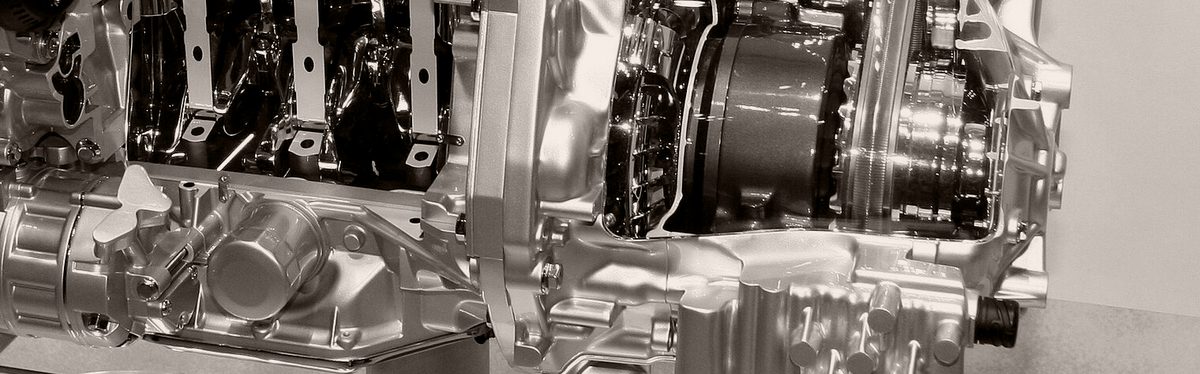
A conventional automatic has a fixed set of gears and picks between them. A continuously variable transmission has none. It runs a steel belt or chain between two pulleys that change diameter, so the ratio slides smoothly across its whole range instead of stepping through six or eight fixed points.
The engineering reason is fuel economy. An engine has one narrow band where it is most efficient, and a CVT can hold it there while road speed changes underneath. That's why they spread quickly through economy cars and compact crossovers rather than through sports cars.

The belt a CVT actually runs on
It also explains why a failing CVT doesn't feel like a failing automatic, which matters later. There are no shifts to go wrong, so the same underlying wear arrives as noise, shudder and slipping instead of as harsh or delayed gear changes.
What the complaint record shows
NHTSA publishes every complaint American owners file, and the text of each one. We pulled every complaint for thirteen cars across the 2014 to 2018 model years, nine fitted with a CVT and four fitted with a conventional automatic, and counted how many mention the CVT by name.
The four conventional-automatic cars are the reason the rest of the chart can be trusted. If our counting method were picking up something other than the transmission, those cars would still show a number. They don't.

| Model | Transmission | Complaints | Mention the CVT | Share |
|---|---|---|---|---|
| Nissan Sentra | CVT | 1,412 | 213 | 15.1% |
| Nissan Versa | CVT | 700 | 71 | 10.1% |
| Nissan Altima | CVT | 3,225 | 236 | 7.3% |
| Nissan Rogue | CVT | 2,726 | 194 | 7.1% |
| Toyota Corolla | CVT | 1,021 | 34 | 3.3% |
| Subaru Forester | CVT | 2,500 | 58 | 2.3% |
| Honda Civic | CVT | 2,918 | 64 | 2.2% |
| Subaru Outback | CVT | 3,081 | 41 | 1.3% |
| Honda Accord | CVT | 4,550 | 30 | 0.7% |
| Toyota Camry | Conventional automatic | 1,347 | 2 | 0.1% |
| Hyundai Elantra | Conventional automatic | 1,976 | 2 | 0.1% |
| Ford Fusion | Conventional automatic | 5,696 | 2 | 0.0% |
| Mazda Mazda3 | Conventional automatic | 559 | 0 | 0.0% |
Use this image
Free to republish under CC BY 4.0: credit Oil & Miles and link to this page. The snippet does both.
<a href="https://oilandmiles.com/articles/cvt-transmission-problems"><img src="https://oilandmiles.com/assets/img/diagrams/cvt-complaint-rates.svg" alt="Bar chart of the share of each model's NHTSA complaints that mention the CVT across 2014 to 2018 model years: Nissan Sentra 15.1%, Nissan Versa 10.1, Nissan Altima 7.3, Nissan Rogue 7.1, Toyota Corolla 3.3, Subaru Forester 2.3, Honda Civic 2.2, Subaru Outback 1.3, Honda Accord 0.7, with four cars that have no CVT shown as dashed bars at 0.1% or below" width="1000" height="906"></a> <p>Diagram: <a href="https://oilandmiles.com/articles/cvt-transmission-problems">Oil & Miles</a>, CC BY 4.0</p>Toyota Camry, Hyundai Elantra, Ford Fusion and Mazda3 produced six CVT mentions between them out of 9,578 complaints. That's a control group behaving exactly as a control group should, and it's what turns the rest of the chart from an impression into a measurement.
Above them, the spread among cars that do have a CVT is enormous. Honda Accord sits at 0.7% and Subaru Outback at 1.3%, closer to the no-CVT cars than to the top of the chart. Nissan Sentra sits at 15.1%.
What the data says
Across 22,133 complaints filed for the nine CVT-equipped models above, 941 name the transmission directly.
The filter is the literal appearance of “CVT” or “continuously variable” in the complaint text or its component field, applied to NHTSA's complaintsByVehicle API and pulled on 22 August 2026. The counts are stored with this site so the figures can be recounted.
What owners report
The counts above are a filter looking for two words. What the filings actually describe is narrower and more consistent than that: not a transmission that fails to engage, but one that won't hold a steady drive. Owners write that the car “seems to be slipping between or not wanting to change gears,” that it “jerks and shudders once I gain some speed,” and that acceleration arrives late and then all at once.
That's worth knowing before a test drive, because it's the distinction a driver can make and a stored code often can't. A CVT has no shifts to go wrong, so the words owners reach for are shudder, jerk and slip rather than anything about a gear.
Wording taken from complaints filed with NHTSA for the 2014 to 2018 Sentra, Altima, Rogue and Versa, read 29 August 2026: 8,071 complaints, of which 716 name the CVT. Quoted as evidence of the words owners use, not as a diagnosis. NHTSA stores every complaint in capitals; these are printed in sentence case and are otherwise unaltered.
The four cars behind most CVT transmission problems
The top four positions are Nissan Sentra, Nissan Versa, Nissan Altima and Nissan Rogue, in that order. The weakest of those four, the Rogue at 7.1%, is still more than double the highest non-Nissan on the list.
That's the finding, and it's narrower than the headline everybody else writes. It's not that belts and pulleys are a doomed idea. Subaru has been building CVTs at volume for as long as anyone, and the Outback's complaint record is nearer to a Camry's than to a Sentra's.
Two things this chart can't tell you, and it's better to hear them from us than to find them yourself:
- The counts aren't adjusted for sales. A model that sold in big numbers has more chances to generate complaints than one that didn't, and nothing in the raw count corrects for it.
- People who file are self-selected. Nobody fills in a federal complaint form because the car is fine, so the pool is drawn from owners who already had trouble.
What survives both objections is that every figure here is a share of that car's own complaints rather than a raw count, so a model selling ten times as many units inflates the top and the bottom of its own fraction together.
The 2013 Altima, and why its fall isn't a fix
One more caution, on a pattern that looks tempting. The 2013 Altima carries 2,307 complaints, 505 of them against the power train, the largest single model year in this data, and the reason that particular car has a reputation of its own. The 2018 Altima carries 224, of which 23 are against the power train.
It would be easy to write that fall as Nissan fixing the problem, and two things stop us. A 2013 car has had thirteen years to accumulate filings and a 2018 car has had eight, so part of that fall is nothing but age.
The years in between don't drop in a straight line either: the figure falls to 161 by 2015, climbs back to 235 in 2016, then falls again. A fix doesn't usually look like that, and we aren't making the claim.
What Nissan agreed to pay for
Complaint data is one source. On its own it wouldn't be enough to name a manufacturer, because it measures what owners say rather than what any authority found. So we went looking for a second record with no connection to the first.
Class-action settlements are that record. They run through federal courts, they're administered publicly, and their terms are published. If they pointed at a different set of cars than the complaints do, this article would say so.
| The car | Extended to | What else the terms carry |
|---|---|---|
| Sentra, 2013 to 2017 | 84 months or 84,000 miles | Transmission warranty extended from the original 60 months or 60,000 miles |
| Versa, 2012 to 2017 | 84 months or 84,000 miles | Versa Note, 2014 to 2017, is covered on the same terms |
| Altima, 2013 to 2016 | 84 months or 84,000 miles | A later settlement adds the 2017 and 2018 cars |
| Rogue, 2014 to 2018 | 84 months or 84,000 miles | Repairs paid out of pocket are reimbursed, up to $5,000 at a non-Nissan shop |
| Infiniti QX60, 2015 to 2018 | 96 months or 96,000 miles | The longest extension of the group, on the same transmission family |
They point at the same cars. Sentra, Versa, Altima and Rogue. The four models at the top of the complaint chart are the four models covered, with the Infiniti QX60 added on a longer term.
Two processes with nothing to do with each other, one driven by owners filling in federal forms and the other by lawyers and judges, arriving at the same four vehicles.
What a settlement does, and doesn't, prove
Nissan settled without admitting liability, and that belongs in the middle of this article rather than in a footnote. A settlement is an agreement to stop arguing. It's not a court finding that a component was defective, and anybody who tells you otherwise is overreading a legal document.
What it does show is a manufacturer choosing to extend warranty cover on one component across five model lines and to reimburse repairs owners had already paid for, including up to $5,000 for work done at shops that weren't its own. Firms don't generally pay out on that scale over a problem they think is imaginary. That's an inference rather than a finding, and we're labeling it as one.
The absence of a settlement elsewhere proves less than it appears to. Class actions follow large fleets and deep pockets, so Subaru not being sued would be weak evidence on its own. What makes the Subaru result meaningful is that the complaint data says the same thing independently.
What a failing CVT feels like
If you own one of these cars, the useful question isn't which brand ranks where. It's what the early signs of CVT failure are, and they're genuinely different from the ones every "bad transmission" article lists.
Those articles describe a conventional automatic: harsh shifts, delayed shifts, gears hunting back and forth. A CVT has no shifts, so a reader checking their car against that list finds nothing wrong right up until something expensive happens.
| What it does | How to read it | What you notice |
|---|---|---|
| Engine flares, speed doesn't | The classic one | Revs climb and stay there while the car accelerates slowly or not at all |
| Shudder at steady speed | Not a shift | A CVT has no gears to shift, so a judder at constant throttle is the belt |
| Whine that tracks the engine | Rises and falls with revs | Distinct from a wheel bearing, which tracks road speed instead |
| Delayed take-up from cold | Worse in the morning | A pause of a second or more before the car moves after selecting Drive |
| Limp mode at highway speed | Stop driving | Power cut to protect the unit. This is the one that becomes dangerous |
A conventional automatic announces trouble by shifting badly. A CVT has no shifts to go wrong, so the same underlying damage arrives as noise, shudder and slipping instead, which is why the usual symptom lists fit it poorly.
The one to treat as urgent is the last. Limp mode at highway speed means the transmission has cut power to protect itself, and a car that suddenly stops accelerating in traffic is a safety problem before it is a repair bill.
Before assuming the worst, check the fluid level and condition. A low level produces slipping that reads exactly like a failing unit. Our guides to checking transmission fluid and to checking it without a dipstick cover both cases, and many of these cars are sealed.
What the fluid looks like is a weaker signal than most people think, for reasons we set out in what fluid color actually tells you. If the level is dropping rather than merely dark, we have priced that separately in transmission fluid leak repair costs.
Why there was never a recall
People reasonably ask why, if the record is this clear, none of this was recalled. We checked: across Nissan Sentra, Altima, Rogue and Versa for 2014 to 2018, exactly one recall touches the transmission, and it concerns gear position indication rather than CVT durability.
The answer is that recalls address safety defects. A transmission that wears out early is a warranty matter, and warranty matters are settled through warranty extensions and lawsuits, which is precisely what happened here.
This is worth carrying beyond this article. No recall doesn't mean no problem. It means no regulator concluded the fault created an unreasonable safety risk, and a great many expensive faults never clear that bar.
What to do about a CVT
If you own one of the covered cars, find out whether your vehicle falls inside a settlement's model years, because the extended term runs to 84 months or 84,000 miles from the original in-service date rather than from when you bought it. If you've already paid for a transmission repair, the reimbursement provisions are the reason to check rather than assume.
What a replacement costs is the question behind all of this, and our own page prices a rebuilt or replaced transmission at $2,500 to $6,000 fitted. The settlement's $5,000 reimbursement cap sits inside that range, which is why checking whether your car is covered is worth the ten minutes.
If you're buying used, this is a service-history question, not a brand question. A Sentra with documented transmission work is a different proposition from one with none, and the chart above is a reason to ask rather than a reason to walk away.
If you drive something whose CVT is nearer the bottom of that chart, the complaint record doesn't support treating it as a liability. Fluid changes at the manufacturer's interval matter more on a CVT than on a conventional automatic, and that's where attention is better spent than on worry.
A machine flush is a different proposition from a drain and fill, though, and worth reading before agreeing to one: is a transmission flush necessary. For the symptoms that aren't CVT-specific, and what each possible cause costs, see the signs a transmission is going out.
We aren't telling anyone which car to buy. The records are public, the counts are published with this article, and the decision is a reader's own.
Conclusion
The question isn't whether it's a CVT
Two records with nothing to do with each other named the same four cars. One is owners filling in federal complaint forms; the other is lawyers and judges settling in federal court. Neither knew what the other was doing, and both arrived at Sentra, Versa, Altima and Rogue.
That's why the Outback and the Accord sit nearer the cars with no CVT at all than they do to the Sentra. A technology doomed by its own design wouldn't leave that much room between the makers using it.
So on a used car, the question isn't whether it has a CVT. It's whose. What the service history says about that one transmission decides more than the badge on the back does.
Oil & Miles counts the complaint record model by model rather than judging a technology, across used car reviews and symptoms.
Common questions
Asked most often
Are CVT transmissions unreliable?
The complaint record doesn't support that as a blanket statement. Several manufacturers' CVTs generate complaint rates close to cars with conventional automatics. The spread between brands is far larger than the gap between CVTs and conventional automatics.
Which cars have the most CVT complaints?
Across 2014-2018 model years, Nissan Sentra, Versa, Altima and Rogue occupy the top four positions, with the Sentra highest at 15.1% of its complaints naming the CVT. Those four are also the models covered by class-action settlements.
Did Nissan admit its CVTs were defective?
No. The settlements were reached without any admission of liability. What Nissan agreed to was extending transmission warranty cover and reimbursing certain repairs, which is an action rather than an admission.
How long should a CVT last?
We don't have a figure we can source, so we aren't publishing one. The useful number is the settlement term instead: Nissan extended cover to 84 months or 84,000 miles on the affected cars, which tells you where the disputes were concentrated.
Is a shudder always the transmission?
No. Check the fluid level first, since a low level causes slipping and shudder that reads like internal damage. On a CVT specifically, a shudder at constant speed is more suggestive than one during acceleration, because there's no shift happening.
What people ask next
- Transmission Slipping: What It Is, and What Waiting Costs 12 min
- Transmission Fluid Color Chart: Dark Isn't Always Bad 15 min
- How to Check Transmission Fluid Level: Dipstick or Sealed 20 min
- Bad Transmission Symptoms: Seven Causes Ranked by Cost 22 min
- Check Transmission Fluid Without a Dipstick: 3 Jobs 17 min
- Is a Transmission Flush Necessary? Needed, Upsell, or Risk 13 min
Sources
- NHTSA complaints API, pulled 22 August 2026 for the 2014-2018 model years of all thirteen vehicles named. The per-model counts are stored with this site so the percentages can be recalculated. NHTSA
- NHTSA recalls API, same date and same model years. National Highway Traffic Safety Administration
- BBB National Programs, the settlement administrator, for the covered cars and the terms. Nissan admits no liability. Those pages now 404 after a relaunch, and one third party gives the cap as $4,750 against our $5,000; ours stands. Read August 2026, not re-openable September 16, 2026
How this was compiled
Two independent records are compared rather than one: the complaint counts and the settlement scope. They point at the same short list of cars, and that agreement is what the article rests on, not either source alone.
What we didn't do
- We don't adjust the complaint counts for how many of each car were sold. Reliable US sales figures by model year and transmission type aren't something we could source, and a ratio built on a number we guessed would be worse than none.
- We don't publish a failure rate. Complaint ratios describe who complained, not what proportion of the fleet broke, and those are different quantities.
- We don't claim the fall in Altima complaints after 2013 shows the problem was fixed, because older cars have had more years in which to generate complaints.
Settlement eligibility depends on your vehicle's identification number and in-service date, and the terms summarized here aren't legal advice. Check with the settlement administrator or a Nissan dealer for your own car. Compiled in September 2026 for the US market. This article is general information, not advice about your specific vehicle. See the disclaimer.