
Short answer
Stop driving on it, then check the fluid.
Transmission slipping is the one common car fault that damages itself while you use it, because every slip turns drive into heat and heat is what destroys a transmission. A low fluid level is the commonest cause and runs $0 to $250 caught early, against $2,500 or more once the heat has done its work.
OilAndMiles.com - The engine note rises, the car doesn't. For half a second nothing connects, then it catches and you carry on. That gap is a slip, and if you felt it once you'll almost certainly feel it again.
Almost every page on this subject treats slipping as a synonym for a dying transmission. It's not one. It's a symptom, the most common cause of it is a fluid level, and the reason it deserves urgency is different from the reason those pages give.
The urgency is this: slipping isn't a fault that waits for you. It's a fault that grows while you drive on it.
What transmission slipping actually is
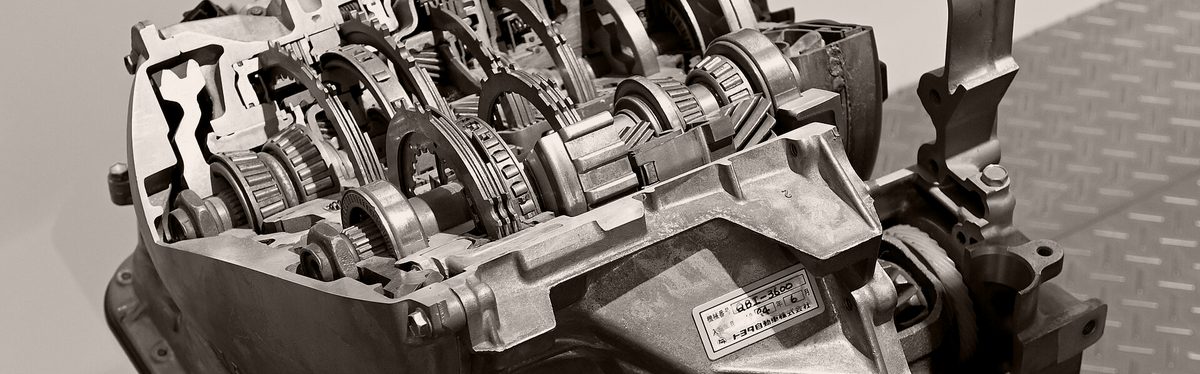
Inside an automatic transmission, gears are selected by clamping sets of clutch plates together with hydraulic pressure. When they're clamped properly, engine and wheels turn in a fixed relationship and everything the engine produces reaches the road.
A slip is that clamp failing to hold. The plates rub past each other instead of gripping, and the engine speeds up because it's suddenly driving less than it was. That's the whole mechanism, and everything else in this article follows from it.
It matters because it tells you what to look for, and pressure comes from fluid. Not enough fluid, fluid that has lost its properties, or a control fault that fails to deliver pressure to the right place. Those are the three ways a clamp goes soft, and only the third is expensive on its own.
Or something that feels like it
Transmission slipping symptoms get confused with three other sensations by people describing them to a shop, and getting the description right changes what gets checked first:
| What you feel | What it is | How to tell |
|---|---|---|
| Revs rise, speed doesn't | This is slipping | The engine races while the car keeps the same pace, or gains it slowly |
| A shudder under light throttle | Torque converter | Steady speed, and a fine vibration like a rumble strip. Not a slip |
| Stumbles, and shakes at idle | Engine, not transmission | A misfire is felt when stationary too. A slip only appears under load |
| Manual car, revs rise | The clutch | The same sensation, a different part, and a different bill entirely |
The single most useful test costs nothing: does it happen when the car is standing still? A misfire does; a slip can't, because a slip only exists when the transmission is being asked to transmit something. If the car shakes at idle in Park, you're looking at the engine.
The second test is throttle. A slip appears when you ask for power: pulling away, climbing, merging. A torque converter shudder is the opposite: it arrives at a steady, light throttle at cruising speed and feels like a rumble strip rather than a gap in the drive.
Why it gets worse as you drive
Because a slip makes the heat that causes the next slip. That's the part the other pages leave out, and it's why the advice at the end of this article is more urgent than "get it looked at soon".

Use this image
Free to republish under CC BY 4.0: credit Oil & Miles and link to this page. The snippet does both.
<a href="https://oilandmiles.com/articles/transmission-slipping"><img src="https://oilandmiles.com/assets/img/diagrams/slipping-heat-spiral.svg" alt="A five-step chain showing why slipping worsens: clutches slip instead of gripping, friction becomes heat, the fluid overheats and oxidizes, degraded fluid grips worse, and the reduced grip produces more slip and more heat, closing the loop" width="1000" height="888"></a> <p>Diagram: <a href="https://oilandmiles.com/articles/transmission-slipping">Oil & Miles</a>, CC BY 4.0</p>Two surfaces rubbing past each other produce heat. That's not a side effect of slipping; in energy terms it is slipping. The drive that should have reached the wheels went somewhere, and it went into temperature.
Transmission fluid does three jobs at once: it carries the hydraulic pressure, it provides the friction the clutches need, and it takes the heat away. Overheat it and it loses all three at once, which means a slipping transmission degrades the exact substance it needs to stop slipping.
Nothing else on a car behaves this way. A worn brake pad is the same pad next week. A slipping transmission isn't the same transmission next week, and that's the entire argument for not putting this off.
Worth knowing
The published cost figures for this repair disagree with each other more than most, and the reason is worth knowing before you compare quotes. Some sources price the transmission assembly alone and some price the job.
A figure near $1,750 to $4,000 is usually a unit; a figure near $2,500 to $6,000 usually includes the labor to fit it, which on a job where the transmission comes out isn't a small share. When a number looks unusually low, check which of the two it is before treating it as a quote.
The cheap causes still come first
Check the fluid level. It is free on a car with a dipstick and it's the most common cause of slipping there is. Our guide to checking transmission fluid covers doing it properly, and if your car has no dipstick, many now don't, checking without one explains why the usual instructions fail.
If the level is low, something let it out. A transmission doesn't consume fluid the way an engine consumes oil, so a low level is a leak until proven otherwise, and the bill depends entirely on where it leaks from: see transmission fluid leak repair costs.
What the fluid looks like will tell you less than you expect, and acting on its color is how unnecessary work gets sold. what fluid color actually tells you sets out why. The smell is the better witness: genuinely overheated fluid smells acrid, and given what the section above describes, that smell on a slipping car is the one worth acting on.
Beyond fluid, a shift solenoid or valve body fault produces slipping without any mechanical wear at all, and usually sets a code that names it. The full list of causes with their prices is in the signs a transmission is going out.
How much does a slipping transmission cost to fix?
$2,500 to $6,000 fitted. The same repair quoted as the unit alone runs $1,750 to $4,000, which is the single most common reason two estimates look incomparable.
That's the price at the end of the road, and it isn't the price of every slip. What each of the four causes costs, caught early against caught late, is set out in the section after this one, and the gap between those two columns is what the rest of this page is about.
What a slipping transmission costs, quoted two ways
Not a total: these are the same repair quoted two different ways, which is the single most common reason two estimates look incomparable.
| The unit aloneA figure near this usually prices the transmission assembly and nothing else | $1,750 – $4,000Part only, as a shop bills it |
|---|---|
| The unit fittedA figure near this includes the labor to fit it, which is most of a day | $2,500 – $6,000Parts and labor, estimated |
Shop-billed US ranges for 2026 at the $120 to $160 an hour used across this site.
Can you drive with it?
Far enough to reach a shop, usually. Not to work all week.
The distinction isn't caution for its own sake, it rests on the heat argument. A short, gentle drive adds little. A week of commuting on a slipping transmission is a week of generating the exact damage that turns the cheap causes into the expensive one.
Two situations change the answer to no. If the car drops power at speed or refuses to hold a gear on the highway, stop. A transmission that has cut power to protect itself is a safety problem before it is a repair bill, and if there is a burning smell, the heat stage has already arrived.
While you wait for an appointment, the useful moves are all about heat: avoid towing, avoid hills, avoid stop-start traffic, and keep the throttle light. Every one of those reduces how hard the transmission is being asked to work, which is the only variable you control.
| The cause | Caught early | Caught late | What the waiting does |
|---|---|---|---|
| Low fluid | $0 to $250 | $2,500 or more | Topped up it is nothing. Run low long enough and the clutches are gone |
| Burnt or exhausted fluid | $150 to $400 | $2,500 or more | A drain and fill, or a rebuild once the friction material has gone with it |
| Shift solenoid | $400 to $1,200 | $1,200 or more | The part doesn't get more expensive. What it damages while slipping does |
| Worn clutch packs | $2,500 to $6,000 | $2,500 to $6,000 | The end of the list. Everything above becomes this if it's driven long enough |
That gap is the reason this article exists. On most faults, the price of waiting is inconvenience. Here it is a different repair.
What to do about a slip
Five steps, and the first one is the whole argument of this page: every mile driven while it slips is added to the bill. 5 steps below:
- Stop driving it further than you need to. Not because the car will strand you today, but because the bill is a function of miles driven while slipping.
- Check the fluid level today, not this week. Low fluid is the cheapest cause on the list and the one doing the most damage per mile you keep driving. Checking it takes five minutes on a car that still has a dipstick.
- Smell the fluid while you're there. Acrid means the heat stage has started, which moves this from “book an appointment” to “book it now”.
- Have the codes read before you authorize anything. Free at most US parts chains. A solenoid fault reads as a solenoid fault, and that one reading separates a few hundred dollars from a few thousand. If the scan shows P0700 as well, that's the transmission module asking for the light rather than a fault of its own, and the code beside it is the one to work from.
- Be careful with a flush sold as the fix. Two dealer pages on the first page of results for this search offer almost the same sentence, that slipping often just means you need to flush and replace the fluid, while a group of ASE-certified technicians discussing the same question advised against it on a high-mileage unit. On a neglected transmission it is a decision worth understanding first, and is a transmission flush necessary covers when it helps and when it doesn't.
Conclusion
The cheapest cause and the dearest are the same fault
Slipping is a symptom rather than a diagnosis, and the commonest thing behind it costs almost nothing to put right. That good news has an expiry date measured in miles.
The cheapest cause and the most expensive one are the same fault, separated only by how far you drove on it. A low level caught early is $0 to $250; run long enough it is $2,500 or more. The part never got dearer.
So the order is short. Stop driving it, check the level today, and get the description right when you book it: a shop told the revs rise while the speed doesn't starts somewhere different from one told the car shudders.
Oil & Miles sorts repair prices by what decides the bill rather than by what averages well, across repair costs and symptoms.
Common questions
Asked most often
What are the transmission slipping symptoms?
The engine revs climb while the car's speed doesn't follow, usually when pulling away or accelerating. There may be a pause before the car responds. It only happens under load, which is what separates it from an engine misfire.
Can low transmission fluid cause slipping?
Yes, and it's the most common cause. The clutches are clamped by hydraulic pressure and the fluid is what carries it. It's also the cheapest thing on the list to fix, which is why the level gets checked first.
How long can you drive with a slipping transmission?
Far enough to reach a shop, not far enough to keep commuting. Every mile driven while slipping generates heat, and heat is what turns a fluid problem into a rebuild. There's no safe number of weeks.
Will a transmission flush or fluid change help slipping?
Sometimes, if the level or the fluid is the problem and the clutches haven't already worn. Neither a change nor a flush fixes a mechanical fault, and on a very neglected transmission a flush is a decision with its own considerations rather than an automatic yes: when a flush is necessary sets out both sides.
Is slipping always expensive?
No. Caught at the fluid stage it can cost nothing. What makes it expensive is time spent driving on it, which is unusual, because most faults cost the same whenever you get to them.
What people ask next
- Transmission Fluid Color Chart: Dark Isn't Always Bad 15 min
- CVT Transmission Problems: It Depends Whose CVT 15 min
- How to Check Transmission Fluid Level: Dipstick or Sealed 20 min
- Bad Transmission Symptoms: Seven Causes Ranked by Cost 22 min
- Check Transmission Fluid Without a Dipstick: 3 Jobs 17 min
- Is a Transmission Flush Necessary? Needed, Upsell, or Risk 13 min
Sources
- The mechanism. Hydraulically clamped clutch packs, and friction converting drive into heat, are ordinary automatic transmission operating principles rather than any one manufacturer's claim.
- Prices. US ranges compiled in August 2026 on the same basis as our other cost guides: parts at typical retail plus book time at prevailing shop rates. Independent shops run roughly $120 to $160 an hour against a national average of $132, with dealers commonly at $180 and up.
- The two cost bands. Near $1,750 to $4,000 prices the assembly alone; near $2,500 to $6,000 includes fitting it. Both printed here, labeled. A second estimator reaches $7,100, which is why our signs page carries a wider top end.
- The order of causes. Cheapest first, which is the order a shop should work through it rather than the order that bills best.
- Average auto repair labor rates by state, 2026. The source of the $132 national average and the $85 to $197 spread between states, aggregated from more than 10,000 shops. Re-opened and checked against the article, read September 18, 2026. Tekmetric
How this was compiled
Costs are printed as two bands rather than one figure because published sources are pricing two different things, and which one a page means is rarely stated. The order the causes appear in is the order a shop should work through them.
What we didn't do
- We didn't measure how fast a slipping transmission degrades, and we won't put a number on it. The “caught late” column is the cost of the outcome, not a prediction of when you reach it, and anyone who gives you a mileage for that is guessing.
- We didn't test whether a fluid change resolves slipping in any particular case, because it depends on wear that can't be assessed from a description.
- We haven't priced a used or remanufactured unit as a separate path, because what it costs depends entirely on what is available for your car on the day.
Prices are US ranges compiled in September 2026: the part and job figures were assembled in August 2026 and the labor rate re-confirmed in September, unchanged. They vary by region, vehicle and shop rate. Prices from $10 up are rounded to the nearest dollar, so $14.13 reads as $14 and $14.52 as $15. Below $10 they're exact. This article is general information, not advice about your specific vehicle. See the disclaimer.