

Short answer
Fuel in the oil, thinning it
Unburned fuel slips past the piston rings into the oil pan. Small amounts are normal and boil back off once the engine is hot. It becomes a problem when the engine never gets hot enough, or when the fuel arrives faster than it can leave.
Most of what's written about comes from lubricant companies and testing laboratories, for fleet engineers and oil analysts. It's accurate, and hard going if what you own is a car.
So this is the same subject, aimed at the person holding the dipstick. What it is, why modern engines do more of it than old ones, what the number on an oil analysis report means, and, the part that matters most, how to tell the difference between the version that's fine and the version that isn't.
One thing to settle up front, because it's the source of most of the panic: a small amount of fuel in the oil is normal and always has been. Dilution describes a quantity, not a fault condition.
What is oil dilution, actually?
Combustion is never complete. On every , some of the fuel sprayed into the cylinder doesn't burn.
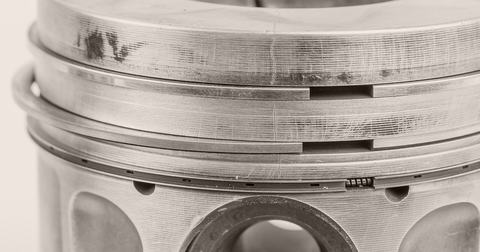
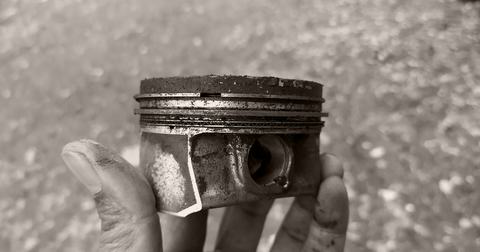
That fuel condenses on the cylinder wall, which at that moment is the coldest surface in the room. The piston rings scrape most of it off on the way down, and what they scrape off runs into the oil pan.
Dilution makes the level climb. If yours is going the other way, that's consumption rather than dilution.
See do high mileage cars burn oil.
That's the entire mechanism. There's no failure involved.
Fuel goes down the bore, mixes with the oil, and sits there.
The reason this normally doesn't matter is that it reverses. Once the engine reaches operating temperature, the fuel in the oil pan is well above its boiling point, evaporates back out of the oil, and gets drawn away through the crankcase ventilation system to be burned properly.
A car you drive far enough to get hot cleans up after itself.
Dilution becomes a problem when that second half stops happening. Short trips in cold weather are the classic case: fuel goes in on every start, and the engine never runs long enough or hot enough to drive it back off.
It accumulates, one trip at a time.
Why do modern gasoline engines dilute oil more?
Because direct injection sprays fuel straight into the cylinder, where some of it lands on the bore instead of vaporizing. The rate went up with direct injection, and it's worth understanding why rather than treating it as a design flaw.
An older port-injected engine sprays fuel into the intake port, upstream of the valve, where it has time to mix with air and largely turn to vapor before it ever reaches the cylinder. A direct-injection engine sprays fuel straight into the cylinder at very high pressure, late, with far less time and no intake tract to evaporate in.
More of that spray reaches a surface as liquid, and one of the surfaces it reaches is the cylinder wall.
Add a turbocharger, and the modern habit of using a small engine working hard, and you have an engine that injects a lot of fuel into a small cylinder. Add stop-start traffic, or a commute short enough that the temperature gauge never settles, and the evaporation half of the cycle barely runs at all.
None of that's a defect. It's the trade that came with the fuel economy and the power density.
It does mean, though, that a habit which was harmless on a 1990s engine, a five-minute drive to the store in January, is measurably less harmless now.
Worth knowing
The single strongest predictor of a dilution problem is the length of the trip.
Two identical cars, same engine, same year: one does a 25-minute commute and one does two five-minute school drop-offs a day. The second will show dilution the first never will, and no amount of premium oil changes that, the oil isn't the variable. Time at temperature is.
Which is also the cheapest fix on this page. A longer drive once a week costs the price of the fuel and does more than any additive sold to solve this.
Is diesel oil dilution a different problem?
Yes. Diesels get dilution too, and on a modern one the biggest source has nothing to do with cold starts.
A diesel particulate filter has to burn off the soot it collects, and to do that the exhaust has to get very hot. The way engines achieve that is post-injection: an extra squirt of fuel late in the cycle, during the expansion stroke, which doesn't produce power but passes into the exhaust and burns across the oxidation catalyst to raise the temperature.
The problem is where that late fuel goes. Injected during the expansion stroke, into a cylinder whose pressure and temperature have already dropped, a meaningful share of it lands on the cylinder wall as liquid instead of vaporizing, and from there it takes the same path past the rings into the oil pan.
This is well documented in the engineering literature.
What follows from it is practical: a diesel that's constantly starting regeneration cycles and never finishing them is a diesel accumulating fuel in its oil. The car that does short urban trips is exactly the car that interrupts regens most often.
Same trip pattern, same outcome, different route to it.
How do you read oil dilution on the dipstick?
You don't need a laboratory to catch this. It has two signatures, and neither needs a tool.
The level rises when nobody added anything. Fuel has volume, and enough of it in the oil pan lifts the level above the full mark on its own.
This is the one people miss, because a high reading gets filed under "somebody overfilled it" and dismissed.
The oil smells of fuel. Pull the stick, wipe it, and smell it.
Engine oil smells of engine oil; diluted oil smells of a gas station, and the test is crude but reliable.
At least one maker prints the limit on the stick. The Mitsubishi L200 owner's manual gives its diesel versions a third mark above the normal range, labeled an oil replacement indication mark, and tells the owner to change the oil as soon as the level passes it.
The same page says the rise itself is expected: fuel mixes in when the particulate filter regenerates, and it doesn't indicate a malfunction.
What owners report
Owners filing with the federal regulator almost never call this dilution. Across 882 complaints from the 2010 to 2025 model years whose wording describes fuel reaching the oil, “smells like gas” appears in 123 of them and the word dilution in 76.
And the place they smell it first isn't the dipstick. 185 describe the smell inside the cabin, two and a half times the number who use the technical word at all, and 115 mention the garage after the car has been parked overnight. Thirty-four say the dealership couldn't tell them what it was, and seventeen describe hunting a fuel leak that was never found.
NHTSA consumer complaints, the published bulk download FLAT_CMPL, model years 2010 to 2025, counted by complaint number rather than by row, read September 12, 2026. Their descriptions, not their diagnoses.
How much oil dilution is normal?
Under 2% by volume, and the figures that recur as cautionary are 2.4% on gasoline and 3.4% on diesel. Fuel dilution is measured as a percentage of the oil by volume, and it's reported on an oil analysis.
The same twenty-dollar test fleets have used for decades and private owners rarely bother with.
The thresholds aren't a single published standard, which is worth stating plainly: they vary by engine maker and by laboratory. But the numbers that recur are consistent enough to be useful.
| Fuel in the oil | Usually read as | What it means for you |
|---|---|---|
| Under 2% | Normal | Nothing to do. Every engine sits somewhere here |
| Around 2.4% (gasoline) | Cautionary | Worth watching, especially if viscosity has moved |
| Around 3.4% (diesel) | Cautionary | Diesels tolerate a little more before flagging |
| 4% and above | Excessive, for some manufacturers | Change the oil and find the cause |
Here's the part that decides things: the percentage on its own isn't the finding. What laboratories look for is the percentage together with a drop in viscosity, because viscosity is what the engine cares about.
Fuel is thin; enough of it in the oil and a 20-grade oil stops behaving like a 20-grade oil.
That's the whole reason dilution matters: a measurable move away from the oil grade the engine was designed around. If you want the numbers behind what a grade guarantees, we took them apart in what you can use instead of 0W-20.
What does oil dilution do to the engine?
Dilution ages an engine faster, quietly, and the bill reaches you later, which is exactly why it's easy to ignore.
The oil film gets thinner. The load-bearing measurement is HTHS: how much film survives at 150°C under shear, inside a loaded bearing.
Fuel dilution pushes that number down, and less film means more of the metal-to-metal contact the oil exists to prevent, at the bearings and the camshaft lobes.
The additive package gets diluted too. The oil isn't only a fluid, it's a chemistry set: detergents, anti-wear additives, dispersants, all mixed to a concentration.
Adding fuel dilutes all of it at once.
Anything the oil drives works less well. On modern engines the oil is a hydraulic fluid as much as a lubricant: variable valve timing phasers, chain tensioners and, on some designs, the timing belt itself all run on it.
That last case is the ugly one: on a wet belt engine the belt is submerged in the oil, and fuel-contaminated oil attacks it directly.
Which cars get oil dilution?
Any direct-injection engine can do this. That's most gasoline engines sold in the last decade, which makes "which cars" the wrong question, it's closer to "which owners."
Some engines did earn a reputation, and the best-documented case is Honda's 1.5-liter turbo in the CR-V and Civic, where Honda ran a software campaign in 21 cold US states and, in April 2019, extended the powertrain warranty on the camshafts and rocker arms to six years.
We went through the complaint record year by year in the CR-V oil dilution article, and the pattern there is informative: the problem was real, it was concentrated in the early cars and cold climates, and it faded on later ones.
There's one group where dilution matters more than the percentage suggests: engines whose timing belt runs inside the oil. Ford's 1.0 EcoBoost and the Stellantis PureTech are the best known, and on those the oil is the belt's working environment rather than just its neighbor.
We keep the sourced list in which cars have wet belt engines.
What we won't do is publish a list of engines to avoid. The complaint records show where owners noticed, which isn't the same as where it happens, and treating one as the other would be dressing up an absence of evidence as evidence.
What should you do about oil dilution?
To keep oil dilution from becoming a problem, work through the 5 steps below, in order of how much good each one does per dollar:
- Drive it properly warm, regularly. Not a rev-it-out drive, but a normal trip long enough for the engine to reach and hold operating temperature at least once a week, which does more than everything else on this list put together.
- Shorten the oil change interval if your driving is short-trip. Manufacturer intervals assume a mix of use, so if yours is all five-minute trips in a cold climate, halving the interval is a reasonable and cheap response.
- Check the level and smell the stick monthly. Thirty seconds, and it's the only free diagnostic in this article.
- If it's rising and smells of fuel, get an oil analysis. A mail-in laboratory kit: you draw a sample at the next change and mail it. Around $20, and it turns a suspicion into a percentage and a viscosity figure, which is worth having before you spend money on anything else.
- Don't buy an additive to fix it. Nothing poured into the oil pan removes fuel from oil; the fuel leaves by evaporating, or by being drained.
Conclusion
It's the trip, not the oil
The fault is rarely the fuel; it's an engine that never gets hot. Every engine puts some unburned fuel past the rings, and on a normal run it boils back out once the oil reaches temperature.
It turns into a problem in two ways only: the car never gets warm, or the fuel arrives faster than heat can drive it off.
So the cheapest fix is a drive long enough to hold operating temperature once a week, which does more than everything else put together, and no additive removes fuel from oil. Oil & Miles ranks fixes by what each one buys per dollar, across oil and fluids.
Common questions
Asked most often
Is oil dilution normal?
A small amount is, in every engine ever built. Fuel enters the oil on cold starts and boils back out once the engine is hot. It only becomes a fault when the engine rarely gets hot enough to reverse it, or when something is putting fuel in faster than that.
Can oil dilution cause a misfire?
Not directly: dilution is a consequence of combustion rather than a cause of it. But the two often appear together, because a fault that leaves fuel unburned (a leaking injector, for instance) both puts fuel in the oil and disturbs combustion. If you have a misfire and rising oil, treat the misfire as the thing to diagnose.
Does the oil level going up always mean dilution?
No. Coolant entering the oil raises the level too, and that's a different and more serious problem. Fuel dilution smells of gasoline and leaves the oil thin; coolant turns it pale and creamy, and if it looks like coffee with milk, stop driving it.
How do I fix oil dilution?
Change the oil, then change the pattern that caused it. A fresh fill in a car that goes back to five-minute trips in winter will be diluted again by spring. If the driving genuinely can't change, shorten the interval to match it.
Is crankcase dilution the same as oil dilution?
Yes. Crankcase dilution is the engineering name for the same thing: the oil pan sits inside the crankcase, so fuel reaching the oil gets described either way. Oil analysis reports usually label it fuel dilution instead.
Is thicker oil a solution?
It's a way of masking the symptom, and it introduces a different problem, because the engine was designed around a specific grade. Going up a grade to offset dilution is a trade made on a guess. An oil analysis costs less than the risk and tells you whether there's anything to offset.
What people ask next
Sources
- Mitsubishi L200 Owner's Manual, 15MY, UK market, for the third dipstick mark on DPF diesels, page 10-05, and the manual's own line that the rise is fuel from regeneration rather than a fault. Mitsubishi Motors, read September 17, 2026
- Fuel dilution thresholds used in oil analysis, for the 4% figure quoted as one manufacturer's limit for excessive dilution, and the point that viscosity is the measurement that matters alongside the percentage. Fluid Life
- On oil analysis flagging limits, for the principle that a dilution reading should be read together with a viscosity drop rather than on its own. Society of Tribologists and Lubrication Engineers
- Prediction of Oil Dilution by Post-injection in DPF Regeneration Mode, for the diesel mechanism: post-injected fuel striking the cylinder wall during the expansion stroke and passing the rings into the oil pan. SAE International, 2019-01-2354
- Honda's warranty extension on the 1.5-liter turbo, for the scope of the best-documented consumer case. Consumer Reports
- American Honda warranty extension, April 5, 2019, filed with NHTSA as MC-10158743, for the parts covered and the term; the 21 campaign states are in the January 31, 2019 procedure update. American Honda, read September 24, 2026
How this was compiled
Everything above is drawn from published laboratory guidance and engineering literature, and the article says which is which at each claim. The 2.4% and 3.4% cautionary figures are the ones that recur across laboratory guidance rather than any single lab's house rule. They move by engine maker and by lab, so treat them as where people start paying attention, not as a line the engine knows about. The Fluid Life thresholds are named rather than linked, because the publisher sells the testing this page describes.
What we didn't do
We didn't run oil analyses ourselves, and we didn't measure dilution in any engine.
Written for the United States and Europe, compiled in August 2026. This article is general information, not advice about your specific vehicle. See the disclaimer.
Oil dilution
Unburned fuel washing past the rings and collecting in the oil pan, thinning the oil and raising the level on the dipstick.
Cold start
The first minutes after the engine has sat long enough to cool all the way down, usually overnight.