
- Steady light?
- Have a dealer check it right away. What it means
- After battery work?
- Drive a short way above 12 mph. Battery work
- New tires?
- Check each sidewall size and the door-label pressures. Tires
- Before you pay
- Check the VIN for a free recall fix before you pay. Free fixes
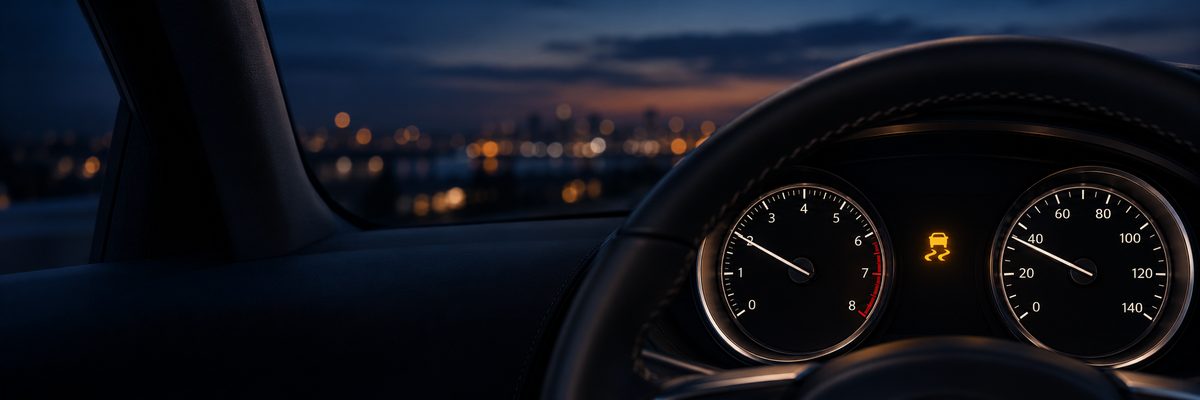
On its own, a lit VSA symbol costs you skid protection, not your brakes. The lights that come on with it decide how urgent it is.
What does the VSA light mean?
The VSA light means different things depending on what it does, because Honda and Acura use one small symbol for several messages. Here’s what each version means on a Honda or Acura dashboard, with what to do:
| What you see | What it means | What to do |
|---|---|---|
| VSA blinks while you drive | VSA is braking a wheel or cutting power to stop a slide | Ease off the gas and slow down for the road |
| VSA stays on, or the words Check VSA System | A problem in VSA, brake assist or hill start assist | Have a dealer check it right away |
| The VSA OFF light stays on | VSA has been partly switched off with its button | Press the button again, or restart the engine |
| VSA and VSA OFF come on after battery work | VSA switched itself off for a moment | Drive a short way above 12 mph |
The table follows newer Honda and Acura manuals. Older Hondas and Acuras use a separate light that blinks when VSA works, so check the indicator page in your own manual.
When VSA works, the engine may not answer the gas pedal for a moment and the brakes may make a noise. That’s normal while the light blinks, and so are a short motor sound and a few seconds of light just after you start the car.
Other carmakers use their own names for the same system, such as StabiliTrak or VSC, and our traction control light guide covers them. The dashboard warning lights guide shows the VSA symbol next to the others.

The OFF button and its light
Is it safe to drive with the VSA light on?
You can drive with only the VSA light on if the car drives and brakes normally, and go gently. Your brakes and steering still work as usual.
What you lose is the skid protection: until the fault is fixed, the car won’t catch a slide for you. So take corners and wet roads gently on the way to the shop.
If other lights come on with it, the answer changes, because the problem may reach the brakes too. Here’s what each combination means and what to do:
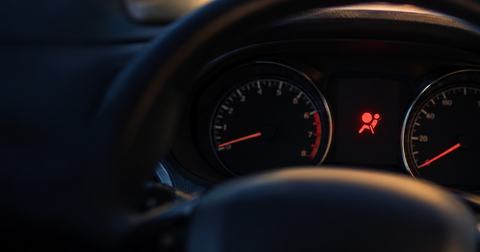
- Red and amber brake lights together. Stop in a safe place at once, Honda says, because the brake pedal gets harder to press.
- The red brake light and the ABS light. The brake distribution system isn’t working, so the car can turn unstable in a sudden stop. Have it inspected at once.
- The ABS light with VSA. The brakes still work normally but without anti-lock, so leave more room to stop.
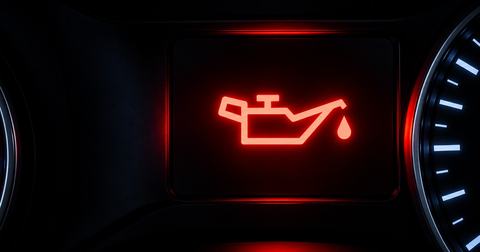
- The red brake light alone. Make sure the parking brake is off. If the pedal feels normal, check the brake fluid at the next stop, and if it has no resistance, stop at once.
- The car brakes by itself. Pull over. NHTSA has investigated automatic emergency braking, a different system from VSA, that brakes with nothing ahead, so check your VIN. Some older Hondas also have VSA recalls.
If any of these come on, or the brakes feel wrong, leave the road as soon as it’s safe and call a dealer or a tow. Turn on your hazard lights, and don’t drive on to the shop.
Our brake warning light guide covers the red light on its own, from the parking brake to low fluid. The ABS light guide covers anti-lock faults, which can light up alongside VSA.
Why is my VSA light on?
The VSA light comes on when VSA is switched off, by you or by itself, or when it loses a signal or finds a fault. Here’s what turns it on, with the test for each cause:
| Cause and clue | Test this first | Don’t replace yet |
|---|---|---|
| VSA switched off The VSA OFF light, after the button was pressed. | Restart the engine, which turns VSA back on. | Any part. |
| Battery work VSA and other lights after a battery change or jump start. | Drive a short way above 12 mph. | Any sensor. |
| A weak battery Several lights at once and slow starts. | A battery and charging test. | The VSA unit, before a software update. |
| Mixed or low tires Tires of different sizes or types, or one low. | Sizes and pressures against the door label. | A sensor. |
| Steering angle sensor The light after steering column work. | Honda’s sensor reset at the shop. | The steering parts. |
| Wheel speed sensor The VSA and ABS lights together. | A scan of the VSA and ABS codes. | The VSA unit. |
| Brake or clutch pedal switch A light that comes and goes. | A check of the pedal switch. | The VSA unit. |
| The VSA unit Brake pedal feel changes, or the car brakes by itself. | A recall check by VIN. | Anything, before the recall check. |
The first four causes are the cheapest to rule out. The sections below explain six of them, each with Honda’s own fix.
1. After a battery change or jump start
Disconnecting the battery switches VSA off for a moment, so the VSA, VSA OFF and some driver-assist lights can come on when it’s reconnected. On many models a short drive above 12 mph turns them off, and some newer ones add a step, so follow your manual.
If they stay on, have the car checked. On some CR-Vs, a battery change also sets a steering code that clears on its own after a short drive.
2. A weak battery or one that drains
Honda’s VSA software is sensitive to low battery voltage, and on some Odysseys a weak battery can set several warning lights at once. Honda’s fix there is a software update for the VSA unit, not a new part.
It can work the other way too: on some CR-Vs, the VSA software kept the unit awake after the car was off and drained the battery. Our guide to a bad alternator or battery covers the free charging test.
3. Mixed or low tires
VSA may not work properly with mixed tire types and sizes, so use the same size and type on all four. Check the size printed on each sidewall, and the pressures on the door label, before anyone scans the car.
On several Hondas the tire pressure warning runs through the VSA unit, so a low tire light can come with codes stored in the VSA unit. On some Accords and Civics, Honda fixed false low-pressure warnings with a software update.

Two tire sizes on one car
4. After steering work
VSA needs to know where the steering wheel points, and the steering angle sensor tells it. If that sensor moves during steering work, the light can come on.
The fix is a calibration, called neutral position memorization, not a new part. The same calibration can be needed after a collision repair or other steering work, so tell the shop about either.
Worth knowing
If the light came on after steering or collision repair, ask whether the shop ran the steering sensor calibration. It's a calibration, not a part, so it shouldn't come with a parts bill.
5. A brake or clutch pedal switch
VSA watches the brake pedal, and on a manual transmission the clutch pedal too. A worn brake pedal switch can make the light come and go, as it did on one Acura SUV.
On one Acura sedan with a manual transmission, resting a foot on the clutch could make VSA flag a fault with no code stored. Honda fixed it with a software update, so ask about both cheap fixes before a bigger part.
6. The VSA unit
The VSA unit, or modulator, is the pump and valves that brake each wheel on its own. Honda’s recalls on it fixed a leaking valve, air in the pump and faults that could brake the car without the driver, using anything from software to a new unit.
So check your VIN for an open recall before anyone replaces the unit, because a recall repair is free at a Honda dealer. The free fixes section lists each recall and what it fixed.
Why do the VSA and other lights come on together?
Several lights come on with VSA because it shares its sensors and control unit with other systems, so one fault can light several symbols at once. Here’s what a group of lights with VSA can point to, from Honda’s own documents:
- VSA, VSA OFF, tire pressure and cruise control lights at start-up. A short drive lets VSA and the power steering calibrate.
- Many lights at once, with slow starts. Suspect a weak battery first, as on some Odysseys. If the battery light is on too, our battery light guide covers the charging side.
- VSA with the ABS or brake light. A fault on the brake side, so follow the safety section’s brake rows, or our parking brake malfunction guide for a parking brake message. A wheel speed sensor feeds both systems, and our guide shows how to test a wheel speed sensor.
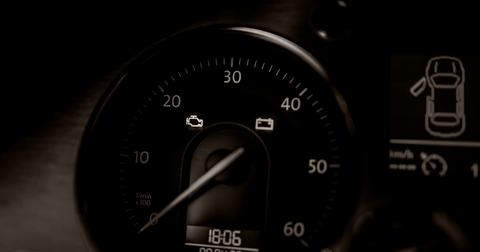
- VSA with the check engine light. The pair doesn’t point to one cause, so have the engine and the VSA codes read. Our check engine light guide covers the engine side.

A jump start at the battery
Federal complaints show how often owners see other lights with VSA. Each bar counts the complaints that name it:
How do you reset the VSA light?
The VSA light resets without a repair only when VSA was switched off or the battery was disconnected. Work through the 3 steps below to reset it when no fault is behind it, in order:
- Restart the engine. VSA comes back on at every start, even if it was switched off on the last drive.
- Press the VSA OFF button. If the VSA OFF light is still on, press the button until you hear a beep.
- Drive a short way above 12 mph. That clears the light after battery work, and the same drive calibrates the power steering and VSA. Some newer models add a steering step, so check your manual.
If the VSA OFF light is still on after a restart and a short drive, have the codes read. If the drive above 12 mph doesn’t clear the light, have a dealer check the car.
A light that keeps coming back needs a diagnosis, and clearing it without a repair only hides the warning. After battery work, though, Honda’s fix is a short drive, the cheapest repair on this page.
Which VSA faults does Honda fix for free?
Honda fixes a VSA fault for free when a safety recall covers your car, and a Honda or Acura dealer does the repair. The recalls we found are cards in the documents section, newest first.
Your VIN is at the lower driver’s-side corner of the windshield and on your registration. Check it on NHTSA’s recall lookup or our free VIN decoder, and ask a dealer for an older car’s full recall history, since the list may not be complete.
How do you fix a VSA light?
A VSA light is fixed by finding which signal VSA lost before any part is replaced. Work through the 5 steps below to fix it, in order:
- Try the reset steps first. If the light goes out after the 3 reset steps, it was most likely the switch-off or the battery work. If it comes back, have the codes read.
- Look at the tires. Use the same size and type on all four, at the pressures on the door label.
- Think back to battery, steering or body work. Battery work needs the short drive, and steering, alignment or body work needs Honda’s calibration.
- Check your VIN for recalls. A recall pays for the fix on the cars it lists.
- Ask for a scan of the VSA codes. Ask the shop to read the VSA and ABS codes, not just the engine codes.
If the light stays on after all five, the codes point the shop to the circuit or part to test. Ask whether a software update applies before a new VSA unit, as it did on some Odysseys and Accords.
What to say to the shop
When a quote names a new VSA unit, ask:
- Which VSA code is stored, and what test confirmed the part?
- Is there a recall or a software update for my VIN?
- Were the battery and the tires checked first?
“My VSA light came on [steady, or with these other lights]. Before you replace the VSA unit, can you tell me the code, check my VIN for recalls and updates, and test the battery and the tires?”

Use this image
Free to republish under CC BY 4.0: credit Oil & Miles and link to this page. The snippet does both.
<a href="https://oilandmiles.com/articles/vsa-light"><img src="https://oilandmiles.com/assets/img/diagrams/vsa-light-checklist.jpg" alt="VSA light checklist: with the red and amber brake lights stop at once, with the red brake and ABS lights have it inspected at once, with ABS leave more room to stop, and pull over if the car brakes by itself; restart, press VSA OFF and drive above 12 mph to reset it; check the tires, the steering calibration, the battery and the brake pedal switch; check the VIN for a recall and ask for the VSA and ABS codes and any software update before a new VSA unit." width="1200" height="1562"></a> <p>Infographic: <a href="https://oilandmiles.com/articles/vsa-light">Oil & Miles</a>, CC BY 4.0</p>From the carmakers
What does Honda say about the VSA light and free fixes?
These documents tell dealers what sets the light and how to fix it, and the recalls pay for the repair. Honda’s bulletins aren’t free-repair programs, so a bulletin fix is yours to pay unless the car is under warranty.
Safety recall 23V-430
Unintended vehicle movement or an unexpected increase in brake pedal travel can increase the risk of a crash or injury.
Safety recall 16V-888
Corrosion of the wiring harness can cause increased electrical resistance, unexpectedly activating the vehicle stability assist (VSA) system, increasing the risk of a crash.
Safety recall 13V-500
The vehicle may suddenly and unexpectedly brake hard, and without illuminating the brake lights, increasing the risk of a crash from behind.
Safety recall 13V-157
Excessive yaw rates prevent the proper function of the electronic stability control (ESC) system, increasing the risk of a crash.
Safety recall 13V-092
Sudden inadvertent braking, especially without illumination of the brake lights, may increase the risk of a vehicle crash.
Safety recall 10V-098
It is possible for enough air to enter the system to result in a brake pedal that feels soft or lower to the floor.
ServiceNews A19050B
…the VSA indicator may come on along with one or more VSA DTCs.
Conclusion
What to do next about a VSA light
If the light blinks, VSA is working, so ease off the gas and slow down for the road. If the red and amber brake lights come on, or the car brakes by itself, stop somewhere safe.
Oil & Miles checks each step here against Honda’s manuals and bulletins and NHTSA’s records.
Common questions
Asked most often
What does VSA mean on a car?
It stands for Vehicle Stability Assist, Honda and Acura’s name for electronic stability control. Other carmakers call the same system VSC, StabiliTrak, AdvanceTrac, VDC or ESC.
Should I turn VSA off?
Only to free a car stuck in shallow mud or fresh snow, and switch it back on right after. Even then the button only partly switches VSA off, making traction control less effective.
Does VSA affect steering?
It doesn’t steer, but it uses the steering angle sensor to know where you aim. On many Hondas the power steering and VSA calibrate together, which is why their lights can come on together.
Why are my VSA and check engine lights on?
The pair doesn’t point to one cause, so have both the engine and the VSA codes read. Owners do report the two together, and our guide to check engine light codes explains the engine side.
How much does it cost to fix a VSA light?
It depends on the cause, from a free restart or recall to a wheel speed sensor or a new VSA unit. Ask the shop for the code and a written quote before any work starts.
What people ask next
Sources
- Honda owner’s manuals: 2018 Accord (pages 81–83, 92–94, 496–497 and 684), 2017 CR-V, 2016 Pilot, 2014 and 2018 Odyssey, on the VSA, brake and ABS indicators. Honda, read October 21, 2026
- 2007 Acura RL owner’s manual, page 371, on the VSA activation light and the Check VSA System message. Acura, read October 21, 2026
- Honda recalls 23V-430, 16V-888, 13V-500, 13V-157, 13V-092 and 10V-098, the VSA unit, its wiring and the Fit’s stability control software. NHTSA recall records, read October 21, 2026
- Honda bulletins A16-005, A17-032, A-13-104, SB-14-042 and 11-014, ServiceNews A19050B and TechLine ATS161223 and ATS170301. Honda via NHTSA, read October 21, 2026
- NHTSA investigation EA24-002, unintended automatic emergency braking on the 2017–2022 CR-V and 2018–2022 Accord, opened April 2024 and still open in NHTSA’s September 2026 file. NHTSA, read October 21, 2026
- Independent shops: Voltage Auto Service, Warminster, Pennsylvania (two VSA calibration job write-ups) and Car ADAS, Salt Lake City (an explainer on the light), on calibration after steering, alignment and collision work. Read October 21, 2026
- Acura bulletin SB-10-041, the 2010 TL clutch switch, from NHTSA’s bulletin summary. NHTSA, read October 21, 2026
- FMVSS 126, electronic stability control, 49 CFR 571.126. US federal rule, read October 21, 2026
- Owner’s manuals of other carmakers: 2010 Toyota Prius, 2012 Chevrolet Cruze, 2016 Ford Escape, 2013 Nissan Altima and 2017 Hyundai Tucson. Read October 21, 2026
- NHTSA’s consumer complaint database, every Honda and Acura complaint on 2005–2025 models that names VSA or vehicle stability assist, files dated September 2 and October 2, 2026. NHTSA, read October 21, 2026
How this was compiled
The complaint figures count Honda and Acura complaints on 2005–2025 models whose text names VSA or vehicle stability assist, 1,118 in all. They count mentions, not confirmed causes, and they aren’t failure rates.
What we didn't do
We didn't drive a car with a VSA fault or scan one. We found no Honda document that explains the VSA and check engine lights coming on together, so we don't say why.
We read the manuals for the cars listed above, not every model year, and the indicator wording changes by year. We didn't price any repair, because the cause decides the bill.
This article is general information, not advice about your specific vehicle. Where anything here differs from your owner's manual or your carmaker's bulletins, follow the carmaker. See the disclaimer.