
Key takeaways
- Safety: If the red brake light comes on with the ABS light, or the car pulls under braking, stop somewhere safe and have the car towed.
- On most cars each wheel's sensor sets its own ABS code, so the stored code names the corner to check.
- A shop should inspect the wire and clean the ring before quoting a new sensor or a bearing.
- Some sensor faults from water and salt are fixed free by a recall or campaign, so run your VIN.
One small ABS sensor behind one wheel can switch on two or three warning lights at once. When it stops reporting, your car switches off anti-lock braking, and traction and stability control go with it.
The fix may not be a new sensor at all. For one common fault, GM tells its dealers most repairs need no new sensor, just metal debris wiped off a magnetic ring.
What does an ABS sensor do?
An ABS sensor is a small magnetic sensor at a wheel that counts how fast it turns for the anti-lock brake module. Traction and stability control read the same count, which is why one failed sensor can switch all three off.
It reads a ring that turns with the wheel: on many cars, a toothed steel ring. Newer ones can read a magnetic ring in the wheel bearing's seal, which GM describes as magnetized rubber, typically brown.
Sensors come in two kinds, and a test has to know which. A passive one, a magnet in a coil, makes its own small AC voltage, while an active one needs a supply voltage from the ABS module and sends an on-off signal.

Use this image
Free to republish under CC BY 4.0: credit Oil & Miles and link to this page. The snippet does both.
<a href="https://oilandmiles.com/articles/abs-sensor"><img src="https://oilandmiles.com/assets/img/diagrams/abs-sensor-two-rings.svg" alt="Two panels comparing what an ABS sensor reads: a sensor tip held just above a toothed steel ring with the air gap marked, and the same tip above a magnetic encoder ring of alternating N and S segments in a wheel-bearing seal." width="1600" height="928"></a> <p>Diagram: <a href="https://oilandmiles.com/articles/abs-sensor">Oil & Miles</a>, CC BY 4.0</p>What are the symptoms of a bad ABS sensor?
The first symptom is the ABS light, and the traction or stability warning comes on with it, because all three lose the same signal. The other signs depend on how the sensor is failing: some set no code at all, and some come and go with the weather.
Here are the signs carmakers' documents tie to a failing wheel speed sensor, starting with the one you'll see first:
1. ABS and traction lights on together
When the module loses a believable speed from one wheel, it stores a code, lights the ABS warning and switches anti-lock off. The traction or stability light comes on too, sometimes as "Service StabiliTrak". With a steady light, the stored code already names the corner.
Brake assist and all-wheel drive can complain too, on the cars that have them, but it’s one missing signal reported by every system that was listening. Treat several warning lights that arrived together as one fault until the ABS codes say otherwise.
2. ABS clicking or a buzzing pedal at low speed
If a sensor reads a wheel as slowing when it isn't, the ABS thinks that wheel is about to lock. The system then pulses the brake at a crawl, heard as a click or the ABS pump and felt as a buzz in the pedal. Leave extra room, since a false pulse at low speed lengthened the stop on some GM trucks (recall 05V-379).
It can happen with no code stored, so the light may never come on, and it usually points at the magnetic ring rather than the sensor. Brake noises that aren't the ABS are on our page on a knocking noise when braking.
3. An ABS light that comes and goes
Water in a sensor's housing or a cracked wire can break the signal only some of the time. The light comes on in rain or after a car wash and goes out once the sensor dries, or flickers as the suspension moves.
A rain-only fault rarely shows up on cue at the shop, so write down when it happens: after rain, on turns, over bumps. The ABS module may still hold the code, and your note tells the shop whether to look at the sensor or its wire.
4. Steering that feels heavy at low speed
On cars with electric power steering, the steering computer uses vehicle speed to decide how much to help. If that speed goes missing, some cars show a steering message and give less help, which feels like a heavy wheel when parking.
GM calls the heavier steering a normal default action when a wheel speed signal is lost, not a failing steering rack. The ABS code points back to the sensor.
Can you still drive with a bad ABS sensor?
For a short while, yes: if the pedal feels normal, your brakes still stop the car. What you lose is the anti-lock help, so drive gently and get it read soon. On a GM truck in recall 19V-761, keep it in two-wheel drive until the dealer's fix.
With the red brake light on too, or a car that pulls or brakes one wheel by itself, stop when it’s safe and have it checked before driving on. Our brake warning light page covers the red light, and an open recall for the sensor gets done first.
How much does it cost to replace an ABS sensor?
A shop is likely to bill $95–$118, parts and labor, for one sensor on the cars in our cost guide. Front and rear prices for ten popular cars, and when the hub comes with the sensor, are on our ABS sensor replacement cost page.
The bill climbs when the sensor is sold only with the wheel hub, because the hub is the bigger part. On its own the sensor is $11–$141 at the counter across ten cars, so check the parts listing for your corner before you accept a hub quote.
How do you tell which ABS sensor is bad?
A scan tool that reads ABS codes shows which wheel's circuit to check, because on most cars each wheel's sensor has its own code. Ask for an ABS scan specifically: these are chassis codes, starting with a C, stored in the ABS module rather than the engine computer.
A code names a circuit, though, not a part. So the test for a bad wheel speed sensor runs in the 5 steps below, in the order carmakers give:
- Read the ABS code and note the wheel. On most cars each wheel has its own code, such as C0035 for the left front on GM's cars.
- Compare the four wheel speeds while driving. A scan tool shows each sensor's reading live, and the bad one disagrees with the other three or drops out. If all four read normally, have the test repeated when the fault shows, or see our ABS light page for the other causes.
- Check the wire and connector along the whole run. Carmakers tell technicians to check the wiring and connection before replacing a sensor. A wire broken inside its insulation can still pass a resistance check.
- Test the sensor itself, by its type. A passive sensor can be checked with a multimeter, while an active one needs its supply voltage and signal checked instead, as our guide on how to test a wheel speed sensor shows.
- Look at the ring and the bearing. Debris on a magnetic ring, a dented ring or a loose bearing makes a good sensor read badly, and a new sensor won't fix it.
After the repair: clear the code and drive
Hella's procedure ends by clearing the stored codes and test-driving with the scan tool connected. On that drive, the repaired wheel's speed should match the other three.
If the code comes back, the repair didn't find the fault. That's the moment to go back to the wire and the ring, not to buy a second sensor.
Don't swap sensors to find the bad one
Moving a sensor from one side to the other to see if the fault follows sounds like a free test. VW told its dealers to stop: it ground down the bearing's magnetic ring, turning one fault into two. A sensor bought on a hunch can send a shop chasing ABS modules and bearings too.
What to say to the shop
When a shop blames the sensor, ask:
- Which ABS code is stored, and which wheel does it name?
- Did you compare the four wheel speeds live?
- Did you check the wire, the connector and the ring?
“Before I pay for a sensor, can I see the ABS code, the live wheel speeds and what you found on the wire and ring?”
Where is the ABS sensor located?
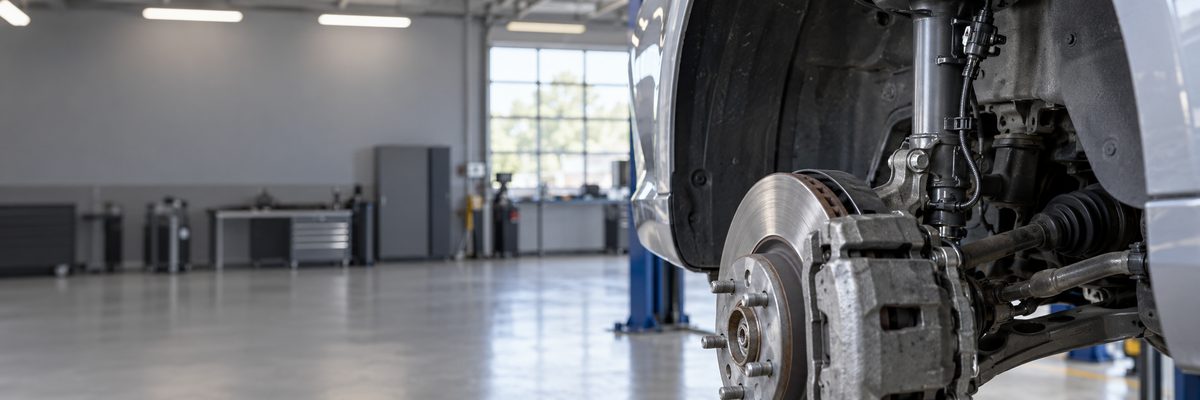
At each wheel, just behind the brake rotor, so most cars have four, and the ABS code tells you which corner to look at. Here's where the ABS sensor is located at each wheel, front first:
1. Front wheels: in the knuckle, behind the rotor
At the front it sits in the steering knuckle, the part that holds the wheel hub and turns with the steering, just behind the brake rotor, its tip facing the ring that turns with the wheel. You can't see it from outside, but with the wheel off you can follow its wire to where it enters the knuckle.
That wire runs along the suspension, held by clips, to a connector and on to the ABS module. Many of the faults in this article happen along that short run or at the ring, not inside the sensor.

Use this image
Free to republish under CC BY 4.0: credit Oil & Miles and link to this page. The snippet does both.
<a href="https://oilandmiles.com/articles/abs-sensor"><img src="https://oilandmiles.com/assets/img/diagrams/abs-sensor-location.svg" alt="See-through semi-3D view of one front wheel corner from behind: the brake rotor, the hub with wheel studs, the steering knuckle and the toothed ring on the CV joint drawn transparent, and the ABS sensor in color, set in the knuckle with its tip just above the ring and its wire clipped to the knuckle on its way to the ABS module." width="1600" height="1022"></a> <p>Diagram: <a href="https://oilandmiles.com/articles/abs-sensor">Oil & Miles</a>, CC BY 4.0</p>2. Rear wheels: in the knuckle, or inside the hub
At the rear it sits the same way on many cars, though on some it's sold only with the wheel hub. The cost section above covers a quote for a whole hub.
Road debris can reach the rear wire too. Subaru added a shielding cover to protect one rear harness, so check the wire and its clips while the wheel is off.
3. Left and right: lookalike parts
Left and right sensors can look alike yet be different parts, so check the part number for the exact corner. GM found exactly that on its newer Silverado and Sierra pickups, where the wrong front sensor was often fitted in repairs. Ask the shop to quote the part number with the corner it fits.

A sensor wire along the arm
What makes an ABS sensor fail?
Its surroundings can do it: carmakers' bulletins name dirt, water, salt, damaged wiring and worn bearings. Here are the six causes carmakers' bulletins and recalls name, each with what to check before paying for a part:
1. Metal debris on the magnetic ring
A magnetic ring picks up fine steel dust, and a crust of it hides the marks the sensor counts. GM and Stellantis treat it as a cleaning job first, so ask the shop to clean the ring before quoting a sensor or a bearing.
2. Water and road salt
Water in a sensor housing or its connector interrupts the signal, and salt corrodes the contacts and the mounting surface. On the cars that have had it, carmakers fixed it with seals, new covers, software or new sensors. It was free under a recall or campaign on the listed VINs, or under warranty.
Run your VIN through our free VIN checker or at nhtsa.gov/recalls before paying, which shows open safety recalls. A dealer can check the VIN for service campaigns too, which that lookup doesn't list, and some are limited to coastal or salt-belt states.
3. A damaged wire or clip
The wire flexes every time the suspension moves, so a wire that rubs, twists or loses a clip can break inside its insulation. The sensor is fine, but its signal never reaches the ABS module cleanly.
Ask for the whole run to be inspected, clips included, before a sensor is ordered. Some wheel cleaners can break the clips, so what you spray on your wheels matters too.
4. Work done at the wheel
The sensor and its wire sit right where brake, bearing, tire and suspension work happens. A light that comes on days after that work can have a simple cause: a pinched wire, an unplugged sensor or a nicked ring.
After a brake job or other work at the wheel, ask the shop that did it to check the sensor and its wire first. Delphi lists damage during other brake work among the sensor's common failures.
5. The wrong part, or a part fitted wrong
A sensor has to sit at the right distance from its ring, facing the right way. The wrong side's sensor, a misplaced mounting hole or a backwards sensor can leave a new part reading badly from day one. If a new sensor didn't fix the light, check the part number against the corner before blaming the module.
6. A worn bearing or damaged ring
When the ring is part of the wheel bearing, a loose bearing or a dented ring makes the signal wobble. Replacing the sensor changes nothing, because the fault is the thing it reads.
On those cars the repair is the bearing or hub, which costs more, so it's worth confirming the ring is damaged first. The other signs of a worn bearing are in our guide to driving on a bad wheel bearing.
Can you clean an ABS sensor?
Yes, and GM and Stellantis have their technicians clean the ring before replacing parts, but they're strict about how. The magnetic ring is easy to ruin, and the tools most people reach for are the ones they forbid.
From GM's and Stellantis's procedures, what's allowed on the sensor and its magnetic ring is short:
- A dry, soft nylon brush. GM's first step, to lift debris off the ring without scratching it.
- Mild soap, then a clean cloth. GM allows mild soap if the brush isn't enough, and Stellantis wipes the ring and sensor head with a microfiber cloth.
And what they forbid, even though page after page online suggests it:
- Magnets. GM warns an external magnet can damage the encoder, the magnetic ring itself, and Stellantis says the same.
- Brake cleaner and solvents. Stellantis rules out cleaning solvents and brake cleaners on the ring and the sensor head.
- Metal brushes, screwdrivers and close-range air. All on Stellantis's list. A sensor maker's wire brush is for the sensor's mounting hole, not the ring.
The ring can sit behind the hub, which makes this a shop job on many cars. GM's procedure also doesn't apply to capped bearings, where the ring can't be reached.

Use this image
Free to republish under CC BY 4.0: credit Oil & Miles and link to this page. The snippet does both.
<a href="https://oilandmiles.com/articles/abs-sensor"><img src="https://oilandmiles.com/assets/img/diagrams/abs-sensor-checklist.jpg" alt="ABS sensor checklist: the ABS and traction lights come on together and the normal brakes still work if the pedal feels normal; with the red brake light too or a car that brakes by itself, stop; read the ABS code for the wheel, compare live wheel speeds and check the wire and ring before the sensor; clean the ring with a soft nylon brush and mild soap, never a magnet, brake cleaner or metal brush; match the part number to the corner, don't swap sensors and run the VIN for a recall." width="1200" height="1562"></a> <p>Infographic: <a href="https://oilandmiles.com/articles/abs-sensor">Oil & Miles</a>, CC BY 4.0</p>From the carmakers
Is there a recall or free fix for an ABS sensor?
On some cars, yes. Recalls on the 2025 Ram 1500 and some GM trucks and SUVs, and a Kia campaign on the Telluride, fix sensor faults free on the VINs they list. The bulletins add one lesson from two carmakers: check and clean before you replace.
Recall 24V-794
The front wheel hub encoder rings may be damaged, which can disable the electronic stability control system.
Recall 19V-761
If a wheel-speed sensor fails, while the vehicle is traveling between 41 and 60 mph in four-wheel or automatic mode…
Service campaign SC301
The wheel speed sensor(s) (WSS) in the subject vehicles may be contaminated with moisture and cause corrosion, which may result in WSS signal fluctuation.
Service bulletin 17-NA-047
Most repairs can be performed without any replacement of the bearing hub assembly or wheel speed sensor.
Service bulletin S2523000091
Do NOT use any cleaning solvents, brake cleaners, high-pressure or close-range air, metal brushes or screwdrivers. Do not use magnets.
Conclusion
What to do next about a bad ABS sensor
If the ABS light is on and the brakes feel normal, have the code read and the wire and ring checked before buying a sensor. If the red BRAKE light comes on too, or the car pulls or brakes by itself, stop and have it checked.
Oil & Miles checks each step here against the carmakers' bulletins before it repeats what the forums say.
Common questions
Asked most often
Is an ABS sensor the same as a speed sensor?
An ABS sensor is a wheel speed sensor, one at each wheel on most cars. The vehicle or transmission speed sensor is a different part in the drivetrain, so a quote for one isn't a quote for the other.
Can I replace an ABS sensor myself?
On many cars it's one bolt and one connector, a short job with the car safely on stands, unless the sensor comes with the hub. Read the code and test first, match the part number to the corner, and have the code cleared with a scan tool afterwards.
Does a new ABS sensor need to be programmed?
None of the carmaker documents we read programs a new sensor, so the light should stay off once the codes are cleared. Kia's Telluride campaign does update the ABS software, but as the fix for a known fault, not a step for a new part.
What people ask next

Sources
- GM bulletin 17-NA-047, February 2017, for the debris on the magnetic ring, the low-speed symptoms, the corner codes, the signal current, the cleaning rules and the labor times. NHTSA bulletin archive, read September 29, 2026
- Stellantis bulletin S2523000091, December 2025, for cleaning the encoder on the Ram 1500 and when the bearing is replaced. NHTSA bulletin archive, read September 29, 2026
- Volkswagen tech tip TT 44-14-02, July 2014, for swapping sensors during diagnosis. NHTSA bulletin archive, read September 29, 2026
- GM bulletins on wiring, water and fitting: PIT5950B, PIC5992, 16-NA-090, 16-NA-248, 17-NA-223 and program 18308. NHTSA bulletin archive, read September 29, 2026
- Stellantis and FCA bulletins: S2408000084, tech tip 52125003A$ and the technical notes on codes C0037-4A and C003A-4A. NHTSA bulletin archive, read September 29, 2026
- Kia, Hyundai, Subaru and Ford documents: Kia campaigns SC148, SC301 and SC301Y, Hyundai campaign 949 and bulletin 19-BR-001H, Subaru 06-49-15R, 06-69-19R and 06-56-16 and Ford 20-2302. NHTSA bulletin archive, read September 29, 2026
- NHTSA recalls 19V761 and 24V794, for the vehicles, the counts and the fixes. NHTSA recall data, read September 29, 2026
- NHTSA recall 05V-379, for false ABS activation at low speed lengthening the stop on GM trucks. NHTSA recall data, read November 5, 2026
- FMVSS 126, 49 CFR 571.126, for how stability control uses each wheel. Code of Federal Regulations, read September 28, 2026
- Check and change ABS and wheel speed sensors, for active and passive sensors, the resistance test and the mounting bore. Hella Tech World, read September 28, 2026
- Sensor makers' guides: Delphi's "Making sense of your sensors: ABS sensor" (May 4, 2022), Bosch Mobility's wheel-speed sensor page, and Standard Motor Products' "A Closer Look: ABS Sensors" (March 6, 2023, sponsored), for the tests and ohms. Read September 28 and 29, 2026
- RockAuto catalog, for which 2018 Camry sensors are sold separately (location section). Read September 29, 2026
- Owner’s manuals: 2020 Chevrolet Equinox (pages 117 and 118) and 2021 Toyota Avalon, for the ABS and red brake lights together. GM and Toyota, read October 24, 2026
AI illustration by Oil & Miles
How this was compiled
The sections cover what drivers need about ABS and wheel speed sensors: symptoms, location, tests, cleaning and cost. They draw on carmakers' bulletins and recalls and the sensor makers' guides.
The shop price comes from our sensor cost guide, and the book times are in the carmakers' cards.
What we didn't do
We didn't test a sensor on a car. The tests come from the carmakers' bulletins and the sensor makers' guides, and the resistance range is Standard Motor Products', so check your own car's figure. We didn't read a carmaker document for rear sensors on trucks with a solid rear axle, so the location section doesn't cover them.
We don't price each car here, because our wheel speed sensor cost page does that for ten popular cars. The range in the cost section is for one sensor on those cars, parts and labor.
Prices are ranges compiled in November 2026 for the US market and vary by region, engine and shop rate. Prices from $10 up are rounded to the nearest dollar, so $14.13 reads as $14 and $14.52 as $15. Below $10 they're exact. This article is general information, not advice about your specific vehicle. See the disclaimer.